
A seiyuu (声優, also written seiyū or seiyu) is a Japanese voice actor. The word combines sei, "voice," with yuu, "actor" or "performer." In anime, the seiyuu are the people you hear when you watch with Japanese audio and subtitles: the voice of Goku, Luffy, Conan, every character in the original track.
English already has a word for this job, so why do fans use the Japanese one? Because in Japan, voice acting is its own career with its own schools, agencies, awards and fan culture, and the most popular seiyuu are celebrities who sing, host radio shows and headline concerts. This explainer covers how that happened, how someone becomes a seiyuu, what the job involves beyond the recording booth, and how to find out who voices a character. Our anime glossary has a one-line definition; this is the long version.
From radio drama to celebrity: a short history
Japanese voice acting started with radio. Broadcasting began in Tokyo in 1925, and radio dramas needed actors who worked only with their voices. In the 1950s radio drama was at its peak and foreign films and TV shows were arriving, which made voice work popular enough to be called the first "voice actor boom." The 1960s were a golden age for dubbing imported Western programs into Japanese.
The second boom ran from the late 1970s into the early 1980s and was driven by anime, starting with Space Battleship Yamato (its 2012 remake, Space Battleship Yamato 2199, is on the site). Fans began following the actors as well as the shows. In the 1990s the focus shifted to personal contact: voice actors hosted radio shows, appeared in OVAs, quiz programs and live events, and record labels backed them as singers. From the 2000s the line between voice acting and the idol industry blurred, with casts performing on stage as their characters.
The profession has grown fast. Industry counts put the number of active voice actors at around 370 in 2001 and over 1,500 in 2021, and Japan has roughly 130 schools that teach voice acting. That's more people competing for each role than ever, which is part of why so many seiyuu also sing, stream and host.
How someone becomes a seiyuu
The usual path looks like this, though there are plenty of exceptions:
- Training. Most start at a voice acting school, often one run by or linked to a talent agency. Classes cover acting, breathing, diction, singing and reading scripts at speed, not only "doing voices."
- Joining an agency. Graduates audition to be taken on by an agency, often first as trainees. Agencies such as Aoni Production and 81 Produce represent many of the best-known names; Masako Nozawa (Goku) is with Aoni, and Minami Takayama (Conan) is with 81 Produce.
- Auditions and small parts. Newcomers play background roles: classmates, shopkeepers, "Soldier B." A lead role in a popular show can change a career overnight.
- Range of work. Few seiyuu live on anime alone. The same actors voice video games, dub foreign films and series, narrate documentaries and record radio dramas and audiobooks.
Figures you'll see online for how much seiyuu earn per episode mostly come from unofficial sources, so treat them with caution. What is well documented is that the field is crowded and that a few famous names are the exception, not the rule.
The voices that last for decades
One thing that surprises new fans is how long Japanese voice actors stay in a role, and how often adult women play boys. Four examples show both.

TV · 1989 · 291 episodes · Toei Animation · 81% on AniList · Sub & dub
Action, Adventure, Comedy
Masako Nozawa voices Goku in Dragon Ball Z, and also his sons Gohan and Goten and his father Bardock. In Japanese, three generations of the same family share one actor. Dragon Ball Z picks up when Goku is an adult with a young son, and its first episode introduces Raditz, the brother who reveals Goku isn't from Earth. The Dragon Ball watch order sorts out the many series and films, and the full Dragon Ball list shows every entry we carry.

TV · 1996 · TMS Entertainment · 82% on AniList · Sub & dub
Adventure, Comedy, Mystery
Minami Takayama has voiced the lead in Detective Conan since it began in 1996. She is also the lead vocalist of the pop duo TWO-MIX, which sang one of the show's openings, an early example of a seiyuu with a second career in music. Conan's first episode is a fine standalone: teenage detective Shinichi solves a murder on a roller coaster, follows two suspicious men in black, is poisoned by them, and wakes up in a child's body. Our Detective Conan guide explains how to approach a series with over a thousand episodes.

TV · 1999 · Toei Animation · 87% on AniList · Sub & dub
Action, Adventure, Comedy
Mayumi Tanaka has voiced Luffy in ONE PIECE since the anime started in 1999. The fact that Luffy is a teenage boy played by a woman is so normal in Japanese anime that most viewers never think about it. The first episode is a good test of her performance: Luffy pops out of a barrel on a cruise ship, meets the timid Coby, and announces he'll be King of the Pirates with total confidence. It suits anyone ready for a very long adventure. If you're starting, see our One Piece watch order and the list of One Piece films and specials.

TV · 1997 · 276 episodes · OLM · 73% on AniList · Sub & dub
Action, Adventure, Comedy
Rica Matsumoto voiced Satoshi, known in English as Ash Ketchum, for his entire run in Pokémon, from 1997 until his last episodes as the lead in 2023, and she sang the theme song as well. In the first episode Satoshi oversleeps on the day he's meant to get his first Pokémon and ends up with a Pikachu that refuses to get in its ball. The Pokémon watch order explains the series, and the Pokémon list covers the films we carry.
Hearing the same voice in different shows
Once you watch enough subtitled anime, you start recognizing voices. That's part of the fun, and some fans pick shows by cast the way others pick films by director.

TV · 1998 · 26 episodes · Sunrise · 86% on AniList · Sub & dub
Action, Adventure, Drama
Cowboy Bebop is a good place to train your ear. Koichi Yamadera plays Spike, and he's also the regular Japanese dubbing voice of Jim Carrey and Eddie Murphy, a reminder that the same actors dub foreign films. Megumi Hayashibara plays Faye Valentine; she also voices Rei Ayanami in Neon Genesis Evangelion, and the two characters could hardly sound more different. The first episode, a bounty hunt for a drug dealer on Mars, is a self-contained short story, so it's an easy way to hear the whole cast at work. Bebop has one of the most praised English dubs too, which our sub vs. dub guide discusses. Evangelion's films are listed in its watch order.
Tomokazu Sugita is another easy one to spot: he's Gintoki, the lazy samurai of Gintama, and Kyon, the sarcastic narrator of The Melancholy of Haruhi Suzumiya. Kyon's whole show runs on his deadpan inner monologue, while Gintoki swings from lazy mumbling to shouted comedy, which shows his range. The Gintama and Haruhi watch orders cover both franchises, and the auto-generated Gintama and Haruhi lists show every entry on the site.
TV · 2022 · 12 episodes · CloverWorks · 83% on AniList · Sub & dub
Action, Comedy, Slice of Life
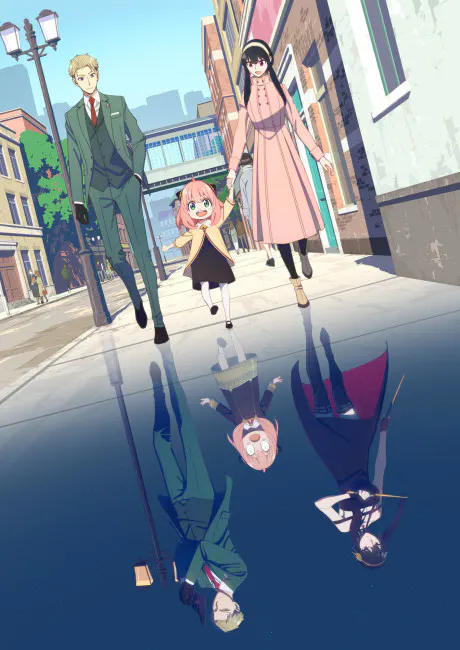
For a current cast, try SPY x FAMILY: Takuya Eguchi as the spy Loid, Saori Hayami as the assassin Yor, and Atsumi Tanezaki as Anya, the mind-reading child whose reactions carry much of the comedy. In episode 1, Loid has to produce a child for a mission and adopts Anya from an orphanage without knowing she can hear his thoughts. It's an easy pick for families and for viewers new to subtitles; the seasons and film are in the SPY x FAMILY watch order.
The idol side: singing, concerts and radio
Many seiyuu have a second job that has nothing to do with acting in a booth. Anime theme songs and "character songs," sung in character, are a big business, and some franchises are built around casts that perform live.

Love Live! School Idol Project
TV · 2013 · 13 episodes · Sunrise · 71% on AniList · Sub & dub
Music, Slice of Life
Love Live! School Idol Project is the clearest example. The nine actresses who voice the school idol group μ's, including Emi Nitta as Honoka, also performed as the group in real concerts, matching their characters' choreography, and their 2016 farewell show was released as μ's Final LoveLive!. In the anime, Honoka starts a school idol group in the first episode to save her school from closing. The seasons and film are in the Love Live! watch order. If music anime appeal, our best music anime list has more.
Radio is the other half. Since the 1990s, seiyuu have hosted their own radio programs and, later, internet radio and streams, chatting between themselves, reading listener letters and promoting their shows. For many fans, the radio show is where they get to know the actor as a person. The next section has an anime built around exactly that.
Anime about seiyuu

The Many Sides of Voice Actor Radio
TV · 2024 · 12 episodes · CONNECT · 70% on AniList · Sub
Comedy, Drama, Slice of Life
The Many Sides of Voice Actor Radio (2024) is about two high-school girls who are rising voice actresses and co-host a radio show. On air they sound like sweet best friends; off air they can't stand each other. It's adapted from Kō Nigatsu's light novels by studio Connect, with Miku Itō and Moe Toyota as the leads, Its running joke is the two hosts sounding sweet in the recording booth and dropping the act the moment the mic is off. It suits viewers who like rivals-to-friends stories, and it's good on the gap between a seiyuu's public image and the work behind it.
TV · 2015 · 13 episodes · GONZO · 68% on AniList · Sub
Comedy, Drama, Slice of Life
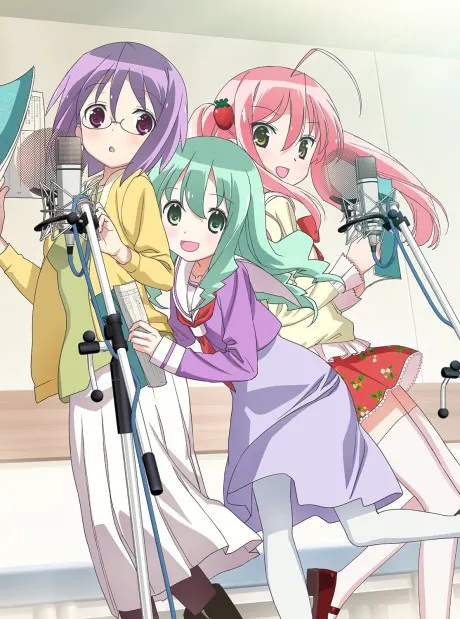
Seiyu's Life! (2015) comes from inside the industry. It's based on a four-panel manga written by voice actress Masumi Asano and drawn by Kenjiro Hata, sold at the Comiket fan convention from 2011 to 2017. Three rookie voice actresses deal with auditions, tiny parts and money worries, and end up co-hosting a web radio show as a unit called Earphones. The three leads, Rie Takahashi, Yuki Nagaku and Marika Kōno, really did perform as Earphones. Gonzo's 13 episodes are the closest thing to a training manual in anime form.

TV · 2014 · 24 episodes · P.A.WORKS · 81% on AniList · Sub & dub
Comedy, Drama, Slice of Life
SHIROBAKO is mainly about animators, but one of its five leads, Shizuka, is a struggling voice actress working a part-time job and waiting for her break. The first episode opens with the five friends' high-school animation club, then jumps ahead to Aoi, now a production assistant racing to deliver an episode on time. Shizuka's story is a good counterweight to the glamour; the rest of the show pairs well with our how anime is made explainer, which also covers how voices are recorded after the animation.
When anime doesn't use seiyuu

Movie · 2016 · CoMix Wave · 85% on AniList · Sub & dub
Drama, Romance, Supernatural
Big theatrical films often cast famous live-action actors instead of career voice actors, a practice called talent casting. Your Name. stars Ryunosuke Kamiki as Taki and Mone Kamishiraishi as Mitsuha, both known mainly for live-action work; Kamiki had also voiced the giant baby Bō in Studio Ghibli's Spirited Away as a child. The film's first act, a country girl and a Tokyo boy waking up in each other's bodies, is mostly comedy, which plays to actors used to live-action timing. Ghibli, Makoto Shinkai and Mamoru Hosoda films do this often. Supporters say it gives films a more natural, less "anime" sound; critics say it sometimes puts stars in roles they can't carry. Our Makoto Shinkai ranking covers his films individually.
Recognition: the Seiyu Awards
The profession has its own awards. The first Seiyu Awards were held in March 2007 at the Tokyo Anime Center in Akihabara, with categories for lead and supporting performances, newcomers and singing. Winning one is a real career boost, especially for the newcomer prizes.
How to find out who voices a character
- Look for "CV." Japanese promotional material lists voice actors as "CV: name," short for "character voice."
- Use the end credits. Each episode lists the cast, usually as character name followed by actor.
- Check a database. AniList, MyAnimeList and Anime News Network's encyclopedia list the Japanese cast for each show, and each actor's page lists their other roles, which is the fastest way to answer "where have I heard that voice?"
- Learn a few words. Watching with Japanese audio is easier when you can pick out the basics; our list of common Japanese words in anime and the guide to Japanese honorifics explain what the actors are actually saying with "-san," "senpai" and the rest.
- Know about dubs. English and Tagalog dubs have their own casts. Our Tagalog-dubbed anime guide covers the Filipino side of voice work.
Choosing between the Japanese and dubbed tracks is mostly taste; the sub vs. dub guide lays out the trade-offs. If you want to hear the seiyuu, pick "Sub" on any show page, or browse the catalog and start with one of the casts above.