Sub vs. dub is the oldest argument in anime fandom, and most of it is noise. "Sub" means the original Japanese audio with subtitles. "Dub" means the dialogue has been re-recorded in another language, which on MyAnimeVerse is almost always English. Neither is the "real" way to watch. Both are translations, both have trade-offs, and the right choice depends on the show and on you.
This guide lays out those trade-offs plainly, shows which kinds of anime lean one way, and explains exactly what the "Sub & dub" label on our show cards means, since it doesn't quite promise what people assume. If you run into other unfamiliar terms along the way, our anime glossary defines them with an example show for each.
What sub and dub actually mean
- Sub (subtitled): Japanese voice actors, the original sound mix, and translated text on screen. On MyAnimeVerse, subtitles are in English.
- Dub (dubbed): a new voice cast performs a translated script, timed to the characters' mouth movements. The music and sound effects usually stay the same.
- Dubtitles: a fan term for subtitles that are just a transcript of the dub script, shown over the Japanese audio. They can mismatch what's actually being said, so they're a common complaint on older home releases.
- Raw: Japanese audio with no subtitles at all. You won't need these unless you speak Japanese.
The important thing to understand is that a dub script is adapted, not just translated. Lines get rewritten so they fit the timing of lip flaps and sound natural when spoken aloud. Subtitles are compressed too: they have to fit in two lines and stay on screen long enough to read. So neither version is a word-for-word copy of the Japanese. They're two different translation jobs with two different constraints.
The case for watching subbed
- You hear the original performance. The Japanese cast was directed by the people who made the show, and the sound mix was built around their voices. Many fans feel big emotional scenes land best this way.
- It comes first. New episodes are usually subtitled within hours of airing in Japan. Dubs can follow weeks or months later, and many shows never get one. If you want to keep up with a season as it airs (our guide to how anime seasons work explains the schedule), sub is often the only option.
- The catalog is bigger. Almost everything gets subtitled. Only a fraction gets dubbed, especially older or niche shows.
- Wordplay and honorifics survive better. A subtitle can keep "senpai" or a pun's original setup with a short note. A dub usually has to replace them with an English equivalent.
The downsides are real, though. You're reading instead of watching for part of every scene, which matters in visually dense shows. Fast exchanges get trimmed to fit. And if you watch while cooking or folding laundry, you'll miss things.
The case for watching dubbed
- Your eyes stay on the animation. In action-heavy shows, you see every frame instead of glancing down at text.
- Background talk is translated. Crowd chatter, radio voices and overlapping arguments often go unsubtitled. A dub can translate all of it.
- It's easier for some viewers. Kids, people who read slowly, people with low vision, and anyone watching on a small phone screen while commuting all benefit.
- Some dubs are excellent. A strong English cast can match or, for some viewers, beat the original, especially for shows set in Western-style worlds or built on fast, snappy banter.
The downsides: lip-sync rewriting can flatten jokes or shift meaning. Casting sometimes misses, particularly for child characters. Older dubs from the 1990s and early 2000s vary a lot in quality. And you'll wait longer for new episodes, if a dub arrives at all.
Three myths worth dropping
- "Subs are the accurate version." Subtitles are a translation too, made under tight space and timing limits, and different releases of the same show can word lines very differently. A careful dub can be closer in meaning to the Japanese than a rushed subtitle track.
- "Dubs are for kids." That reputation comes from 1990s TV edits that cut violence and renamed characters. Most modern dubs translate the full, uncut show, and many are made for adult series.
- "Real fans only watch subbed." Plenty of people who've watched anime for decades prefer dubs, or switch depending on the show. How you watch says nothing about how much you care.
The real differences are the practical ones above: timing, availability, and whether you'd rather read or watch.
Shows where the dub has a strong reputation
These are cases where many fans actively recommend English. For a full ranked list, see our best dubbed anime guide, which covers headline examples like Cowboy Bebop. Here are a few others that come up in these debates.

TV · 2007 · 13 episodes · Brain's Base · 81% on AniList · Sub & dub
Action, Mystery, Supernatural
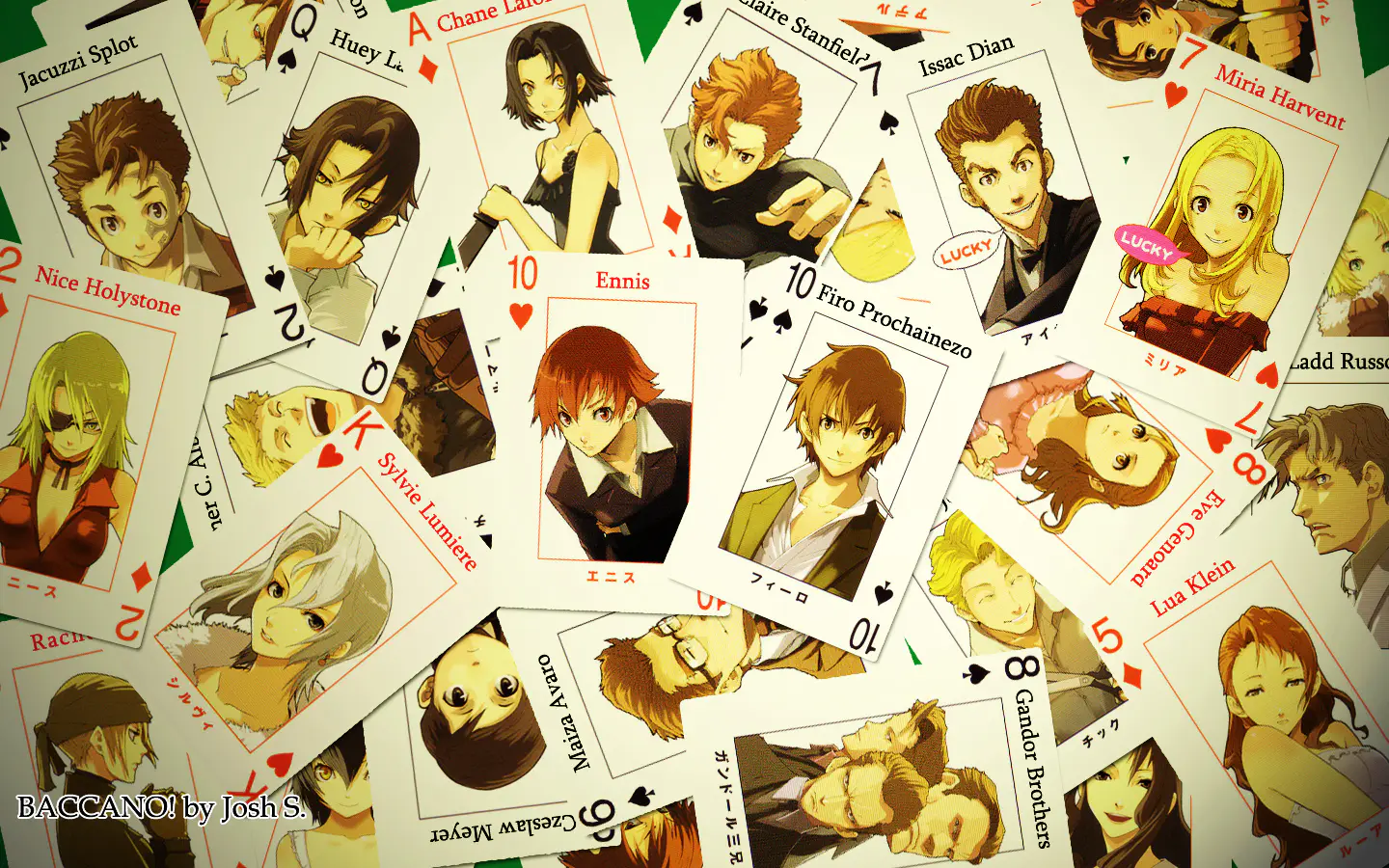
Baccano! is set among gangsters, alchemists and immortals in Prohibition-era America, so English voices with period accents fit the setting naturally. Brain's Base's 13-episode series also jumps between timelines and a large cast from the first episode, which opens with two people arguing over where the story even begins. Being able to keep your eyes on the screen helps a lot with that structure.

OVA · 2006 · 10 episodes · Graphinica · 81% on AniList · Sub & dub
Action, Horror, Supernatural
Hellsing Ultimate is a 10-episode OVA about a British organization that hunts vampires using a far more dangerous vampire, Alucard. Crispin Freeman's English performance as Alucard is often named among the best in the medium. Note that this is an OVA series released over several years, not the earlier 2001 TV version; the glossary explains what an OVA is.

TV · 2006 · 26 episodes · bones · 80% on AniList · Sub & dub
Comedy, Drama, Romance
Ouran High School Host Club is a rapid-fire romantic comedy from Bones about a scholarship student who breaks an expensive vase and has to repay it by working in a rich school's host club. The jokes depend on timing more than wordplay, so they translate well, and its English dub is a frequent pick for viewers who want comedy without reading.
Shows where many fans prefer the sub
The pattern here is dense Japanese wordplay, references to Japanese pop culture, or a central performance that's hard to recreate.

TV · 2006 · 201 episodes · Sunrise · 85% on AniList · Sub & dub
Action, Comedy, Drama
Gintama is a samurai comedy built on puns, parody of other anime and Japanese TV, and long riffs that bend the language. Any translation struggles with it, but subtitles can at least keep the original rhythm and add context. Sunrise's series runs 201 episodes in its first run alone, and the early episodes are its weakest, so many fans suggest pushing through the first stretch. The Gintama watch order helps with its many seasons and films.

Monogatari Series Second Season
TV · 2013 · 26 episodes · Shaft · 88% on AniList · Sub
Comedy, Drama, Mystery
Monogatari Series Second Season is a useful example for a different reason: its card says "Sub" only, because we don't have an English dub of it on the site. Shaft's Monogatari shows are long conversations full of Japanese wordplay, flashed on-screen text and rapid cuts, and that style is part of why dubs have been slow to arrive. If you want to watch, you'll be reading. Our Monogatari watch order explains where this season fits.
Growing up with Tagalog dubs
For many Filipino viewers, the first anime they ever saw was dubbed, just not in English. Ghost Fighter (Yu Yu Hakusho) and Slam Dunk were Tagalog-dubbed hits on free TV in the 1990s, and for that generation the Tagalog voices, and names like Eugene, are the characters. Voltes V took a different path: it first aired in English in 1978 and only got its Tagalog runs years later. Our guide to anime that aired in the Philippines covers which shows ran where, and you can go deeper with the Ghost Fighter guide and the history of Voltes V.
To be clear about what we have: MyAnimeVerse doesn't carry those original Tagalog broadcast tracks. When a show here is marked as having a dub, it's an English dub in almost every case. If nostalgia is your reason for rewatching, you'll be choosing between the Japanese original with English subtitles and an English dub, not the version you heard on TV.
What "Sub & dub" means on MyAnimeVerse
Every show card in our articles ends its facts line with either Sub or Sub & dub. Here's exactly what those mean:
- Sub means we have the show with English subtitles, and no dubbed episodes.
- Sub & dub means at least some episodes of that show also have a dub on the site, usually in English. It does not guarantee that every episode is dubbed. A long-running series or a season that's still airing can have a dub that stops partway, with the latest episodes available subbed only.
Switching is simple:
- On a show's page, there's a Sub/Dub choice above the episode list. If no dub exists, the Dub option is greyed out.
- While watching, the same choice is in the player's settings menu.
- The site remembers your last choice on that device, so if you pick Dub once, the next show you open starts in Dub where it can.
- If you're in Dub mode and an episode has no dub, the player plays the subbed version instead and shows a short notice, so you're never stuck on a blank screen.
The quickest way to compare is to try both on the same scene. Open episode 1 of a show in Sub, switch to Dub in the settings menu for a few minutes, and keep whichever one you stopped noticing. Our Discover feed is handy for this, since it plays episode-1 previews one after another.
How to choose: a short checklist
- Is the show still airing? If you want to keep up week to week, sub is usually the only choice. Check air times on our schedule.
- Is it heavy on wordplay or Japanese culture? Lean sub. Gintama and Monogatari are the classic cases.
- Is it a fast action show you'd rather see than read? Lean dub, if a good one exists. Our best action anime list is a good place to test this.
- Will you watch while doing something else? Dub. You'll catch more.
- Is it for kids? Dub, almost always. Our best anime for kids list notes the family-friendly options.
- Still undecided? Watch episode 1 in one, episode 2 in the other. You'll know by episode 3.
It's also fine to switch per show. Plenty of longtime fans watch comedies dubbed and dramas subbed, or the reverse. The label on a show tells you whether you have the choice. What you do with it is up to you.
Related explainers
- How anime seasons work: why new episodes arrive subbed first, and what "Season 2 Part 2" means.
- Shounen vs. seinen explained: what the four demographic labels mean and why they surprise people.
- What is isekai?: the "another world" genre, its subtypes and where it came from.
Prefer to just start somewhere? Browse the full catalog and look for the "Sub & dub" label if you want the choice.