Anime runs on a calendar that Western TV doesn't really have. New shows start in waves four times a year, most of them run for about three months, and a show you love might come back next season, in two years, in seven years, or never. Then the titles start getting strange: "Cour 2," "Season 2 Part 2," "Final Season Part 2," "4th Season Part 1 & 2."
This guide explains how that calendar works and why sequels behave the way they do. It's part of our anime glossary series, and it focuses on scheduling and production. For the other side of the problem, which entries to watch in what order, our pillar guide on how to watch anime in order covers release vs. chronological order, OVAs and filler.
The four anime seasons
Japanese TV schedules turn over every three months, and most new anime start at the beginning of one of these blocks:
- Winter: starts in January
- Spring: starts in April
- Summer: starts in July
- Fall (or Autumn): starts in October
So when fans say "the Fall 2026 season," they mean the batch of shows that premiered around October 2026. Each season brings dozens of new series and returning sequels, all airing one episode per week. Spring and Fall are often the busiest, though big shows premiere in every season.
We publish a guide for each one. The current season is covered in our Winter 2027 anime guide, and the one before it in our Fall 2026 anime guide. For a full year in review, see the best anime of 2026.
When episodes actually air, in Philippine time
Most TV anime in Japan air late at night, many after 11 p.m. Japan time, because they're aimed at older teens and adults and late-night slots are cheaper. Japan is one hour ahead of the Philippines, so an episode that airs at 11:30 p.m. in Tokyo goes out at 10:30 p.m. in Manila. Subtitled versions usually reach streaming services within hours.
Our airing schedule lists every new episode coming in the next week, soonest first, so you don't have to do the time-zone math. It's also the quickest way to see which shows are currently airing.
Not everything follows the weekly pattern. Some streaming-first releases, called ONAs, drop a whole season at once. Devilman Crybaby arrived as all 10 episodes on the same day in 2018, for example.
What a cour is
A cour (from the French word for "course") is one three-month broadcast block. In practice, it means a run of roughly 10 to 13 episodes. It's the basic unit anime is planned and sold in.
- A one-cour show runs for a single season, about 12 episodes. Most anime are this length.
- A two-cour show runs for two seasons back to back, about 24 to 26 episodes, like the first season of Frieren, which ran 28 episodes from Fall 2023 into Winter 2024.
- A long-running show like One Piece just keeps going, cour after cour, for years.
Our watch-order guide has a short definition too. The useful takeaway: when someone asks "how long is season 1?", the answer is almost always 12 or 24 episodes.
Split cours: one season, two halves
A split cour is a two-cour season with a break in the middle. The first 12 or so episodes air, the show goes off the air for one or more seasons, and then the second half picks up exactly where it left off. Here are three clear examples, with the dates from our database.
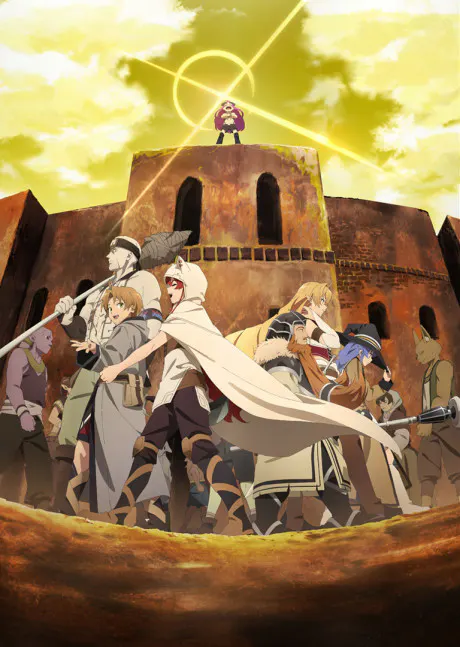
Mushoku Tensei: Jobless Reincarnation Cour 2
TV · 2021 · 12 episodes · Studio Bind · 85% on AniList · Sub & dub
Adventure, Drama, Ecchi
Mushoku Tensei: Jobless Reincarnation aired its first 11 episodes in Winter 2021, then returned in Fall 2021 with Cour 2. It happened again with the second season: Season 2 in Summer 2023, then Season 2 Part 2 in Spring 2024. Studio Bind's adaptation is known for its detailed animation, and the breaks gave the team time to keep that level up. The Mushoku Tensei watch order puts every part in sequence, and if you're looking for something similar, try our anime like Mushoku Tensei picks.
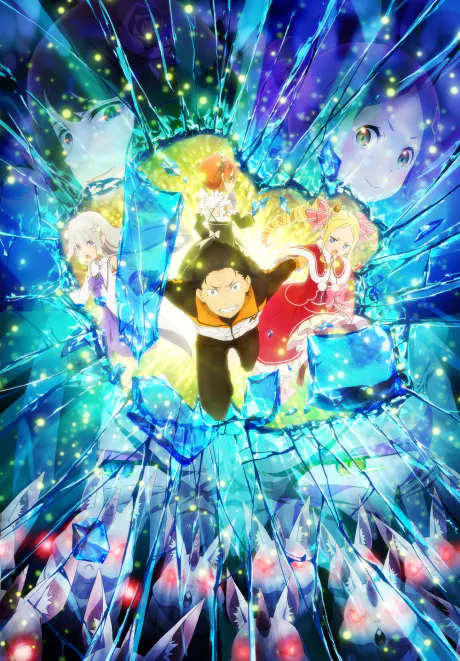
Re:ZERO -Starting Life in Another World- Season 2 Part 2
TV · 2021 · 12 episodes · WHITE FOX · 84% on AniList · Sub & dub
Action, Adventure, Drama
Watch Re:ZERO -Starting Life in Another World- Season 2 Part 2
Re:ZERO Season 2 aired in Summer 2020, and Season 2 Part 2 followed in Winter 2021. "Part 2" here isn't a new season in the story sense; it's episode 14 onward of the same arc. Skipping it would leave you in the middle of a cliffhanger. See the Re:ZERO watch order.

TV · 2022 · 13 episodes · CloverWorks · 81% on AniList · Sub & dub
Action, Comedy, Slice of Life
SPY x FAMILY did the same: 12 episodes in Spring 2022, then Cour 2 in Fall 2022, before a separately titled Season 2 in Fall 2023. Three "seasons" on a streaming menu, but really two. The SPY x FAMILY watch order keeps it straight.
Why split a season? Studios rarely spell out their reasons, but the usual explanations are practical. A break gives animators time to catch up and avoid a mid-season drop in quality. It keeps a show in the news for longer, across two seasons instead of one. And it lets a long arc air in full without tying up a studio's staff for six straight months.
Why the naming is such a mess
There's no industry standard for naming sequels. Each production picks its own, and different databases and streaming services then number things in their own ways. You'll see all of these:
- "Season 2," "2nd Season," "II": a new season, usually after a gap.
- "Part 2" or "Cour 2": the second half of a split season.
- "Season 2 Part 2": the second half of the second season, as with Re:ZERO and Mushoku Tensei.
- Arc names instead of numbers: Demon Slayer names each season after its story arc ("Entertainment District Arc," "Swordsmith Village Arc"; see the Demon Slayer watch order), and HAIKYU!! has "TO THE TOP" and "TO THE TOP Part 2" (watch order).
- "Final" that isn't final: Attack on Titan Final Season was followed by a Part 2 and then two "Final Chapters" specials. Our Attack on Titan watch order lists all of them.
- Both parts in one title: the fourth season of Slime is listed in our database as "4th Season Part 1 & 2."

That Time I Got Reincarnated as a Slime Season 4
TV · 2026 · 24 episodes · 8-bit · 83% on AniList · Sub & dub
Action, Adventure, Comedy
That Time I Got Reincarnated as a Slime Season 4 is a good example of how messy it gets. The franchise has had a Season 2 and a Season 2 Part 2, a spin-off (The Slime Diaries), OVAs, two movies and then a fourth season whose Japanese title names both halves. Counting "seasons" by hand is a losing game; the Slime watch order does it for you.
On MyAnimeVerse, each part has its own show page, because that's how the anime database we use lists them. When you finish one part, the show page links to the next entry in the franchise, and every franchise with more than a few entries has a guide in our watch-order index.
Why sequels can take years
This is the question fans ask most, usually with some frustration. Several reasons stack up, and most long waits involve more than one.
1. The anime is partly an advertisement
Most anime are funded by a production committee: a group of companies, often including the manga or light novel publisher, a music label, a video distributor and the TV station, that share the cost and the profit. For the publisher, an adaptation is partly a way to sell more books. If sales of the source material, home video, streaming rights and merchandise justify it, a sequel gets funded. If they don't, the show often ends after one season, even with a fan following. That's why "Will there be a season 2?" so often has no answer for years.
2. The source needs to get further ahead
A single cour can adapt a lot of manga chapters or several light novel volumes. If the original is still being written, the anime can catch up quickly. Studios then either wait for more material, add filler (common for older weekly shows), or end on an anime-original ending. Waiting is the usual choice today.
3. Studios are booked years ahead
Good studios and directors are scheduled far in advance. If the team that made season 1 is busy with other shows, a sequel either waits for them or moves to a different studio. Studio changes happen more often than people realize.
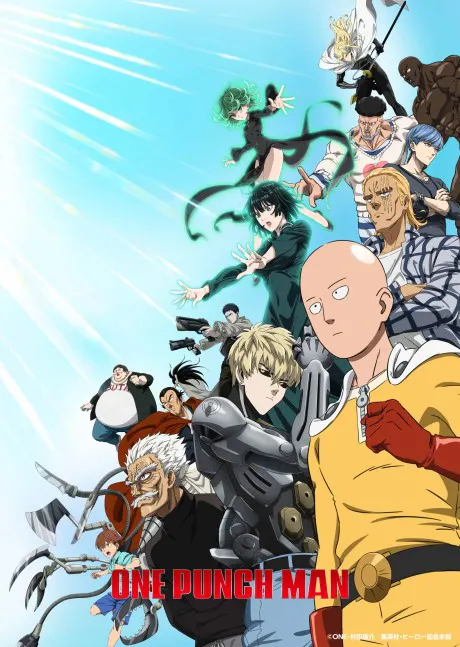
TV · 2025 · 12 episodes · J.C.STAFF · 50% on AniList · Sub & dub
Action, Comedy, Sci-Fi
One-Punch Man is the most-cited example. Madhouse made the first season in Fall 2015. Season 2 moved to J.C.Staff and aired in Spring 2019, and many viewers felt the action lost some of its punch. Season 3 came in Fall 2025, more than six years later. The One-Punch Man watch order lists each part.

KONOSUBA -God's blessing on this wonderful world! 3
TV · 2024 · 11 episodes · Drive · 82% on AniList · Sub & dub
Action, Adventure, Comedy
KONOSUBA 3 is another. KONOSUBA 2 aired in Winter 2017, and season 3 didn't arrive until Spring 2024, made by a different studio (Drive, taking over from Studio Deen). The franchise wasn't idle in between: a movie came out in 2019 and a spin-off series about Megumin in 2023. Long gaps between TV seasons often hide movies or spin-offs, which is one more reason to check the KONOSUBA watch order. If isekai is your thing, our explainer on what isekai is covers the genre that produces many of these long-gap franchises.
4. Quality takes time
Modern TV anime often aims for film-like visuals, and that's slow. Some productions now prefer to wait until a full season is mostly finished before airing it, rather than rush episodes out weekly. That makes for fewer mid-season dips in quality, at the cost of a longer wait.
5. Sometimes the story continues as a movie
A few franchises move key arcs to theaters. Demon Slayer's Mugen Train arc was a film first, and its Infinity Castle arc continues as movies rather than a TV season. If a show seems to have stopped, check whether it went to cinemas. Our best anime movies list includes several films like this.
The exception: shows that never stop

TV · 1999 · Toei Animation · 87% on AniList · Sub & dub
Action, Adventure, Comedy
ONE PIECE has aired almost continuously, week after week, since 1999. Long-running shows like this don't really have seasons; they run continuously and are divided by story arcs instead. Older shows built this way, such as Naruto and Bleach (see the Naruto and Bleach watch orders), caught up with their manga often, which is where most anime filler comes from. One Piece is listed on our site as a single entry with its own watch order for its movies and specials, and you can pick up the latest episodes on the schedule each week.
How to keep track without losing your mind
- Check the schedule for what's airing this week and when.
- Read the seasonal guides (Winter 2027, Fall 2026) to see which shows are new and which are sequels.
- Use a watch-order guide before starting any franchise with "Part" in a title.
- Expect subs first. New episodes are usually subtitled within hours, while dubs can take weeks. Our sub vs. dub guide explains how that affects which version you'll see.
- Not sure what to start? Swipe through first episodes in Discover or browse by genre.
If you came across a term here you didn't know, the anime glossary covers everything from OVA to simulcast, and our shounen vs. seinen explainer covers the demographic labels you'll see on every seasonal list.