Shounen, shoujo, seinen and josei are the four words you will see most often on anime and manga listings, and they are also the four most misunderstood. People treat them like genres: shounen means fights, seinen means violence, shoujo means romance. That shorthand works maybe half the time. The other half, it tells you that Frieren should be a seinen show (it isn't) and that Kaguya-sama is for teenagers (it was written for adult men).
This guide explains what the labels actually measure, which magazines decide them, and how much they should matter when you're picking something to watch. It's one of the deeper entries in our anime glossary, which covers the rest of the vocabulary, from cour to tsundere. Each section below includes a few example shows you can open and start tonight.
The short answer: it's about the magazine, not the content
All four words are demographic labels. They describe the audience a story was first sold to, and in practice that means the manga magazine it ran in. Japanese publishers split their magazines by target reader, and a series inherits its label from where it was serialized.
- Shounen (少年, "boy"): magazines aimed at boys, roughly from late grade school through high school. Weekly Shonen Jump, Weekly Shonen Magazine and Weekly Shonen Sunday are the big three.
- Shoujo (少女, "girl"): the same age range, aimed at girls. Nakayoshi, Ribon, Margaret and Hana to Yume are the classic names.
- Seinen (青年, "young man"): magazines for men from their late teens upward, such as Weekly Young Jump, Young Magazine, Monthly Afternoon and Young Animal.
- Josei (女性, "woman"): magazines for adult women, such as Be Love, Kiss and Feel Young.
You'll also see the spellings shonen, shojo and shōnen. They're the same words, just romanized differently.
The anime adaptation keeps the label of its source. So when someone asks whether a show is shounen or seinen, the honest answer is a fact you can look up, not a judgment about how dark it is. That's why the labels surprise people so often. A publisher picks a magazine for business reasons, and the content can drift far from what you'd expect from the label.
Shounen: the label everyone knows
Shounen manga built the template most newcomers think of as "anime": a young lead with a clear goal, a group of friends, rivals who become allies, tournaments or training arcs, and a long run that can last years. Weekly serialization shapes the storytelling. Each chapter needs a hook, and popular series keep going for as long as readers vote for them.
Not every shounen is a battle series, though. Sports, comedy, romance and mystery all run in shounen magazines. Here are three that show the range.

TV · 2014 · 25 episodes · Production I.G · 83% on AniList · Sub & dub
Comedy, Drama, Sports
HAIKYU!! ran in Weekly Shonen Jump, the same magazine as Naruto and One Piece, and it shows what the shounen formula looks like with no superpowers at all. Shoyo Hinata is short and untrained but can jump absurdly high, and the first episode pairs him with Tobio Kageyama, the rival who crushed his only middle-school match. Production I.G's adaptation is the textbook case of shounen structure applied to volleyball: rivals, team growth, one tournament at a time. If you like it, our best sports anime list has more. The full order of its seasons and movies is in the Haikyu!! watch order.

TV · 2023 · 28 episodes · MADHOUSE · 91% on AniList · Sub & dub
Adventure, Drama, Fantasy
Frieren: Beyond Journey's End is the show that breaks most people's mental model. It's quiet, melancholy and mostly about grief and time, the sort of story people assume must be seinen. It isn't: the manga runs in Weekly Shonen Sunday. Episode 1 opens after the hero's party has already beaten the Demon King, then skips decades in a few minutes as the elf mage Frieren outlives her friends. Madhouse's adaptation proved a slow, reflective fantasy can sit in a boys' magazine.
TV · 2022 · 12 episodes · CloverWorks · 83% on AniList · Sub & dub
Action, Comedy, Slice of Life
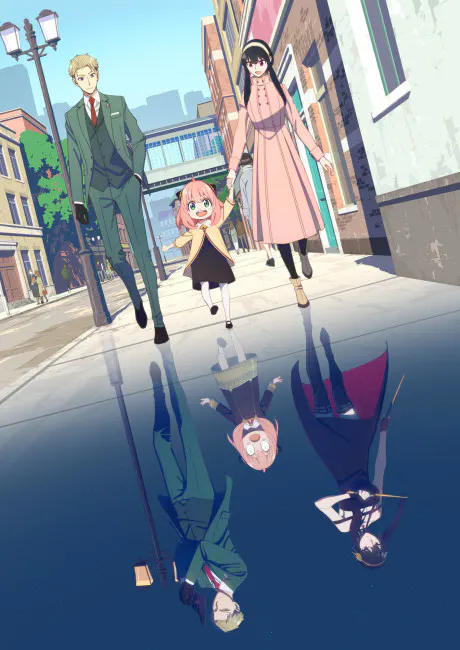
SPY x FAMILY is a family comedy about a spy, an assassin and a telepathic little girl pretending to be a normal household. It runs on Shonen Jump+, Shueisha's digital app, which counts as shounen. It's a good reminder that "shounen" today covers a lot of ground, from Haikyu!! to this. Its watch order is short.
For more picks in this lane, see our best shounen anime ranking.
Shoujo: more than romance
Shoujo manga grew up in parallel to shounen and developed its own visual language: expressive eyes, flowers and sparkles behind characters, panel layouts that follow feelings more than action. Romance is common, but shoujo magazines also gave the world magical-girl series, fantasy epics and some of anime's most famous tearjerkers. The focus tends to fall on relationships and inner life over power levels.

TV · 1992 · 46 episodes · Toei Animation · 76% on AniList · Sub & dub
Action, Adventure, Fantasy
Sailor Moon ran in Nakayoshi and is the reason a whole generation knows the term magical girl. Usagi Tsukino is a crybaby schoolgirl who gets a talking cat and a transformation brooch in episode 1, and Toei's 1992 series spends a lot of its early run on monster-of-the-week fights. It's also a team story, which is often forgotten. Filipino viewers will know it from local TV; our guide to anime that aired in the Philippines covers that history, and the Sailor Moon watch order sorts out its five seasons.

TV · 2019 · 25 episodes · TMS Entertainment · 82% on AniList · Sub & dub
Comedy, Drama, Romance
Fruits Basket (2019) comes from Hana to Yume and is the shoujo series that most often wins over viewers who think shoujo isn't for them. Orphaned high schooler Tohru Honda is living in a tent when the first episode starts, and she ends up in the house of the Sohma family, who turn into zodiac animals when hugged. That sounds silly, and the early episodes are light, but the series becomes a serious story about family abuse and healing. TMS Entertainment's remake adapts the full manga across three seasons, all listed in the Fruits Basket watch order.

Kimi ni Todoke: From Me to You
TV · 2009 · 25 episodes · Production I.G · 79% on AniList · Sub & dub
Comedy, Drama, Romance
Kimi ni Todoke: From Me to You ran in Bessatsu Margaret and is the most classic shoujo on this page: a shy girl, misjudged by her classmates because she looks like the ghost from The Ring, slowly making friends and falling for the most popular boy in class. Production I.G's adaptation moves at a gentle pace, and the Kimi ni Todoke watch order covers its later seasons. If that sounds like your thing, our best shoujo anime list goes deeper, and the best romance anime list mixes in picks from every demographic.
Seinen: for older readers, not necessarily darker
Seinen magazines target men from their late teens into adulthood. That gives creators room for slower pacing, more ambiguity, adult jobs and relationships, and yes, more graphic violence when the story calls for it. But plenty of seinen is comedy or quiet drama. The real difference is assumed life experience, not gore.

TV · 2019 · 24 episodes · WIT STUDIO · 87% on AniList · Sub & dub
Action, Adventure, Drama
Vinland Saga is a perfect illustration of how the labels can shift. Makoto Yukimura's manga started in Weekly Shonen Magazine and then moved to the seinen magazine Monthly Afternoon, where it has run ever since. The anime opens with Viking-era warbands, a teenage mercenary named Thorfinn, and a revenge story that the second season deliberately turns inside out. Wit Studio made the first season, MAPPA the second. If you finish it, our anime like Vinland Saga guide is the next stop.

TV · 2005 · 26 episodes · Artland · 85% on AniList · Sub & dub
Adventure, Fantasy, Mystery
MUSHI-SHI is seinen at its calmest. Yuki Urushibara's manga ran in Afternoon Season Zōkan and later Monthly Afternoon, and Artland's 2005 anime is an episodic series about Ginko, a wanderer who deals with mushi, strange life forms that cause supernatural problems in rural villages. There's no villain and no power ladder. Each episode is a short story, and the first one, about a boy whose drawings come to life, sets the tone exactly. The MUSHI-SHI watch order lists its second series and specials.
TV · 2019 · 12 episodes · A-1 Pictures · 83% on AniList · Sub & dub
Comedy, Psychological, Romance
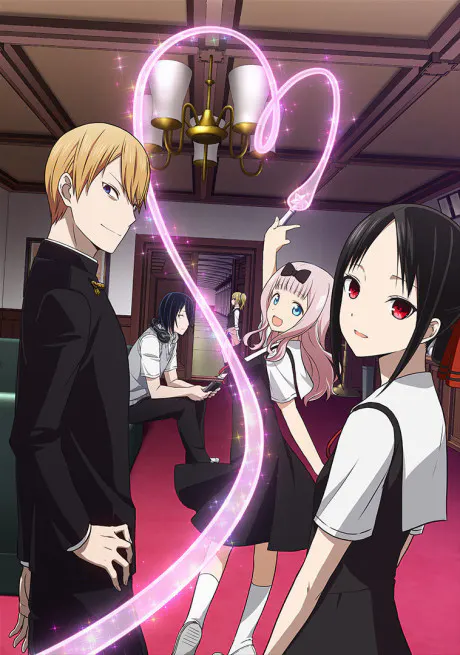
Kaguya-sama: Love is War is the other half of the Frieren surprise. It's a romantic comedy set in a high school student council, and it runs in Weekly Young Jump, a seinen magazine (it started in a Young Jump spin-off before moving to the main title). The first episode sets the rules: two geniuses who like each other refuse to confess first and treat every conversation as a battle of wits. A-1 Pictures adapted it, and the Kaguya-sama watch order lists every season.
A few other well-known seinen titles: Tokyo Ghoul (Weekly Young Jump; see its watch order), Berserk (Young Animal; watch order) and One-Punch Man, which began as ONE's webcomic and was redrawn by Yusuke Murata for the Tonari no Young Jump website (watch order). Dark seinen gets its own spotlight in our best psychological anime list.
Josei: stories about adult women's lives
Josei is the smallest of the four in anime terms. Fewer josei manga get adapted, and the ones that do often fly under the radar outside Japan. The stories tend to focus on careers, adult friendships, rent, family and relationships without the high-school framing that dominates the other three. If you're in your twenties or older and tired of student councils, this is the label to search for.

TV · 2011 · 25 episodes · MADHOUSE · 80% on AniList · Sub & dub
Drama, Romance, Slice of Life
Chihayafuru runs in Be Love and is a clear example of how josei isn't a genre either: on screen it plays like a sports anime about competitive karuta, a card game based on classical Japanese poetry. Madhouse's series opens with high schooler Chihaya, then flashes back to the childhood friendship that got her into the game. It's emotional and surprisingly intense, and the Chihayafuru watch order covers all three seasons.
TV · 2010 · 11 episodes · Brain's Base · 79% on AniList · Sub & dub
Comedy, Romance, Slice of Life
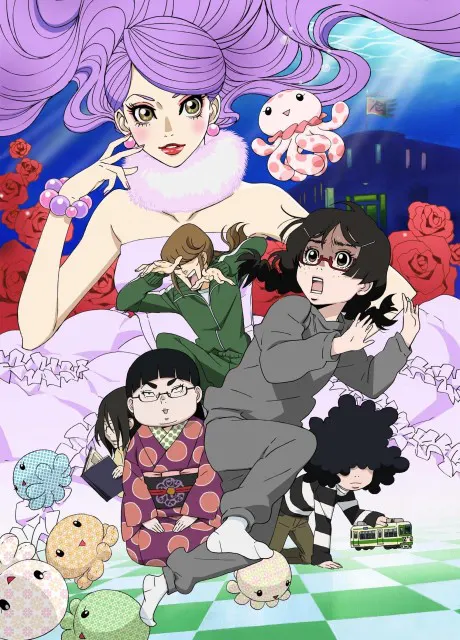
Princess Jellyfish ran in Kiss. Tsukimi is a jellyfish-obsessed young woman living in a Tokyo boarding house full of fellow otaku women who are terrified of fashionable people, until one very fashionable stranger shows up. Brain's Base made the 11-episode anime, and it's a sharp comedy about adult awkwardness.
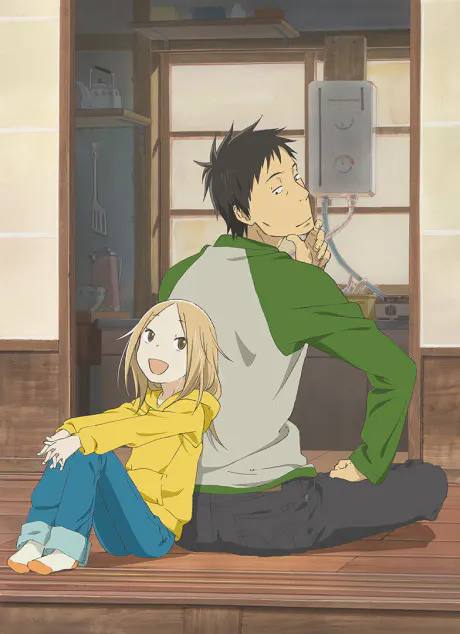
TV · 2011 · 11 episodes · Production I.G · 81% on AniList · Sub
Slice of Life
Bunny Drop (Usagi Drop) comes from Feel Young. A 30-year-old office worker takes in his late grandfather's six-year-old secret daughter at the funeral in episode 1, and the rest of Production I.G's short series is about him learning to be a parent. It's one of the gentlest shows on the site. Note that the anime adapts only the first part of the manga, which many fans consider a good thing, since the manga's later time skip is widely criticized.
Wotakoi: Love is Hard for Otaku belongs here too: an office romance between two adult nerds, which began as a web manga before moving to Ichijinsha's josei magazine Comic POOL. For more grown-up everyday stories, see our best slice-of-life anime list.
The NANA problem: when labels disagree

TV · 2006 · 47 episodes · MADHOUSE · 85% on AniList · Sub & dub
Drama, Music, Romance
NANA is probably the most famous "josei" anime, and it's a good case study in why you shouldn't treat these labels as law. Ai Yazawa's manga ran in Cookie, which Shueisha positions as a shoujo magazine for older girls. Yet NANA's subject matter (two 20-year-old women sharing an apartment in Tokyo, punk bands, pregnancy, breakups) reads as adult, and it's listed as josei in many databases and lists. Both labels are in common use. If a source tells you NANA is definitely one or the other, it's simplifying. The magazine says shoujo; the content and much of the audience say josei.
Honey and Clover has a similar story. It started in Takarajimasha's CUTiE Comic and moved to Shueisha's Young You, then Chorus, all josei titles, after its first magazine stopped running it.
Why the labels confuse people
Once you know the label comes from the magazine, the most common mix-ups make sense.
- Dark doesn't mean seinen. Attack on Titan ran in Bessatsu Shonen Magazine (its many parts are sorted in the Attack on Titan watch order), and Chainsaw Man ran in Weekly Shonen Jump before moving to Jump+. Both are shounen despite heavy violence.
- Quiet doesn't mean seinen either. Frieren is the go-to example. Mob Psycho 100, from Shogakukan's Ura Sunday site (watch order), is another shounen that spends more time on a shy kid's self-worth than on its fights.
- Romance doesn't mean shoujo. Kaguya-sama is seinen. Many harem and romcom series run in shounen magazines.
- Audiences don't follow the target. Adults read Jump in huge numbers, and many shoujo fans are men. The label describes the marketing, not who actually shows up.
- Some shows have no label at all. Original anime like Cowboy Bebop never ran in a magazine. Light novels and web novels are sold by imprint, not by these four categories. Korean webtoons such as Solo Leveling sit outside the system completely.
Isekai is a good example of a category that cuts across all four: the same "transported to another world" idea shows up in shounen, seinen and shoujo stories. Our explainer on what isekai is covers that genre on its own terms.
How to use the labels when choosing a show
The labels are a hint about tone and pacing, not a promise. Here's a practical way to read them:
- Want momentum and a clear goal? Shounen is the safest bet. Expect long runs, so check the watch-order guides before starting a big one.
- Want relationships at the center? Try shoujo for teen stories and josei for adult ones.
- Want slower, more ambiguous storytelling? Seinen leans that way, but read a synopsis first; it might be a comedy.
- Not sure? Skip the label and sample first episodes. Our Discover feed lets you swipe through episode-1 previews, and Browse lets you filter by genre, such as romance or action, which tells you more about content than any demographic word.
One more practical note: whatever the demographic, you can watch most of these subbed or dubbed. If you haven't settled that question yet, our guide to sub vs. dub walks through the trade-offs and what the "Sub & dub" label on our cards means.
Quick reference
- Shounen: boys' magazines. Examples: HAIKYU!!, Frieren, SPY x FAMILY, Attack on Titan, Chainsaw Man.
- Shoujo: girls' magazines. Examples: Sailor Moon, Fruits Basket, Kimi ni Todoke, Cardcaptor Sakura (watch order).
- Seinen: young men's magazines. Examples: Vinland Saga (after its move), MUSHI-SHI, Kaguya-sama, Tokyo Ghoul, Berserk, One-Punch Man.
- Josei: adult women's magazines. Examples: Chihayafuru, Princess Jellyfish, Bunny Drop, Wotakoi, and arguably NANA.
When you hit a term on this page you don't recognize, from "cour" to "OVA," the anime glossary has a plain definition and an example show for each one.