Most anime don't come with a number on the box. A franchise can have a first season, a "2nd Season," a "Final Season," a "Final Season Part 2" and a "Final Chapters Special 2." It can have a movie that's essential, a movie that's pure side story, and an OVA released between them. Some shows are told out of order on purpose. Others pad their middle with dozens of episodes that the original manga never had.
This is our guide to sorting all of that out for any series. It covers the two main kinds of watch order and which one to choose, what each format label means, why seasons get split into "parts," and how to tell filler and non-canon movies from the episodes that matter. At the end, you'll find our full watch-order guides for four of the most confusing franchises, plus links to the auto-generated order pages for the shows people ask about most.
Release order vs. chronological order
Almost every watch-order question comes down to these two options.
- Release order means watching everything in the order it came out. It's how the original audience saw it, and it's how the people making the show expected you to see it.
- Chronological order means watching in the order events happen in the story's own timeline. Prequels come first, and flashback seasons get slotted in where they belong.
For most series, the two are the same. You watch season 1, then season 2. The difference only shows up when a franchise adds a prequel, a side story set in the middle of the timeline, or a season told out of order.
Which should you pick?
For a first watch, pick release order, unless a guide for that specific series gives you a strong reason not to. Here's why:
- Prequels are written for people who've seen the original. They often reveal things the original treats as mysteries. Fate/Zero is the classic example. It's set ten years before Fate/stay night, and it gives away several of that story's twists. Our Fate/stay night watch order page lists both.
- Shows that jump around in time do it on purpose. The Monogatari series, starting with Bakemonogatari, reveals characters' pasts out of order, so that each flashback changes how you see someone you already know. Watching chronologically flattens those reveals into setup.
- Later entries assume you know earlier ones. A season made in 2015 may reference a film released in 2012, even if the film is set later in the story.
Chronological order is great for a rewatch, when you already know the twists and want to see the timeline lined up. And for a few franchises, the best order is a mix of the two. Fate/Grand Order is one: its TV series Babylonia came out in 2019, before the two Camelot films (2020–2021), but Camelot comes first in the story, and most guides tell you to watch Camelot first. The Fate/Grand Order watch order page lists every entry.
A third option: source order
Some franchises have a third option: the order of the original light novels or games. Monogatari's prequel Kizumonogatari was the second novel but was animated years later, after most of the TV series. Fate/stay night's visual novel has three routes that must be played in sequence. Source order is usually what hardcore fans recommend, and it's worth knowing, but it's rarely the easiest way in.
What the format labels mean
Every entry on an anime database has a format. These are the ones you'll see, and what each one usually means for your watch order.
- TV. A regular broadcast series. This is the main line of almost every franchise.
- Movie. A theatrical film. Some films are part of the main story, and some are side stories. More on telling them apart below.
- OVA (original video animation). Originally, episodes released straight to home video instead of TV. Today, OVAs are often bonus episodes bundled with Blu-rays or manga volumes. They're usually side stories, extra comedy or adaptations of chapters the TV series skipped. Most are optional.
- ONA (original net animation). Anime released online first, on a streaming service or a web platform. An ONA can be a full main-line season: Monogatari's Koyomimonogatari and its 2024 Off & Monster Season both premiered online, and both are on the Monogatari watch order page. So don't assume an ONA is optional.
- Special. A one-off episode, such as a prologue, an epilogue, a TV special or a short. Some specials are essential: the last two parts of Attack on Titan's story are listed as "The Final Chapters Special 1" and "Special 2." Others are throwaway shorts.
- Recap. An episode or film that summarizes earlier episodes, usually with little new footage. Skip them unless you need a refresher.
- Compilation film. A movie made by re-editing an existing TV season, sometimes with new scenes. Many popular series get them. They're useful as a refresher, or as a fast way into a long series, but they usually cut a lot. Kizumonogatari: Koyomi Vamp (2024), which recuts the three Kizumonogatari films into one, is a recent example.
When to skip OVAs and specials
A quick test for any OVA or special:
- Is it a recap or a compilation? Skip it.
- Is it a short comedy or "chibi" side series? Watch only if you're already a fan.
- Is it a prequel or a side story about one character? Optional, but often good. Attack on Titan's No Regrets, about Levi's past, is a well-liked example. Watch it after the main story has introduced the character.
- Does the next TV season pick up from it? Then it's essential. Watch it in release order.
When in doubt, check the series' own watch-order page. On MyAnimeVerse, every watch order guide lists all the entries for a franchise with their formats and years.
Cours, split seasons and "Part 2"
A lot of confusing anime titles come from the way Japanese TV is scheduled.
Japanese TV anime runs in three-month blocks called cours. One cour is usually 12 or 13 episodes. A "two-cour" show runs for about 24 to 26 episodes, across six months. A season in the sense Western viewers use can be one cour, two cours in a row, or two cours with a break in between.
That break is what creates split seasons. A studio announces a 24-episode season but airs the first 12 episodes, takes a break of a few months, then airs the second 12. Databases like AniList, which our site uses, often list each half as its own entry, and the titles reflect that:
- Attack on Titan Season 3 Part 2 and The Final Season Part 2, each the second half of a season.
- Re:ZERO Season 2 Part 2, which aired after a three-month break.
- Mushoku Tensei: Jobless Reincarnation Cour 2, which puts the term right in the title.
- Bleach's Thousand-Year Blood War, split into four parts, each with its own subtitle: The Separation, The Conflict and The Calamity.
The rule is simple: "Part 2" or "Cour 2" is the second half of the same season, so watch it right after Part 1. Don't count it as a separate season when someone tells you "start from season 3." And watch out for title changes: Attack on Titan's "Final Season" alone has three entries plus two specials. A franchise page that lists every entry in order saves a lot of guessing.
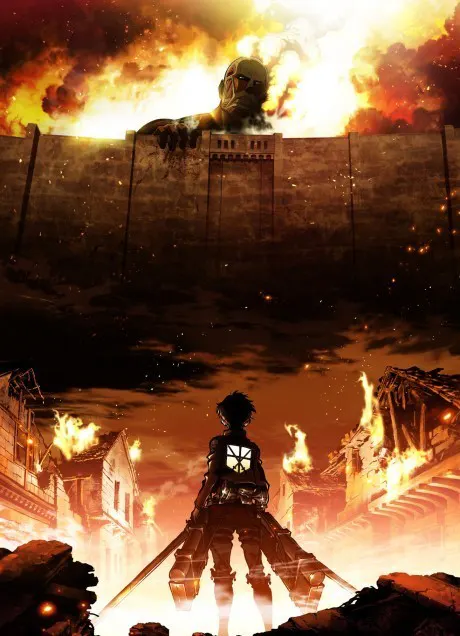
TV · 2013 · 25 episodes · WIT STUDIO · 85% on AniList · Sub & dub
Action, Drama, Fantasy
One more naming trap: re-edited versions. Re:ZERO's first season was re-released in 2020 as a "Director's Cut" with the episodes combined into longer ones. It's the same story. Pick one version, not both. Dragon Ball Z Kai is a bigger example: a remastered cut of Dragon Ball Z with most of the padding removed. Our Dragon Ball watch order explains when to pick Kai over Z.
What filler is, and how to spot it
Filler means episodes with no source in the manga or novel the anime adapts. It happens when a long weekly anime catches up to a manga that's still being written. The studio can't stop the broadcast, so it adds original stories while the manga gets ahead again.
Filler isn't always bad. Some filler episodes are fan favorites. But in the long shonen series of the 2000s, filler made up a large share of the episodes. By the count of the fan-run site Anime Filler List, which most guides use, about 41% of both Naruto and Naruto Shippuden is filler, and about 45% of the original Bleach.
Signs you're watching filler
- A new villain or mission appears out of nowhere, and nobody mentions it again afterward.
- The story pauses right after a big climax. Long filler arcs often start just after a major arc ends, because that's when the anime has caught up.
- Everything resets at the end. No one gets stronger, learns anything or dies, and the status quo is the same as before.
- Flashback episodes that retell events you've already seen, often framed around a character remembering them.
- A sudden change in tone, like a beach episode or a comedy detour in the middle of a serious arc.
The more reliable method is a filler list. Fan sites mark each episode as manga canon, filler, or mixed, which means a canon episode with anime-only scenes added. Don't skip mixed episodes; they still move the story. Some sites also use anime canon for original stories that the anime treats as part of its own continuity. Boruto has a lot of these. You can skip them, but later episodes may refer to them.
Filler lists are fan-made, so guides sometimes disagree by an episode or two at the edges of an arc. Our Naruto watch order gives the commonly cited ranges for Naruto, Shippuden and Boruto, and notes where sources differ.

TV · 2004 · 366 episodes · Studio Pierrot · 79% on AniList · Sub & dub
Action, Adventure, Supernatural
For Bleach, the biggest filler block is the Bount arc, which Anime Filler List counts as episodes 64 to 108. The Bleach watch order page lists the films and every part of Thousand-Year Blood War, which has no filler arcs.
Why some movies are canon and others aren't
Anime movies fall into two groups, and it's not always obvious which is which.
Canon movies adapt part of the original story, or are written as part of it. The TV series that follows picks up where they leave off. Examples:
- Demon Slayer: Mugen Train (2020) adapts the arc right after the first season, and the next season starts after it. (It also got a TV version, with one new episode added at the start, so you can watch either.)
- Jujutsu Kaisen 0 (2021) adapts the manga's prequel volume, and its main character returns later in the series.
- The Last: Naruto the Movie (2014) fills in a gap near the end of Shippuden.
- Dragon Ball Super: Broly (2018) continues straight from the end of the Dragon Ball Super TV series.
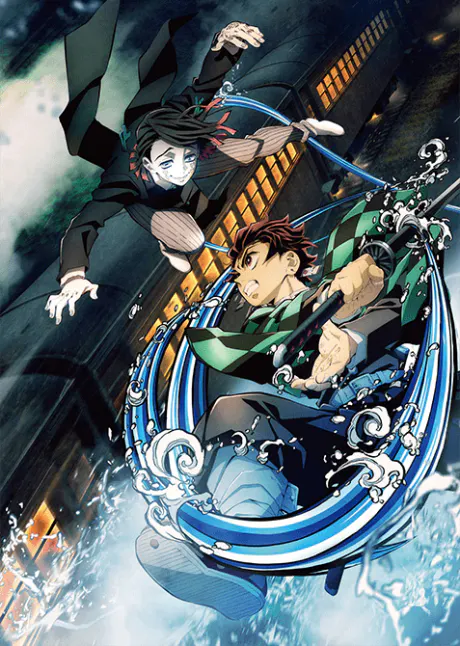
Demon Slayer -Kimetsu no Yaiba- The Movie: Mugen Train
Movie · 2020 · ufotable · 84% on AniList · Sub & dub
Action, Adventure, Drama
Watch Demon Slayer -Kimetsu no Yaiba- The Movie: Mugen Train
Non-canon movies are original side stories, made to cash in on a popular series while it was still airing. They're written so that anyone can watch them at any point, which means nothing in them can change the main story. No one important dies, no permanent power-ups, no new relationships. The 1990s Dragon Ball Z films (listed on our Dragon Ball watch order page), most Naruto films (on the Naruto watch order page), the Bleach films and the My Hero Academia films all work this way. Some are excellent. They just don't count.
How to tell which kind you have
- Is it based on chapters of the manga or novel? Then it's canon.
- Does the next TV season start where it ends? Then it's canon.
- Does it have a new villain who never appears again, and a story that fits between two arcs without anyone mentioning it? Then it's a side story.
- Was the original creator credited with the story? That helps, but it isn't proof. Road to Ninja (2012) had its story and character designs done by Naruto's creator, Masashi Kishimoto, and still isn't part of the main timeline.
The My Hero Academia watch order page is a good example of how this looks in practice: the films sit between seasons, and each one is a self-contained story. If you just want great films regardless of canon, see our list of the best anime movies.
Our full watch-order guides
These four franchises are confusing enough that we wrote full guides for them, with a recommended order, explanations and what to skip:
- Fate series watch order: Fate/stay night's three versions, the Heaven's Feel films, the Fate/Zero-first debate, Apocrypha, Fate/Grand Order, Lord El-Melloi II, Fate/strange Fake and the comedy spin-offs, with a first-timer order and the reasons behind it.
- Monogatari watch order: release order, novel order and chronological order compared, the one order we recommend for newcomers, and where the Kizumonogatari films belong.
- Dragon Ball watch order: Dragon Ball, Z or Kai, GT, Super, the Broly and Super Hero films, Daima and the 2026 Super remake, plus which films are canon and the filler to skip.
- Naruto watch order: Naruto, Shippuden, Boruto and all eleven movies, where The Last fits, and the commonly cited filler ranges for every series, including the filler arcs worth keeping.
Watch order pages for popular series
For other franchises, our auto-generated watch order pages list every entry we carry in order, with format, year and episode count. These are the ones people ask about most:
- Attack on Titan: four seasons, the split parts, the Final Chapters specials and the OVAs.
- Demon Slayer: the seasons, the Mugen Train film and its TV version, and the Infinity Castle films.
- Jujutsu Kaisen: the seasons and the Jujutsu Kaisen 0 film.
- My Hero Academia: every season, the films and the OVAs.
- Re:ZERO: the seasons, the split parts and the OVAs.
- JoJo's Bizarre Adventure: each part of the story in order, through Steel Ball Run.
- Bleach: the original series, the films and Thousand-Year Blood War.
- Sword Art Online: the seasons, the Alicization parts, Ordinal Scale and the Gun Gale Online spin-off.
- One Piece: the TV series and its long list of films and specials.
- Gintama: one of the most confusingly titled franchises, with seasons, arcs and films.
- Mushoku Tensei, That Time I Got Reincarnated as a Slime and Haikyu!!: three more series split into parts, cours and films.
The full list is on the watch order index, and you can search any series from Browse.
A quick checklist for any series
- Start with release order. Switch only if a guide for that series gives a clear reason.
- Treat "Part 2" and "Cour 2" as the second half of the same season.
- Skip recaps and compilation films, unless you need a refresher.
- Watch OVAs and specials only if they're essential to the next season, or if you're already a fan.
- Check a filler list before starting a long series, but don't skip episodes marked mixed.
- Assume a movie is a side story unless it adapts the source or the next season picks up from it.
- Try the first episode first. Our Discover feed lets you swipe through first episodes before you commit to a long franchise.
New to anime altogether? Our best anime for beginners list starts with complete, self-contained shows that don't need a watch-order guide at all. And to keep up with new seasons and parts as they air, check the release schedule.
Every guide in this series
- Detective Conan Watch Order: The Black Organization Episodes, the Movies, and Where to Start
- Evangelion Watch Order: Where End of Evangelion and the Rebuild Films Fit
- Fullmetal Alchemist Watch Order: Brotherhood, the 2003 Series and the Films
- Ghost in the Shell Watch Order: The Films, Stand Alone Complex, Arise, SAC_2045 and the 2026 Series
- Gundam Watch Order: The Universal Century Timeline and the Best Places to Start
- Lupin III Watch Order: The Best Entry Points, Not the Whole List
- Macross Watch Order: Every Series and Film, Where to Start, and How Robotech Fits
- Pokémon Watch Order: Every Series by Region, the Movies, and How to Tackle 1,300+ Episodes
- Dragon Ball Watch Order: Every Series, Kai vs. Z, and Which Movies Count
- Fate Series Watch Order: The Best Order for First-Timers
- Monogatari Watch Order: Which Order to Pick, and Where Kizumonogatari Goes
- Naruto Watch Order: Series, Movies, Boruto and Every Filler Arc