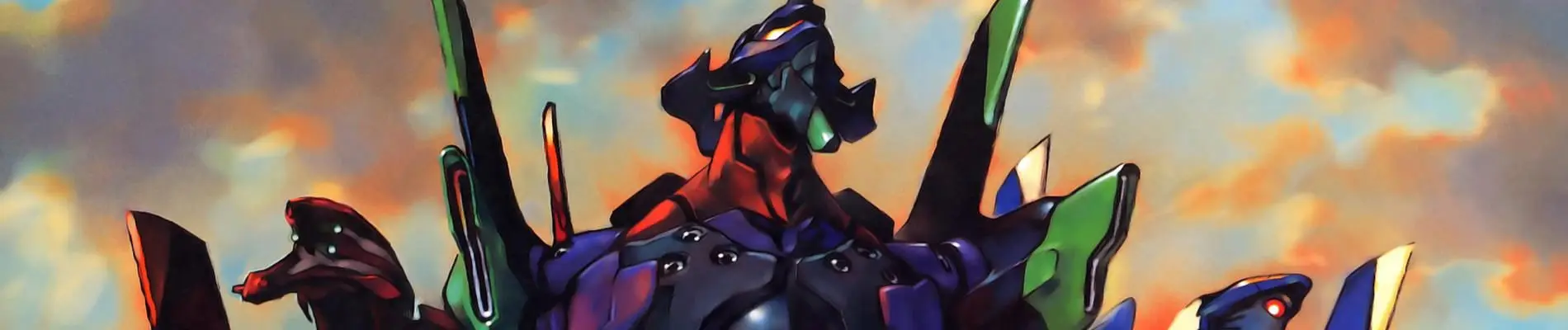
Evangelion has one story and three endings. The TV series ended in 1996 with two episodes that take place almost entirely inside the main character's head. A year later, The End of Evangelion showed the same events from outside, as an apocalypse. Then, from 2007 to 2021, director Hideaki Anno remade the whole thing as four films that start as a remake and end somewhere completely new. Seven titles in all, and most of the confusion comes from not knowing which ones replace which.
The good news is that the order itself is short and mostly settled. This guide gives it, explains the one real debate (where The End of Evangelion goes), and says what to skip. If watch-order terms like recap film or remake are new to you, start with our guide to watching anime in order. Every entry is also listed on our Neon Genesis Evangelion watch order page.
The short answer
- Neon Genesis Evangelion (1995–1996), TV, 26 episodes
- The End of Evangelion (1997), film
- Evangelion: 1.0 You Are (Not) Alone (2007)
- Evangelion: 2.0 You Can (Not) Advance (2009)
- Evangelion: 3.0 You Can (Not) Redo (2012)
- Evangelion: 3.0+1.0 Thrice Upon a Time (2021)
Skip Death & Rebirth (1997). That's the whole list for most people. The rest of this guide explains why, and covers the alternatives.
1. Neon Genesis Evangelion (1995–1996)
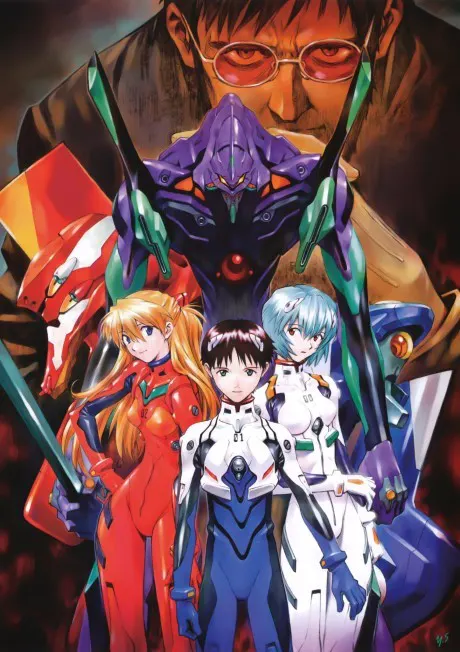
TV · 1995 · 26 episodes · GAINAX · 83% on AniList · Sub & dub
Action, Drama, Mecha
Neon Genesis Evangelion aired on TV Tokyo from October 1995 to March 1996, 26 episodes, made by Gainax and directed by Anno. Fifteen years after a disaster killed half the world's population, giant beings called Angels attack the city of Tokyo-3. The only defense is the Evangelions, giant machines that only certain 14-year-olds can pilot. Shinji Ikari arrives in the first episode because his estranged father summoned him, not to reconnect but to put him in a cockpit. He says no, then sees the alternative, and gets in.
That first episode is a good guide to the rest. It looks like a robot show, and for the first half the series often is one: monster-of-the-week fights, school comedy and a lot of style. But the story is about people who can't stand being close to each other and can't stand being alone, and from around episode 16 it becomes much darker and more personal. Episodes 25 and 26 drop the plot almost completely and play out as a psychological session inside Shinji's mind. Some viewers love them. Many were baffled, and some were angry, which is part of why the next film exists.
A note on versions: some home releases and streams use the "director's cut" versions of episodes 21 to 24, with extra scenes added for later video releases. Either version is fine for a first watch. The added scenes are small and don't change the story.
2. The End of Evangelion (1997)
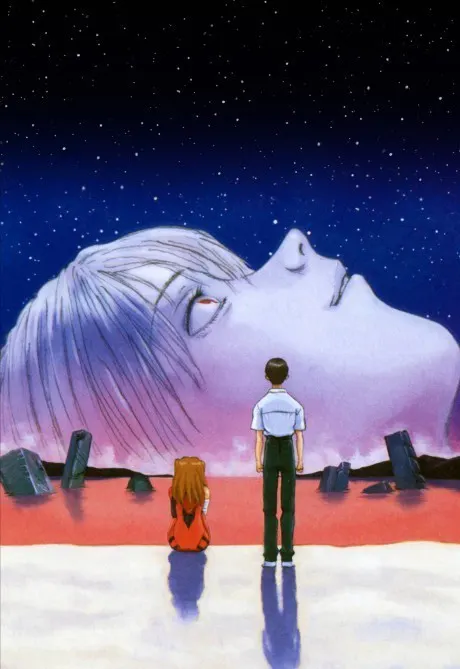
Neon Genesis Evangelion: The End of Evangelion
Movie · 1997 · GAINAX · 86% on AniList · Sub & dub
Action, Drama, Mecha
The End of Evangelion was released in July 1997. It's two connected episodes, numbered 25' and 26', that retell the end of the series as events in the outside world: what NERV, the organization behind the Evas, was actually doing, and what happens to everyone when it gets done. It's violent, disturbing and frequently called one of the best anime films ever made. It's also not a gentle watch, so know that going in.
The debate: after episode 24, or after episode 26?
The End of Evangelion picks up after episode 24, and it covers the same stretch of story as episodes 25 and 26 from a different angle. That raises the question of whether you should watch the TV ending at all. The two main options:
- Episodes 1–26, then The End of Evangelion. The most common recommendation, and ours. It's the order everyone saw them in, and the film plays partly as a response to the TV ending. You'll get both halves of the picture: the inner version first, then the outer one.
- Episodes 1–24, then The End of Evangelion, then 25–26. Some fans prefer this, because it gets you from episode 24 straight into the action, and puts the TV ending last as a kind of coda. It's a fine choice, and nothing is spoiled either way.
What you shouldn't do is skip episodes 25 and 26 entirely. The two endings were made to be read against each other, and the TV version is a large part of how people talk about the show.
Skip: Death & Rebirth (1997)
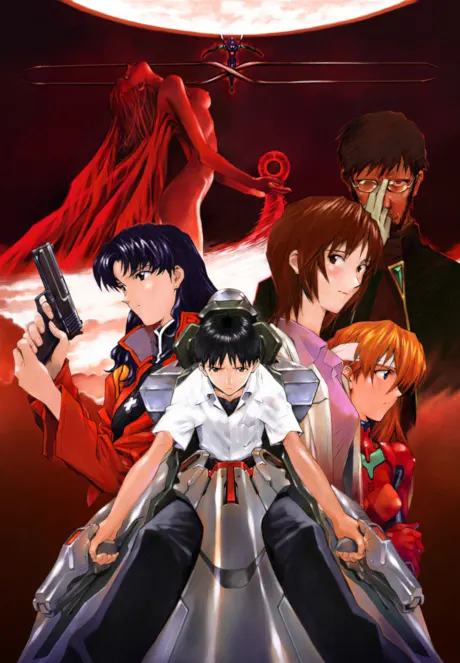
Neon Genesis Evangelion: Death & Rebirth
Movie · 1997 · GAINAX · 73% on AniList · Sub & dub
Drama, Mecha, Psychological
Death & Rebirth came out in March 1997, when The End of Evangelion wasn't finished. "Death" is a recap of episodes 1 to 24, cut out of order with a few new shots. "Rebirth" is the first part of what became The End of Evangelion, unfinished. Once The End of Evangelion came out, it replaced Rebirth completely. Watch Death only if you want a quick refresher of the series before the film; nobody needs to watch Rebirth.
The Rebuild of Evangelion (2007–2021)
In 2006 Anno founded his own studio, Khara, and started a series of four films called Rebuild of Evangelion. They begin as a remake of the TV series, with new animation and the same characters, and steadily turn into a different story. All four are required, in order. A rough guide to how each one relates to the original:
Evangelion: 1.0 You Are (Not) Alone (2007)
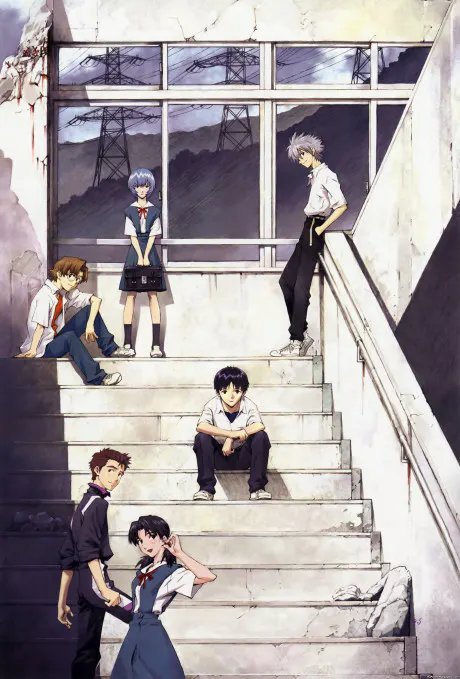
Evangelion: 1.0 You Are (Not) Alone
Movie · 2007 · Studio Khara · 78% on AniList · Sub & dub
Action, Drama, Mecha
1.0 covers roughly the first six episodes of the TV series, often shot for shot, in about 100 minutes. If you've just watched the series, it'll feel like a very polished summary. The differences are small, but a few of them hint that this isn't the same world.
Evangelion: 2.0 You Can (Not) Advance (2009)
Evangelion: 2.0 You Can (Not) Advance
Movie · 2009 · Studio Khara · 81% on AniList · Sub & dub
Action, Drama, Mecha
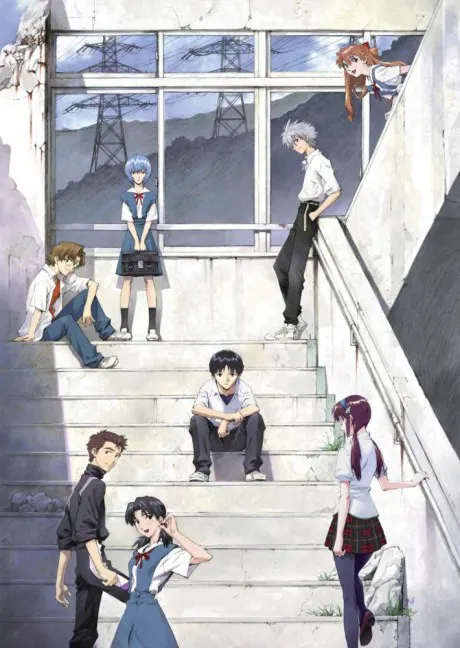
2.0 is where the Rebuild goes its own way. A new pilot, Mari Makinami, appears, familiar characters arrive in a different order and make different choices, and the climax departs from the series completely. Many fans consider it the best of the four.
Evangelion: 3.0 You Can (Not) Redo (2012)
Evangelion: 3.0 You Can (Not) Redo
Movie · 2012 · Studio Khara · 76% on AniList · Sub & dub
Action, Drama, Mecha
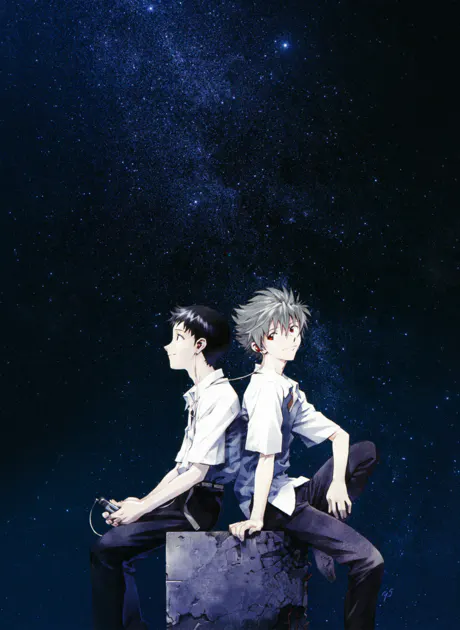
3.0 jumps ahead 14 years. Shinji wakes up in a world he doesn't recognize, and the film explains almost nothing, on purpose, because he doesn't understand it either. It's the most divisive Evangelion film. If it frustrates you, keep going; the last film answers most of what it holds back.
Evangelion: 3.0+1.0 Thrice Upon a Time (2021)

Evangelion: 3.0+1.0 Thrice Upon a Time
Movie · 2021 · Studio Khara · 85% on AniList · Sub & dub
Action, Drama, Mecha
3.0+1.0 was delayed several times, partly by the pandemic, and finally opened in Japan in March 2021, nearly nine years after 3.0. It's two and a half hours long and closes the Rebuild for good. It's also an ending to the whole Evangelion project, with references to the TV series and The End of Evangelion, which is the strongest reason to watch the original first. In August 2021, Amazon Prime Video released all four films worldwide, with the first three in updated versions numbered 1.11, 2.22 and 3.333. The differences from the theatrical cuts are minor.
Can you start with the Rebuild films?
Technically, yes. 1.0 re-introduces everything from scratch, and the films are better looking and shorter than the series. Some people do watch them first and are fine.
We don't recommend it. The Rebuild's changes are designed to be noticed: scenes set up the way you remember and then turn another way. And the last film leans heavily on what the TV series and The End of Evangelion did. If you start with the Rebuild, 3.0+1.0 loses much of its weight. The original takes about 12 hours including the film. It's worth it.
Are the Rebuild films a sequel or a reboot?
Fans still argue about this. The simple answer is that the Rebuild is a new version of the story, and you don't need any theory to enjoy it. There are hints, though, especially in the first and last films, that the Rebuild might be connected to the original rather than replacing it, possibly as a repeat or a continuation. Anno has never published a definitive answer, so treat any "it's a sequel" or "it's a reboot" claim online as a fan reading, not a fact.
What else is there?
There's a long list of Evangelion spin-off manga, games and short comedies, but no other anime you need for the story. A new Evangelion TV series was announced in February 2026, produced by Khara and CloverWorks, with scripts by Yoko Taro, the creator of the NieR games. It's directed by Kazuya Tsurumaki, who also co-directed the Rebuild films, with a co-director from the Rebuild staff. No release date or story details have been confirmed, so we can't say yet how it connects to the rest.
Tsurumaki and Khara also made Mobile Suit Gundam GQuuuuuuX (2025), which feels a lot like Evangelion in style. To watch it properly you'll need some Gundam first, which our Gundam watch order sorts out; the core Universal Century entries are also on our Mobile Suit Gundam watch order page.
How long it takes, and who should skip it
The TV series is about 10 hours, The End of Evangelion adds under 90 minutes, and the four Rebuild films add about eight more, so the whole thing is under 20 hours. That's short for a franchise with this much reputation, and it's realistic to finish over a few weekends.
It's not for everyone. Evangelion deals directly with depression, trauma and self-loathing, and The End of Evangelion includes graphic violence and disturbing sexual content. If you want a robot show that's mainly about the fights, this one will frustrate you on purpose, especially after the halfway point. If you want a story about why people hurt each other, and you're fine with not every question being answered, it's one of the most rewarding anime there is.
The full list, in one place
- Neon Genesis Evangelion, episodes 1–26 (1995–1996)
- The End of Evangelion (1997), or watch it after episode 24 and the TV ending afterward
- Evangelion: 1.0 You Are (Not) Alone (2007)
- Evangelion: 2.0 You Can (Not) Advance (2009)
- Evangelion: 3.0 You Can (Not) Redo (2012)
- Evangelion: 3.0+1.0 Thrice Upon a Time (2021)
- Skip: Death & Rebirth (1997)
Where to go next
If Evangelion's mix of robots and mental collapse worked for you, our list of the best psychological anime has more in that direction, and our best mecha anime list puts Evangelion next to the robot shows that came before and after it. You can also browse every psychological anime and mecha anime we carry. For another franchise where the same story was retold in films and TV series that don't line up, see our Ghost in the Shell watch order. And if you've never seen Evangelion, try the first episode on Discover before committing to 26.