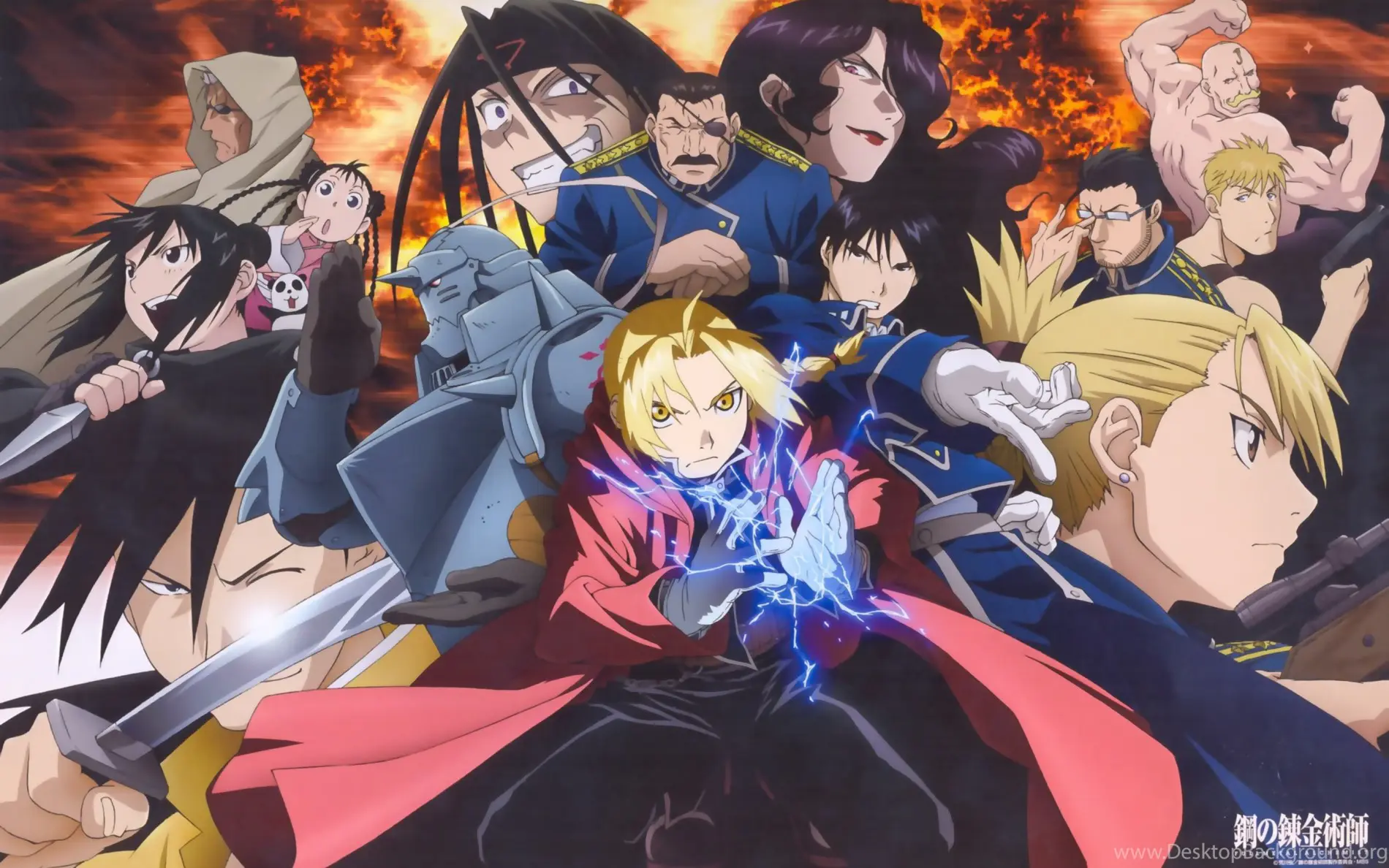
Fullmetal Alchemist has two anime, and they aren't a series and a sequel. They're two adaptations of the same manga, made by the same studio six years apart. The first, from 2003, ran out of manga to adapt and invented its own story and ending. The second, Brotherhood, from 2009, follows the finished manga to the end. Each has its own film, and neither film fits the other show.
That's why the usual question isn't "what order" but "which one first." This guide answers that, gives the order for each version, and says where the films and OVAs fit. For the general terms used here, such as anime-original, filler and OVA, see our guide to watching anime in order.
The short answer
- Fullmetal Alchemist: Brotherhood (2009–2010), 64 episodes
- The Sacred Star of Milos (2011), optional side-story film
- Optional: Fullmetal Alchemist (2003–2004), 51 episodes, then Conqueror of Shamballa (2005)
Watch Brotherhood first if you're new. Watch the 2003 series afterward if you want a different take on the same characters. The sections below explain why, and why some fans argue the other way.
Where it comes from
Hiromu Arakawa's manga ran in Square Enix's Monthly Shonen Gangan from 2001 to 2010, 27 volumes. Two brothers, Edward and Alphonse Elric, try to bring their dead mother back with alchemy and pay for it: Ed loses a leg, and Al loses his entire body, his soul bound to a suit of armor. Ed gives up his arm to save him. Years later, with a metal arm and leg, Ed becomes a State Alchemist, a weapon of the military, to search for the Philosopher's Stone and get their bodies back.
Both anime are by Studio Bones. Both start from that premise. Where they go after the first dozen or so episodes is completely different.
1. Fullmetal Alchemist: Brotherhood (2009–2010)
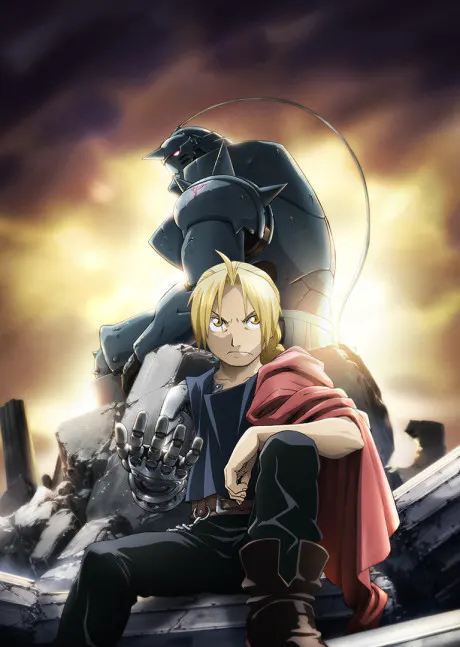
Fullmetal Alchemist: Brotherhood
TV · 2009 · 64 episodes · bones · 90% on AniList · Sub & dub
Action, Adventure, Drama
Fullmetal Alchemist: Brotherhood aired from April 2009 to July 2010, 64 episodes, directed by Yasuhiro Irie. It adapts the entire manga, and it finished within weeks of the final chapter's publication, so it has the ending Arakawa wrote. It's one of the most widely recommended anime ever made, and it works as a complete story from start to finish, with no filler to skip.
The first episode is unusual. It's an anime-original story about a rogue alchemist who freezes people, made to introduce the cast and the military in one action-packed episode, and it's not in the manga. Don't skip it, but don't judge the show by it either. Episode 2 tells the brothers' backstory, and from there, the story moves quickly through events the 2003 series had already shown at length. That fast early pace is the main complaint people have about Brotherhood. It slows down and deepens around the first third, once it moves beyond what the earlier show covered, and the second half is a long, tightly plotted war.
Brotherhood is often recommended as a first anime, partly because of how well its English dub holds up. If you're choosing, our article on sub vs. dub explains the trade-offs, and both versions are good here.
The Sacred Star of Milos (2011)
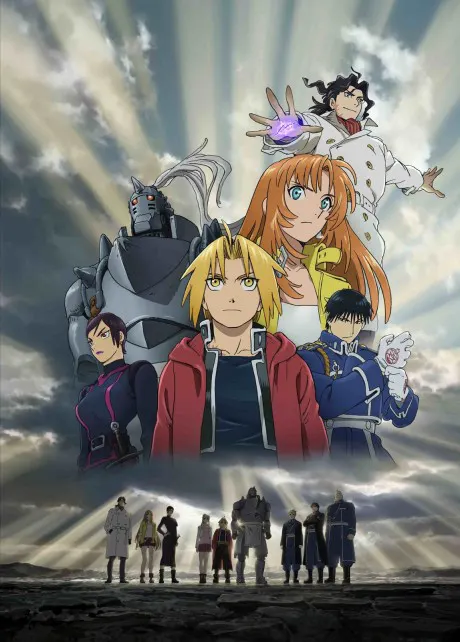
Fullmetal Alchemist: The Sacred Star of Milos
Movie · 2011 · bones · 69% on AniList · Sub & dub
Action, Adventure, Comedy
The Sacred Star of Milos is a side-story film made in the Brotherhood style but not part of the manga. Ed and Al chase an escaped prisoner to a border town where an oppressed people are fighting for their land. It doesn't affect the main story, and fan guides disagree about exactly where it fits: most place it somewhere around episodes 15 to 25, and after episode 20 is a common suggestion. You can also simply watch it after finishing Brotherhood, which is what we'd do. It's a solid action film, not an essential one.
The Brotherhood OVAs and specials
Fullmetal Alchemist: Brotherhood OVA Collection
OVA · 2009 · 4 episodes · bones · 77% on AniList · Sub & dub
Adventure, Drama, Fantasy
The Brotherhood OVA Collection is four short side stories, released with the Japanese home video, about minor characters and moments the series skips. One fan guide suggests placing them after episodes 14, 20 and 30, but they work just as well after the finale, and none are required. The 4-Koma Theater shorts are comedy sketches based on Arakawa's four-panel strips, for fans only.
Fullmetal Alchemist: Brotherhood: 4-Koma Theater
Special · 2009 · 16 episodes · bones · 70% on AniList · Sub & dub
Comedy, Fantasy
2. Fullmetal Alchemist (2003–2004)
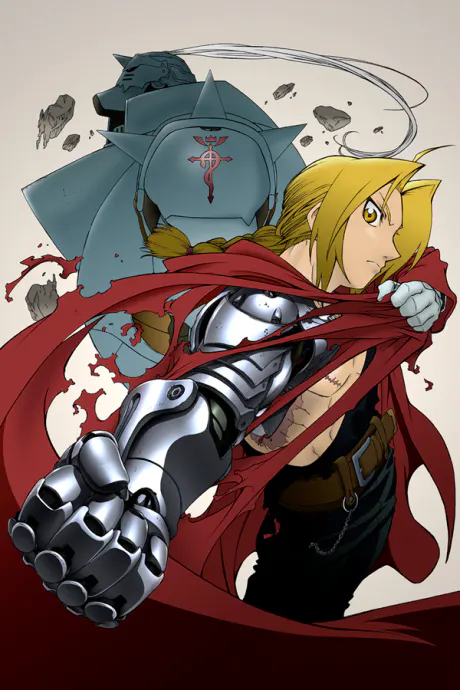
TV · 2003 · 51 episodes · bones · 79% on AniList · Sub & dub
Action, Adventure, Drama
Fullmetal Alchemist, the 2003 series, aired from October 2003 to October 2004, 51 episodes, directed by Seiji Mizushima with Sho Aikawa as head writer. When it started, the manga had only a few volumes out. At first it follows the manga loosely, spending more time on early stories and standalone episodes. Its opening episodes include the case in the desert town of Lior, where the brothers expose a cult leader, and it spends more time than Brotherhood on the brothers' early cases. Around the halfway point it goes its own way, with its own explanation of the Homunculi, a different main villain and an original ending.
It isn't a worse version so much as a different show. It's darker in places, more focused on the cost of what the brothers did, and its world feels smaller and sadder. Several characters get very different fates. Some fans prefer it, and its first half is often called better paced than Brotherhood's opening, because it doesn't assume you've seen anything before.
The 2003 series is not canon to the manga, but it's not filler either. It's a complete, separate story. Mizushima later directed Gundam 00, which our Gundam watch order covers, with the full 00 list on the Gundam 00 watch order page.
Conqueror of Shamballa (2005)
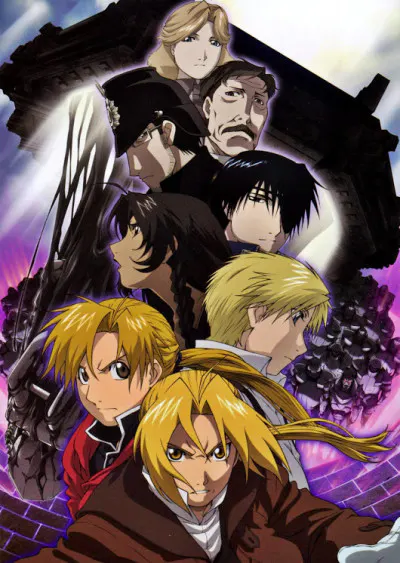
Fullmetal Alchemist: The Movie - Conqueror of Shamballa
Movie · 2005 · bones · 71% on AniList · Sub & dub
Action, Drama, Fantasy
Watch Fullmetal Alchemist: The Movie - Conqueror of Shamballa
Conqueror of Shamballa is the direct sequel to the 2003 series, and it only makes sense after its final episode. It picks up with Ed in a world without alchemy, in Germany in 1923, and closes the 2003 story for good. Don't watch it after Brotherhood without the 2003 series; nothing in it will connect.
The 2003 series also has a short Premium OVA Collection of extras, which is optional.
Brotherhood or 2003 first? The honest trade-off
- Brotherhood first is what most guides and most fans recommend, and it's ours. It's the complete story as Arakawa wrote it, with the ending she intended, and it's the version everyone discusses. Watching it first means you get the full mystery fresh.
- 2003 first has a real case too. Brotherhood rushes the early story because it was made for viewers who had seen the 2003 show. Watching 2003 first gives those early episodes room to breathe, and its different second half and ending won't spoil Brotherhood's, since they're different.
The catch with 2003 first is commitment: you're adding 51 episodes and a film before the version most people consider the definitive one. If you watch only one, make it Brotherhood. If you love it, the 2003 series is the best "what if" you can watch next.
How the two versions differ, without spoilers
If you've seen one and wonder whether the other is worth it, these are the differences you'll notice without anyone ruining the plot:
- The cast. Several major Brotherhood characters never appear in the 2003 series, because Arakawa hadn't introduced them yet. That includes Ling Yao and May Chang from the eastern country of Xing, and Major General Olivier Armstrong of the northern border. If you liked them, the 2003 show will feel like it's missing a whole side of the world.
- The Homunculi. Both versions have artificial humans named after the seven deadly sins, but where they come from and what they want are completely different. This is the biggest single change.
- The brothers' father. Van Hohenheim's role in the story is different in each version, and so is his relationship with the boys.
- Scope. Brotherhood becomes a story about the whole country and its history. The 2003 series stays closer to the brothers, their guilt and a handful of people around them.
- Tone. Brotherhood keeps more of the manga's comedy, including Ed's running jokes about his height. The 2003 series is moodier, and its villains are often sadder than they are frightening.
Because of these differences, watching both doesn't feel like a repeat after the first stretch of episodes. It feels like the same characters living two different lives.
How long does it take?
Brotherhood is 64 episodes of about 24 minutes, a little under 26 hours. At three episodes a night, that's about three weeks. The 2003 series plus Conqueror of Shamballa adds about 22 hours more. If that's too much at once, Brotherhood on its own is the complete story; you lose nothing by stopping there. And you don't need to read the manga to follow either show, though the manga is worth reading if you want Arakawa's art and the few small scenes Brotherhood trimmed.
Who should skip it
Fullmetal Alchemist is a broad-appeal show, but it isn't gentle. Both versions include war crimes, body horror and the deaths of children and animals, and one early storyline in particular, shared by both versions, is famous for being upsetting. Brotherhood is fine for most teenagers, and the 2003 series is a little heavier. If you want a lighter adventure, start elsewhere and come back later.
What about the live-action films?
There are three Japanese live-action films: Fullmetal Alchemist (2017) and a two-part finale, The Revenge of Scar and The Final Alchemy (2022). They adapt the manga in a condensed form. They're not needed, and they don't replace either anime.
The full list
Brotherhood route:
- Fullmetal Alchemist: Brotherhood, episodes 1–64 (2009–2010)
- The Sacred Star of Milos (2011), after episode 20 or after the finale
- Brotherhood OVA Collection, any time after the middle of the series
2003 route:
- Fullmetal Alchemist, episodes 1–51 (2003–2004)
- Conqueror of Shamballa (2005)
- Premium OVA Collection, optional
Where to go next
Brotherhood is often the show that turns a casual viewer into an anime fan, so our list of the best anime for beginners is a natural next step, and our best shounen anime list has more stories of growing up through a long war. You can also browse all adventure anime and fantasy anime we carry. For another franchise with a long main series and side films you can place where you like, see our Naruto watch order (or jump to the Naruto watch order page), and if you want a franchise where the same story was told twice with different endings, our Evangelion watch order is the closest match. If you're still torn between the two versions, the first episode of each is on Discover, though remember that Brotherhood's opener is the least typical episode of its run.