OVA stands for original video animation: anime made to be sold or rented on home video instead of shown on TV or in cinemas. You'll also see OAV (original animated video), which means the same thing. An OVA can be a single bonus episode, a short series of three to six episodes, or, in one famous case, a 110-episode space opera.
Our anime glossary gives the one-line definition, and the pillar guide on how to watch anime in order has a quick test for deciding whether to skip an OVA. This article covers what that test doesn't: where the format came from, why some of the most respected anime ever made were OVAs, how OVA differs from ONA, OAD and "special," and which classic OVAs we have on the site.
OVA, ONA, OAD, special: the labels on a show card
Every show card on MyAnimeVerse shows a format label. Here's what each one means in practice.
- TV: broadcast on Japanese television, usually weekly in 12- or 24-episode seasons. "TV short" is the same, with episodes of a few minutes.
- Movie: released in cinemas first.
- OVA: released straight to home video (VHS and LaserDisc in the 1980s and 1990s, DVD and Blu-ray since). Today many are bonus episodes packed with a Blu-ray set.
- OAD (original animation DVD): a variant where the episode comes bundled with a special edition of a manga volume. Databases, including ours, usually label these as OVA too. Attack on Titan: No Regrets, which the glossary mentions, began this way (it sits in the Attack on Titan watch order).
- ONA (original net animation): released online first, on a streaming service or video site. This is the modern successor to the OVA, and it's how Netflix, YouTube and others commission anime.
- Special: a catch-all for one-off episodes, TV specials, recaps and short extras that don't fit elsewhere.
These labels describe how something was released, not how good or important it is. To list them on the site, open Browse with the OVA format filter; you can switch it to ONA or Special from the same menu.
Where OVAs came from
The first anime generally credited as an OVA is Dallos, a science fiction series about a rebellion on a mining colony on the Moon, produced by Studio Pierrot. It was co-directed by Hisayuki Toriumi and a young Mamoru Oshii, his first job as a director. Its first release, on December 21, 1983, was actually episode 2, which was finished before episode 1; the rest followed over the next several months. We don't have Dallos on the site, but Oshii's later work comes up again below, and our Mamoru Oshii guide covers his career.
Dallos landed just as home video players were spreading across Japan, and the format grew quickly through the late 1980s. OVAs had real advantages over TV:
- No broadcast rules. Without TV standards or sponsors, OVAs could be far more violent, sexual or strange. A lot of the gore and adult content that gave 1980s anime its reputation in the West came from OVAs.
- Niche audiences. A TV show needs mass appeal. An OVA only needs enough fans to buy or rent tapes, so mecha fans, hard sci-fi fans and fans of specific novels could get anime made just for them.
- Higher quality per minute. With no weekly deadline and a smaller episode count, studios could spend more on each episode. Many OVAs look better than TV anime from the same years.
- A training ground. Young directors got their first projects on OVAs, which is why the format shows up in so many famous careers.
The boom faded in the 1990s as the economy slowed and late-night TV anime took over the niche-audience role. OVAs never disappeared, but they shifted from being a main format to mostly bonus content.
Classic OVAs worth watching
These are the OVAs people still recommend decades later, all available here. None of them are ranked; they're examples of what the format made possible.
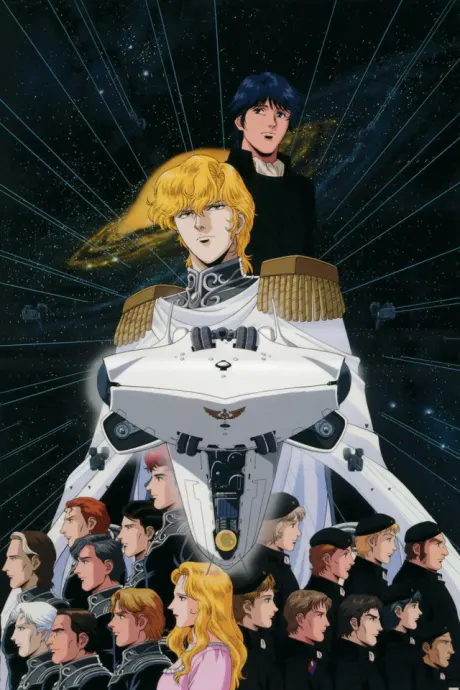
OVA · 1988 · 110 episodes · T.P.O · 88% on AniList · Sub
Drama, Sci-Fi
Legend of the Galactic Heroes is the format's biggest achievement: 110 episodes released between 1988 and 1997, adapting Yoshiki Tanaka's novels about a war between a galactic empire and a democratic alliance. It's built around two brilliant commanders, the ambitious Reinhard and the reluctant historian-turned-admiral Yang Wen-li, and it spends as much time on politics and ethics as on fleet battles. The first two episodes tell the same battle from each commander's side, and they're the ideal test. Expect dated visuals and a huge cast. The Legend of the Galactic Heroes watch order lists the films around it, and a modern remake, Die Neue These, retells the story with Production I.G.
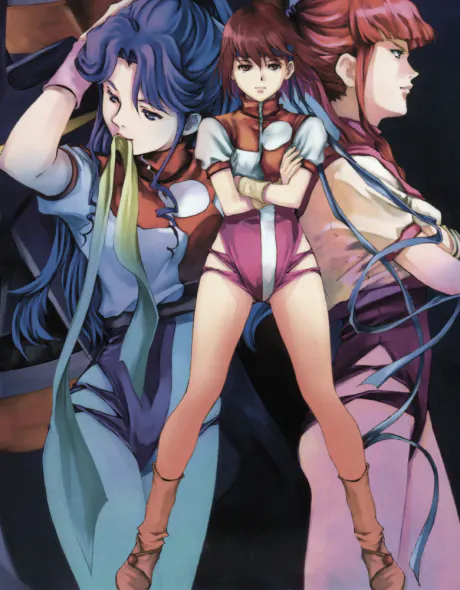
OVA · 1988 · 6 episodes · GAINAX · 77% on AniList · Sub & dub
Action, Drama, Mecha
Gunbuster (1988) is Gainax's six-episode space war story and Hideaki Anno's first work as a director. It starts as a parody of sports anime, with a girl at a pilot academy training to fly a giant robot, and turns into a serious story about relativity: every mission at near-light speed means years pass on Earth. The last episode is in black and white, a choice that still lands. Our Hideaki Anno guide picks up from here to Neon Genesis Evangelion, whose own order is in the Evangelion watch order.
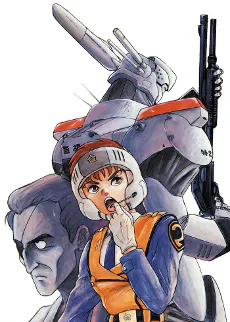
OVA · 1988 · 7 episodes · Studio DEEN · 72% on AniList · Sub & dub
Comedy, Mecha, Sci-Fi
Mobile Police Patlabor (1988), directed by Mamoru Oshii, is a seven-episode OVA about a police unit that pilots robots in a near-future Tokyo where construction mecha are everywhere. It's closer to a workplace comedy than a war story. It also shows how an OVA could start a franchise: it led to the TV series Patlabor the Mobile Police and to a run of films, the first two directed by Oshii and among the most respected anime of their era.
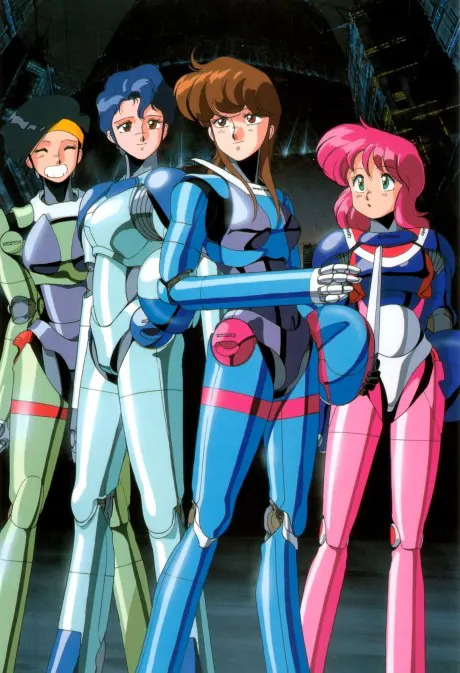
OVA · 1987 · 8 episodes · AIC · 70% on AniList · Sub & dub
Action, Mecha, Sci-Fi
Bubblegum Crisis (1987) is eight episodes of cyberpunk action about four women in powered armor fighting rogue androids in a future MegaTokyo. Its look (neon, synth-rock, Blade Runner city) helped define what Western fans thought "anime" meant in the early 1990s, and it's a key influence on later shows on our best cyberpunk anime list.
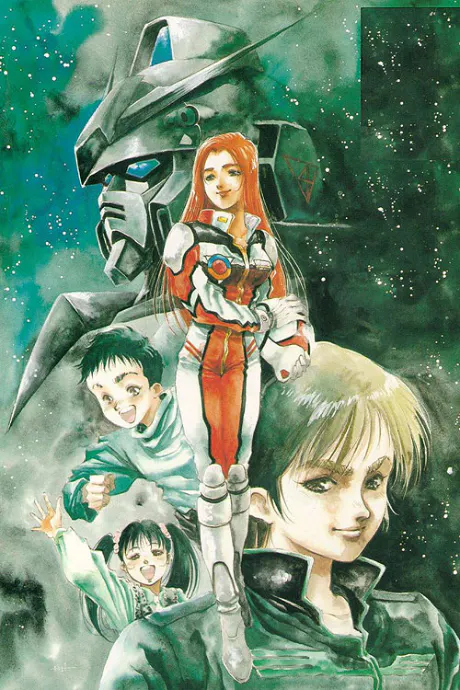
Mobile Suit Gundam 0080: War in the Pocket
OVA · 1989 · 6 episodes · Sunrise · 80% on AniList · Sub & dub
Adventure, Drama, Mecha
Mobile Suit Gundam 0080: War in the Pocket (1989) was the first Gundam OVA, and it tells the war from the point of view of a schoolboy in a neutral space colony who befriends an enemy soldier. Six episodes, no chosen-one pilot, and one of the saddest endings in the franchise. Gundam 0083: Stardust Memory (1991) followed as a 13-episode OVA with much bigger battles. Both fit into the timeline in our Gundam watch order.
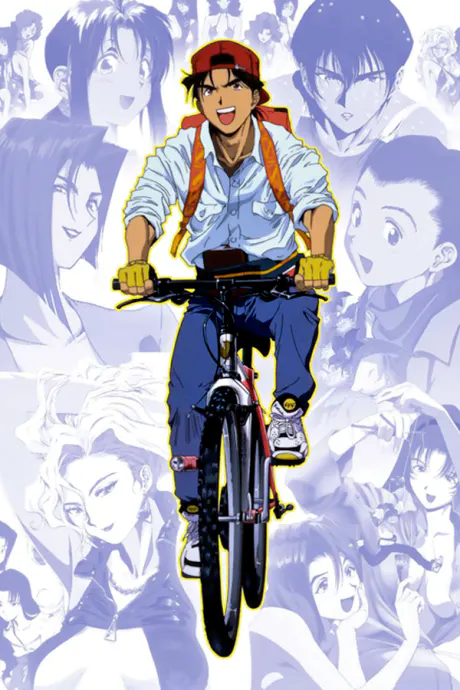
OVA · 1995 · 6 episodes · APPP · 78% on AniList · Sub & dub
Adventure, Comedy, Ecchi
Golden Boy (1995) is a six-episode comedy about a drifter who takes odd jobs to "study" life, and it's a good reminder that OVAs weren't all serious. It's crude and very much for adults, which is exactly the kind of show that could only exist outside TV at the time.
OVAs that continue or complete a TV series
The format also let studios finish stories that TV couldn't. When a TV run ended early, fans who'd buy the next part on video were sometimes enough to fund it.
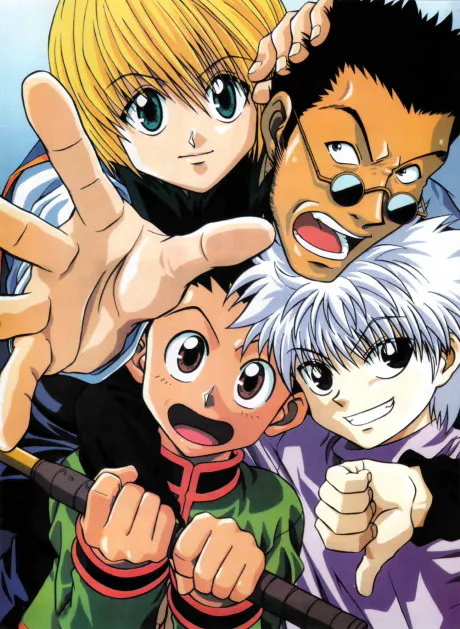
TV · 1999 · 62 episodes · Nippon Animation · 83% on AniList · Sub & dub
Action, Adventure, Fantasy
The original Hunter x Hunter (1999) TV series stopped at 62 episodes, partway through the Yorknew City arc. Nippon Animation then finished that arc in a 2002 OVA and adapted the next one in two more: Greed Island (8 episodes, 2003) and Greed Island Final (14 episodes, 2004). If you watch the 1999 version, those OVAs are the rest of the story, not extras. The site's 1999 Hunter x Hunter order page lists the TV series and all three OVAs, and our Hunter x Hunter watch order compares it with the 2011 remake.
OVAs that tell a story TV couldn't
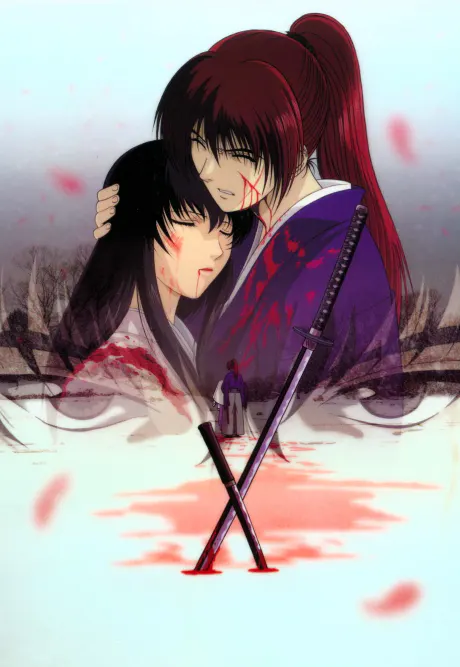
Rurouni Kenshin OVA: Trust & Betrayal (Tsuioku-hen)
OVA · 1999 · 4 episodes · Studio DEEN · 85% on AniList · Sub & dub
Action, Drama, Romance
Rurouni Kenshin: Trust & Betrayal (1999) is a four-episode prequel showing Kenshin's past as an assassin, before the gentle wanderer of the TV series. It's slow, quiet and bloody, it has almost none of the TV show's comedy, and it's often named one of the best anime OVAs ever made. You can watch it without the TV series, though you'll get more from it if you know who Kenshin becomes. The Rurouni Kenshin watch order lists it alongside the later Reflection OVA, and our Rurouni Kenshin guide covers the 2023 remake too.
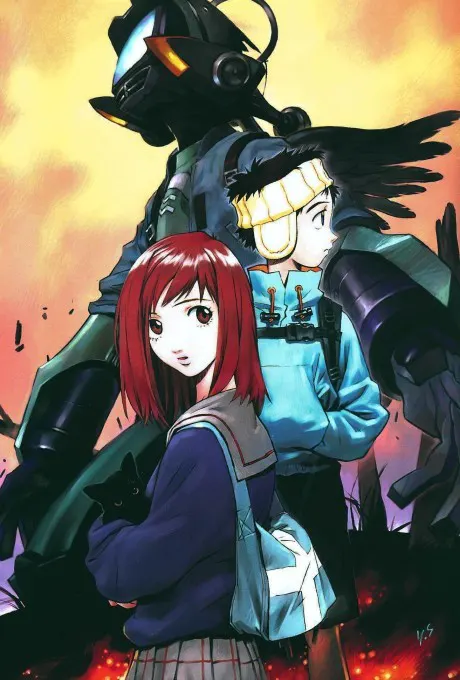
OVA · 2000 · 6 episodes · GAINAX · 79% on AniList · Sub & dub
Action, Comedy, Mecha
FLCL (2000) is six episodes from Gainax and Production I.G about a bored 12-year-old in a small town, a woman on a Vespa who hits him with a bass guitar, and robots that come out of his forehead. It runs on The Pillows' soundtrack and makes sense on a second watch more than a first. It's a coming-of-age story in disguise, and its six-episode length is part of why it works. Later seasons were made for TV years afterward (see the FLCL watch order), and most fans treat the original six as the essential part.
OVAs today, and the rise of the ONA
New OVAs still come out, but most are short: an extra episode on a Blu-ray, a beach or hot-spring episode, a side story bundled with a manga volume. They're usually optional, and the pillar guide's test handles them well.
The role the OVA used to play, anime made for a specific audience without TV's limits, has moved to streaming. ONAs are now where you'll find the adult-oriented, high-budget, short-run projects that would have been OVAs in 1988:
- Devilman Crybaby (2018), Science SARU's 10-episode Netflix adaptation of Go Nagai's horror manga, far more violent than TV would have allowed.
- Cyberpunk: Edgerunners (2022), Trigger's 10-episode series set in the Cyberpunk 2077 game world.
- PLUTO (2023), Studio M2's eight-episode adaptation of Naoki Urasawa's reworking of an Astro Boy story.
The pattern is the same as in the 1980s: short runs, higher budgets per episode, more freedom, and an audience that pays directly instead of through TV ratings.
Are OVAs canon? A practical answer
It depends on which of three kinds you're looking at:
- Continuations like Greed Island: canon, and essential if you're following that version.
- Prequels and side stories like Trust & Betrayal or No Regrets: canon or close to it, but optional, and best watched after the main series.
- Bonus episodes like beach episodes and comedy shorts: rarely canon, safe to skip, fun if you're already a fan.
Standalone OVAs like Gunbuster, Patlabor or Legend of the Galactic Heroes don't have this problem: they are the main story. If you're tracking a franchise with lots of extras, the filler explainer covers the related question of anime-original episodes, and our simulcast explainer covers how new TV episodes reach you, by contrast.
Where to start
If you've never watched an OVA, start with Gunbuster or FLCL, both six episodes and done in an evening. If you want a commitment, Legend of the Galactic Heroes is one of the most rewarding long series in anime. Our best sci-fi anime and best mecha anime lists include several OVAs alongside TV shows, and the mecha genre page is where most 1980s OVAs live. Or just try a few first episodes on Discover.
Related explainers
- What is a light novel?: the source of Record of Lodoss War and many OVA side stories.
- How anime is made: the production process OVAs, TV and films all share.
- What is mecha?: the genre that dominated the OVA boom.
- How anime seasons work: the TV calendar OVAs sit outside of.