Here's the short answer: anime is a kind of cartoon, in the plain sense that it's drawn animation. What fans mean by "anime vs. cartoons" is something narrower: animation made in Japan, for the Japanese market, versus animation made elsewhere, mostly in the United States. The two traditions grew up with different budgets, audiences and source material, and that shows on screen. But the differences are tendencies, not rules, and a growing number of shows sit right on the line.
This explainer covers what the word means in Japan (it's not what you think), the real differences between the two traditions, the myths worth dropping, and the cases that start arguments. For any terms that come up, like OVA or seiyuu, check our anime glossary.
In Japan, everything is anime
Anime is simply the Japanese short form of animēshon, the English word "animation." In Japan it covers all of it: Studio Ghibli, Pixar, Disney, Tom and Jerry. A Japanese viewer can call a Disney film "anime" with no contradiction at all.
Outside Japan, the word picked up a narrower meaning: animation from Japan. English dictionaries now define it that way, usually adding a nod to its look and its fondness for science fiction and fantasy. So when the question is "anime or cartoon," it's really a question about origin and style, not about the medium.
Where the two traditions actually differ
1. The audience
This is the biggest difference. American TV animation spent decades aimed mainly at children and families, with adult animation (The Simpsons, adult comedies) growing as its own lane. Japanese TV animation split much earlier. A large share of anime airs late at night in Japan and is made for teenagers and adults, with violence, romance and politics to match. Kids' anime exists too and is huge: Doraemon and Crayon Shin-chan are family staples in Japan, closer in spirit to Saturday-morning cartoons than to anything on a late-night schedule.
That's why someone who's only seen kids' animation can be startled by Ghost in the Shell or Paprika, and why "it's just cartoons" doesn't survive long once you've watched a few. Our anime for people who don't like anime list is built for exactly that skeptic.
2. Where the stories come from
Most American animation is original or based on toys, comics or films. Most anime is adapted from something Japanese: a manga, a light novel, a video game. That changes the storytelling. A show adapting a long manga tends to be serialized, with arcs that continue across episodes and seasons, and often ends where the source material was when production stopped. Our manga vs. anime explainer covers how that relationship works.
3. How it's made and paid for
Anime is usually financed by a production committee of companies (publishers, music labels, toy makers, broadcasters) who split the cost and the profits. Budgets per episode are generally tighter than for major American productions, and studios developed techniques to stretch them. Osamu Tezuka's Astro Boy, the 1963 series that set the pattern for weekly TV anime, relied on limited animation: fewer drawings per second, reused shots, held poses with only the mouth moving. American TV studios like Hanna-Barbera used limited animation too, but anime turned the constraint into a style, putting its effort into dramatic still frames, camera moves and a few big sequences per episode. Our how anime is made explainer walks through the pipeline.
4. How the voices are recorded
American animation usually records the voices first and animates to match. Japanese TV anime usually records after the animation, with actors performing to footage that's often unfinished. Japan also has a dedicated voice acting profession with its own schools and fandom, covered in our what is a seiyuu explainer.
5. The look
Big eyes, small mouths, sharp chins and colorful hair are the clichés. Some of that traces back to Tezuka, who openly admired early Disney and American cartoons and adapted their round, expressive eyes for manga. But there isn't one anime style. Compare AKIRA, Doraemon and Paprika and you get three different worlds. Our anime art styles explainer breaks down the main looks.
Three myths worth dropping
- "Anime is for adults, cartoons are for kids." Both have shows for every age. Japan produces plenty of children's anime; America produces plenty of adult animation.
- "Anime is a genre." It isn't. Anime contains every genre, from sports to horror to cooking. It's better thought of as a national industry with a recognizable set of habits.
- "If it looks like anime, it's anime." Plenty of Western shows borrow the look, and plenty of anime doesn't have it. Style alone settles nothing, as the next section shows.
The hard cases: shows that blur the line
These are the examples people argue about. Most are on our site, and they're good viewing on their own merits.
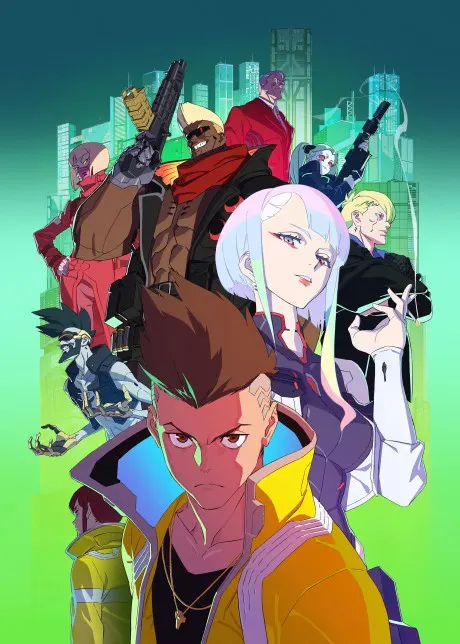
ONA · 2022 · 10 episodes · TRIGGER · 85% on AniList · Sub & dub
Action, Drama, Psychological
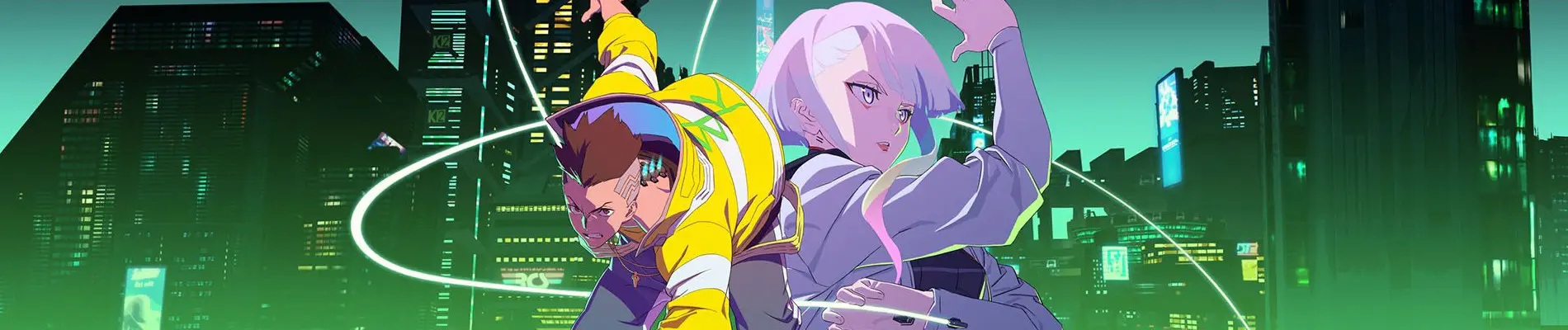
Cyberpunk: Edgerunners is set in the world of a Polish video game, Cyberpunk 2077 by CD Projekt, but it was animated in Japan by Studio Trigger, with Japanese direction and a Japanese voice cast. Most fans call it anime without hesitation. David, a street kid in Night City, loses everything in the first episode and gets a military-grade implant installed in his spine, which starts him on a fast and violent ride. It's ten episodes and does not end happily. More like it in our best cyberpunk anime list.
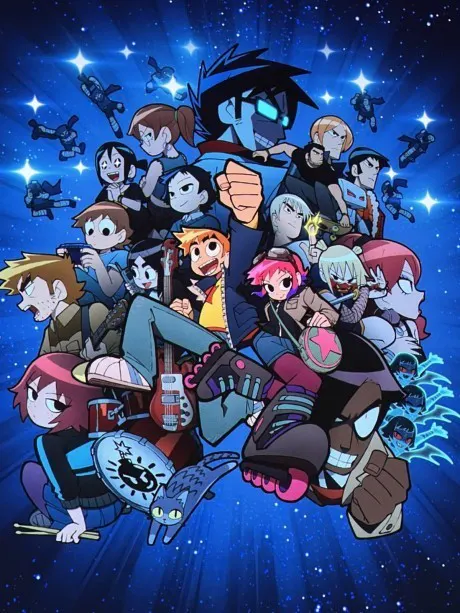
ONA · 2023 · 8 episodes · Science SARU · 79% on AniList · Sub & dub
Action, Comedy, Drama
Scott Pilgrim Takes Off adapts a Canadian graphic novel series and was made for Netflix, but Science SARU, a Japanese studio, animated it. It looks like anime, sounds like an American comedy, and the first episode sets up the familiar story before swerving away from it. If you're asking "is it anime," this is the hardest case on the list. Our best Science SARU anime list covers the studio's other work.
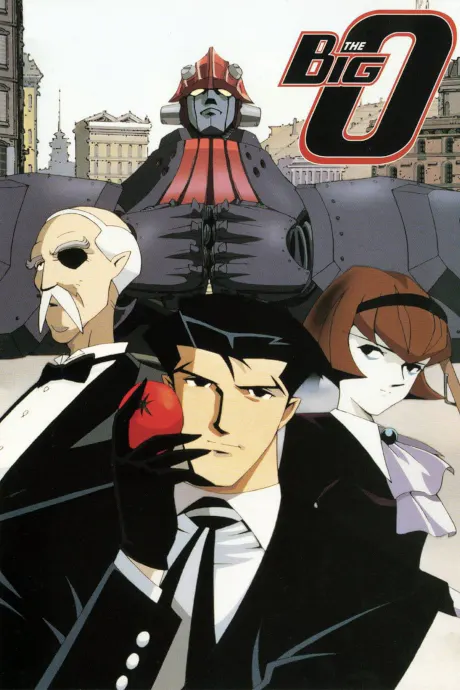
TV · 1999 · 13 episodes · Sunrise · 74% on AniList · Sub & dub
Action, Mecha, Mystery
The Big O is the reverse. Sunrise made the first season in Japan in 1999, and its success abroad led Cartoon Network to co-produce the second season, with the request that the story be wrapped up. It's a Japanese robot show with a Batman-like hero, in a city where nobody remembers anything from forty years earlier, and its second season exists partly because American viewers wanted it. Episode 1 introduces Roger Smith, a "negotiator" in a black suit, who settles a hostage case and then calls down his giant robot when talking fails. It suits anyone who likes noir and old tokusatsu in equal measure.
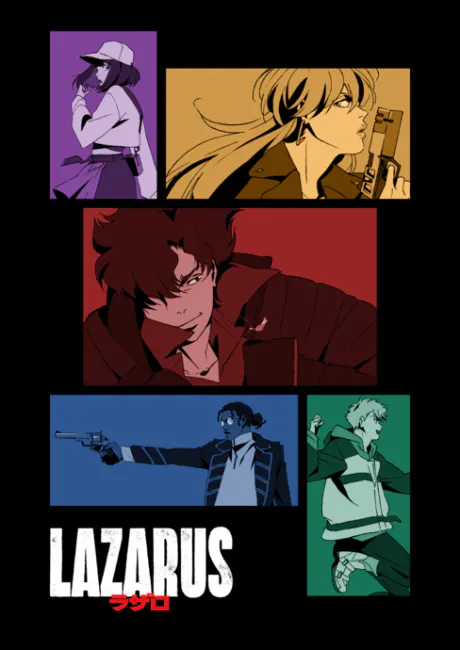
TV · 2025 · 13 episodes · MAPPA · 70% on AniList · Sub & dub
Action, Sci-Fi, Thriller
LAZARUS (2025) went further. Shinichiro Watanabe created it, MAPPA animated it, and it was produced for Adult Swim, Cartoon Network's nighttime block, from the start. The action was designed with Chad Stahelski, the director of the John Wick films, and Watanabe has said the team recruited animators from outside Japan for the fight scenes. In 2052, a miracle painkiller turns out to kill everyone who took it within three years, and a squad of misfits has 30 days to find its creator. The first episode opens with Axel, a prisoner who keeps escaping, being pulled out of jail to join that squad. It suits viewers who like Watanabe's music-driven style and don't mind a slow-burn mystery between the fights. Our Shinichiro Watanabe guide places it next to Cowboy Bebop.
OVA · 2003 · 9 episodes · DNA · 70% on AniList · Sub & dub
Action, Drama, Psychological
The Animatrix (2003) is a set of nine short films commissioned by the makers of The Matrix, who had been inspired by anime such as Ghost in the Shell. Most of the shorts were made by Japanese studios like Madhouse and Studio 4°C, while one is fully computer-animated and another was directed by Korean-American animator Peter Chung. It's an anthology that literally mixes the two traditions. It suits viewers who have seen The Matrix; start with the shorts on the war between humans and machines, which explain the films' backstory.
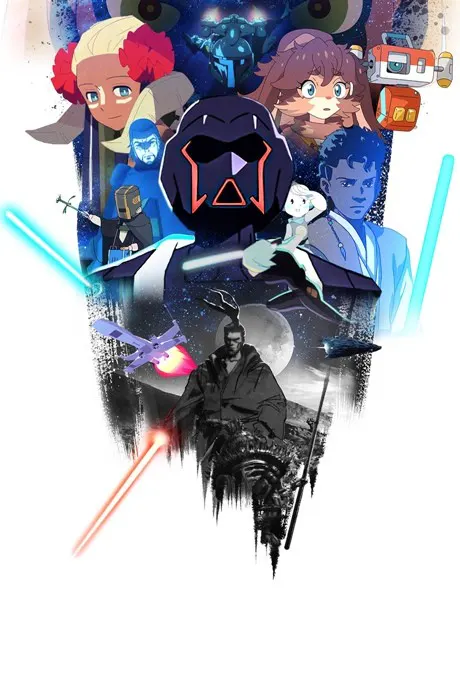
ONA · 2021 · 9 episodes · Geno Studio · 70% on AniList · Sub & dub
Action, Adventure, Sci-Fi
Star Wars: Visions (2021) did the same for Star Wars: an American franchise handed to seven Japanese studios, including Trigger, Production I.G and Science SARU, for nine standalone shorts. Each is under half an hour and needs no knowledge of the films, so it works as a sampler of studio styles. Batman Ninja is a similar experiment, a Warner Bros. Japan film that sends Batman and his rogues' gallery to feudal Japan.
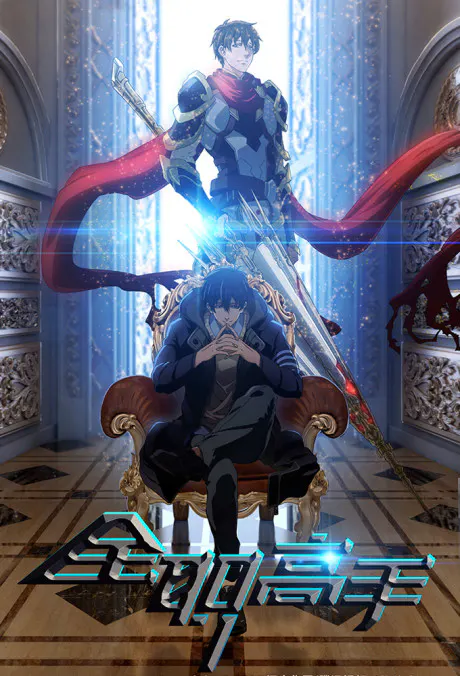
ONA · 2017 · 12 episodes · G.CMay Animation & Film · 75% on AniList · Sub
Action, Drama
The King's Avatar shows the other border: it's Chinese animation, called donghua, about a pro gamer forced into retirement who starts over on a new server. It's often filed with anime because of its style and fan overlap, but it isn't Japanese. Our what is donghua explainer covers that industry.
Two famous shows we don't carry belong here too. Avatar: The Last Airbender is an American Nickelodeon series heavily influenced by anime, and most fans call it an anime-inspired cartoon rather than anime. And Trese (2021), based on Budjette Tan and Kajo Baldisimo's Filipino komiks about a detective of the supernatural in Manila, was presented as an anime when it came to Netflix, which set off the same debate at home: is a Filipino story told in an anime style still anime?
The Philippine connection
Many Filipino viewers grew up on both traditions, often without drawing a line between them. Our histories of Hero TV and of anime that aired in the Philippines trace the Japanese side of that, and the Tagalog-dubbed anime guide covers the dubs. There's also a production link: Toei Animation, the studio behind Dragon Ball and ONE PIECE, has a Philippine subsidiary, Toei Animation Philippines, where Filipino animators work on its series. So some of the "Japanese" animation that Filipinos grew up watching was partly drawn in Metro Manila.
So which is it?
A workable rule, used by most databases including the one behind our catalog: if it was made mainly by a Japanese studio, for a Japanese or global anime audience, it's anime, regardless of where the story comes from. By that rule, Edgerunners, Scott Pilgrim Takes Off and Lazarus are anime; Avatar isn't; donghua is its own thing. Edge cases will keep coming as Western streamers commission more work from Japanese studios.
The differences at a glance
If you only remember one part of this page, make it this side-by-side. Each line is a tendency, with plenty of exceptions in both directions:
- Who it's made for: American TV animation leans toward children and families, with adult comedy as its own lane; a large share of anime targets teenagers and adults and airs late at night.
- Where stories come from: Western shows are more often original; anime is more often adapted from manga, light novels or games.
- Story shape: Western cartoons have traditionally favored self-contained episodes; anime favors arcs that run across a season or several.
- Budget and motion: anime usually has less money per episode and spends it selectively, on key scenes and strong still frames.
- Voices: recorded before animation in most Western productions, after it in most Japanese TV anime.
- Ending: Western series usually run until they're canceled or wrapped up; anime often stops when it catches up to its source, sometimes mid-story.
The more useful question is usually what kind of show you want. If you're new and coming from Western animation, a short, self-contained show like Edgerunners or a film like Paprika is an easier first step than a 500-episode shounen series; our guide to how to start watching anime has more suggestions, and the Discover feed lets you try first episodes quickly.