A 24-minute TV anime episode takes months of work by well over a hundred people, most of them freelancers spread across several companies and often several countries. It's still largely drawn by hand, then colored, layered and lit on computers, and voiced at the very end. The order of those steps explains a lot about anime: why some episodes look worse than others, why the credits are so long, and why shows get delayed.
This guide walks through the pipeline one step at a time, with the Japanese terms you'll see in fan discussions and credits. It's part of our anime glossary series, which defines related terms like sakuga and production committee; here we'll focus on the actual work. For the business side of seasons and sequels, see how anime seasons work.
Step 0: planning and money
Most TV anime are funded by a production committee: a group of companies (a publisher, a music label, a video distributor, a broadcaster, sometimes a streaming service) that share the cost and the profit. The committee hires a studio to make the show. The studio that takes the contract is the "main" studio in the credits, but it may hand out large parts of the work to other studios.
How much does it cost? It varies far more than people expect. Nao Hirasawa, CEO of the anime company ARCH, has described per-episode budgets ranging from around ¥18 million for cheap early-morning children's shows up to around ¥300 million for prestige projects funded by international companies. Most seasonal TV anime fall somewhere in between, and costs have risen sharply in recent years as studios compete for scarce staff.
Production usually starts a year or more before the first episode airs. Sequels and adaptations are often planned before the previous season has finished airing.
Step 1: series composition and scripts
The series composition writer (shirīzu kōsei) decides what the season covers: which chapters of the manga or novel, in what order, and where each episode ends. Then scriptwriters write each episode's script. For an adaptation, this is the stage that decides the pacing problems and cuts discussed in our manga vs. anime guide. Our explainer on how anime adaptations work goes deeper into how a source gets chosen and trimmed.
Step 2: the storyboard (e-konte)
The storyboard is the blueprint for the whole episode. The episode's storyboard artist, often the series director or an episode director, draws every shot in rough sketches, with notes on camera movement, timing in seconds and dialogue. Each shot is called a cut, and an average TV episode has around 300 of them.
Storyboards are where a director's style really lives. Two episodes of the same show can feel completely different because different people storyboarded them, which is why fans track episode directors by name.
Step 3: layout
For each cut, an animator draws a layout: a detailed version of the storyboard frame that fixes the composition, the character positions, the background and the camera framing. Layouts go to two places. The background art department uses them to paint the scenery, and the key animators use them to draw the movement.
Step 4: key animation (genga)
Key animators (genga-man) draw the important frames of each movement: the start, end and turning points of a punch, a head turn or a run. A single episode can have around 20 key animators, each assigned a set of cuts. The quality of the key frames is the biggest single factor in how an episode looks.
Above them, the animation director (sakuga kantoku, often shortened to sakkan) checks and corrects the key frames, especially faces, so the characters stay "on model" across dozens of different animators. When people say an episode looked "off model," it usually means there wasn't enough time for this correction pass. Many productions now add a second key animation stage (dai-ni genga), where other animators clean up rough keys drawn by the first.
When an animator gets a cut with complex movement and the time to do it well, the result is what fans call sakuga: a burst of animation clearly above the rest of the episode. Our guide to anime art styles covers how different studios and animators approach this.
Step 5: in-betweens (douga)
In-between animators (dōga) draw the frames between the key frames and turn rough keys into clean final lines. It's precise, repetitive work, and it's where most new animators start.
It's also where the volume is. Toei Animation, the studio behind One Piece, says a single TV episode typically uses about 3,000 to 4,500 sheets of drawings, and more for demanding episodes. In-between pay is usually by the drawing, not by the hour. NHK reported in 2017 that the going rate was around ¥200 per in-between drawing, and veteran animators have publicly pushed for it to be raised; rates vary by studio and have moved since. In a 2019 survey by the Japan Animation Creators Association (JAniCA), reported by Anime News Network, respondents aged 20 to 24 averaged about ¥1.55 million a year, well below the national average for that age group.
Where the Philippines fits in
Much of the in-between and coloring work on Japanese anime is done outside Japan, in South Korea, China, Vietnam and the Philippines. Toei Animation has a long-running Philippine studio: a 2008 Anime News Network report on a Philippine Daily Inquirer profile described it as mainly producing in-between animation from key frames drawn in Japan, on series including Dragon Ball (watch order), Sailor Moon (watch order) and One Piece. So the long-running shows many Filipino viewers grew up with on local TV, covered in our anime that aired in the Philippines guide, were partly drawn in Metro Manila.
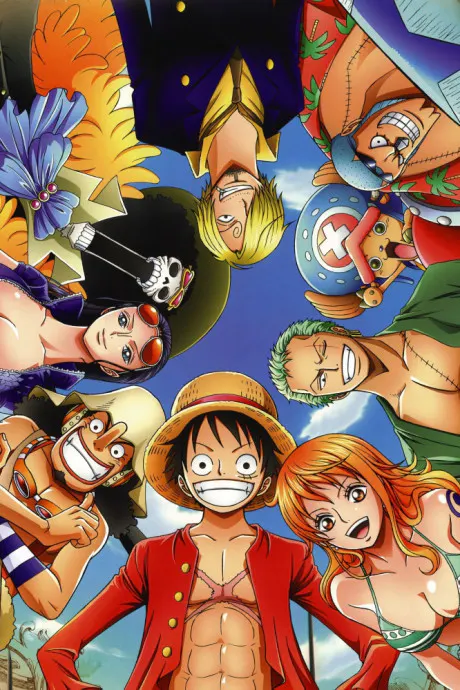
TV · 1999 · Toei Animation · 87% on AniList · Sub & dub
Action, Adventure, Comedy
ONE PIECE is the clearest example of the whole pipeline running at industrial scale: a weekly show, produced by Toei since 1999, with work spread across studios in Japan and abroad. Its episode 1 is a good look at the late-1990s house style, before the show moved to digital coloring and, later, widescreen. Toei's other long-runners are in our best Toei Animation anime guide, and the One Piece order page lists the films.
Step 6: finishing and backgrounds
Scanned drawings go to finishing (shiage), where they're colored digitally, following color models set by the color designer. Hand-painted cels had largely disappeared from TV anime by the early 2000s; today, coloring is done in software, but the line art underneath is still usually drawn on paper or, increasingly, on tablets.
At the same time, the art department (bijutsu) paints the backgrounds from the layouts, supervised by an art director. Backgrounds are often the most beautiful thing in an anime frame, and some art studios work across many shows. Increasingly, 3DCG is used too: for cars, crowds, mecha, and sometimes entire casts.
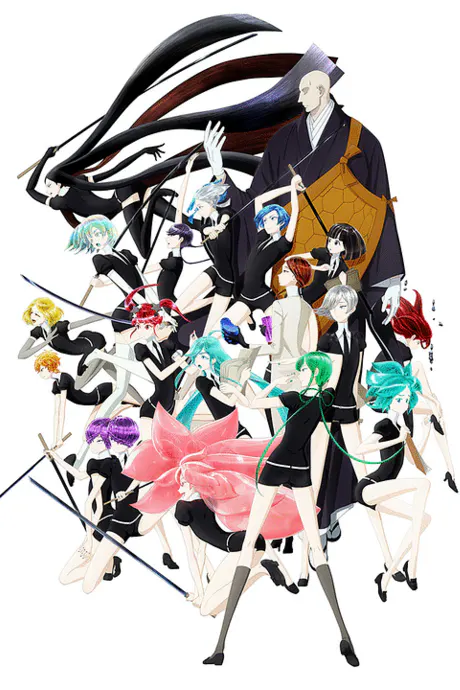
TV · 2017 · 12 episodes · Orange · 83% on AniList · Sub & dub
Action, Drama, Fantasy
Land of the Lustrous (2017) is the best-known case of a fully 3DCG anime that won over fans of hand-drawn work. Studio Orange animated Haruko Ichikawa's manga about immortal gem-people who shatter and are rebuilt, and the CG lets light pass through and refract off their bodies in a way drawn animation couldn't easily do. The first episode introduces Phos, the most fragile and useless gem, and it's worth watching just to see what CG anime can look like when it's designed for it.
Step 7: compositing (satsuei)
Compositing is still called satsuei, "photography," because in the cel era it meant literally photographing layers of cels over backgrounds with a camera. Now it's digital: the compositing team stacks characters, backgrounds and CG, then adds lighting, shadows, lens flares, blur, glow and camera movement. A lot of what makes modern anime look "expensive" happens here. Ufotable is known for doing its compositing in-house, which is part of why its shows have such a distinct glowing look; see our best ufotable anime list.
Then the episode is edited to its exact broadcast length, often cutting frames from scenes to hit the time.
Step 8: voices, music and sound
In Japan, voices are usually recorded after the animation, a process called afureko (from "after-recording"). Actors watch the footage and match their lines to it. Because of deadlines, that footage is often unfinished: rough key frames, storyboards or even just timing marks with character names. Our explainer on seiyuu covers the actors' side.
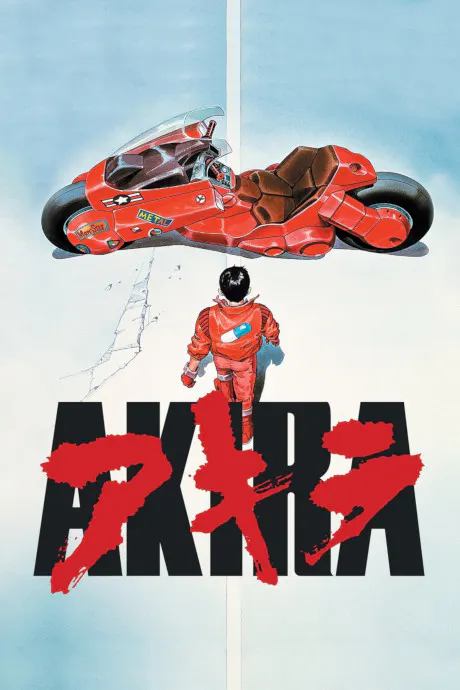
Movie · 1988 · Tokyo Movie Shinsha · 79% on AniList · Sub & dub
Action, Adventure, Horror
AKIRA (1988) is the famous exception. Katsuhiro Otomo had the dialogue recorded first and the mouths animated to match, so the lip sync is unusually exact for anime of any era, at a significant extra cost. Western feature animation works this way as standard; Japanese TV anime almost never does. The film itself, Tokyo Movie Shinsha's adaptation of Otomo's own manga about psychic powers and biker gangs in a rebuilt Neo-Tokyo, is still a reference point for hand-drawn detail. Our Katsuhiro Otomo guide covers the rest of his work.
Music is composed separately, usually as a library of tracks the sound director places into each episode, plus the opening and ending songs, which are often tied to the music label on the production committee.
Why so many anime run late or look rough
Put the steps together and you can see where things break. Every stage depends on the one before it, much of the work is outsourced to freelancers paid per cut or per drawing, and the broadcast date is fixed. When a storyboard is late, every later step has less time. The usual signs:
- Off-model faces and stiff movement in the middle of a season, when animation directors can't correct everything.
- Still frames and pans across a single drawing standing in for motion.
- A recap episode or a delayed episode in the middle of a season, buying time. Our recap episode explainer covers this.
- Improved Blu-ray versions, where studios fix broadcast shots afterward.
The money doesn't always reach the people doing the drawing. The Association of Japanese Animations put the total anime market at a record ¥3.84 trillion in 2024, with overseas revenue now more than half of it. Yet a 2024 survey by the research firm Teikoku Databank found that about 60% of the companies that actually produce anime reported lower profits or losses that year, citing staff shortages and rising costs.
Anime about making anime
The best way to understand all of this is to watch it dramatized. Two shows do it well.
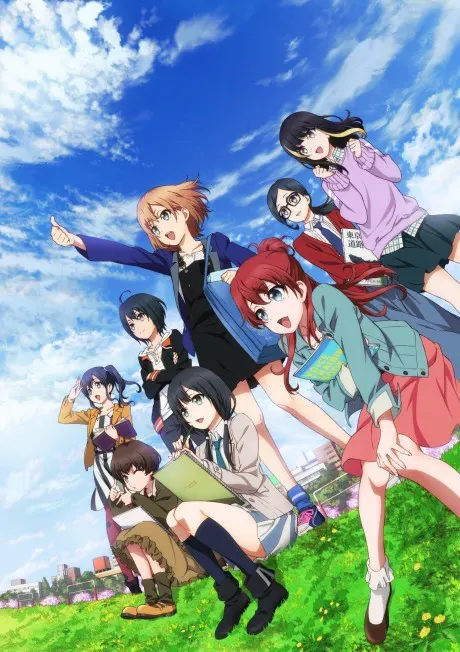
TV · 2014 · 24 episodes · P.A.WORKS · 81% on AniList · Sub & dub
Comedy, Drama, Slice of Life
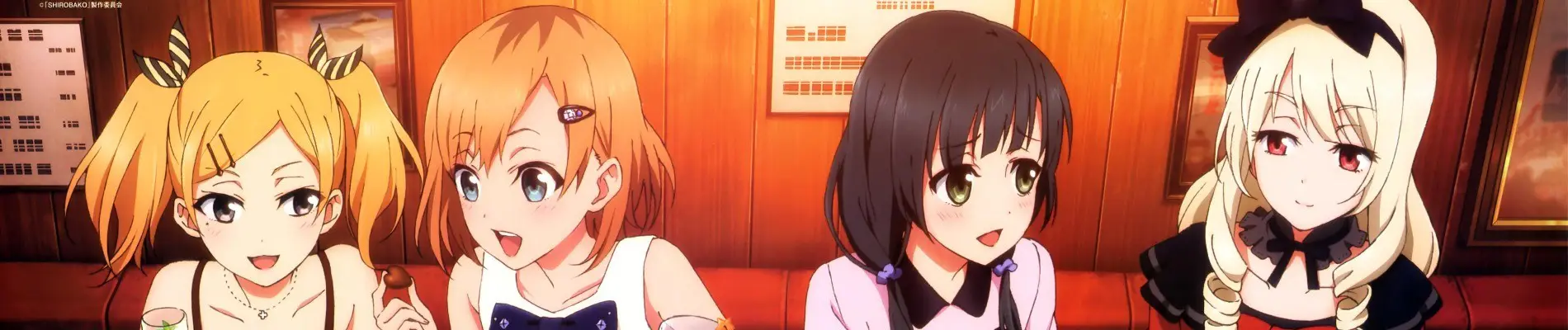
SHIROBAKO (2014) is P.A.Works' 24-episode series about Aoi Miyamori, a production assistant at a small studio, whose job is to chase every cut through every step above. The first episode is mostly her driving between freelancers to collect late drawings before a deadline, and if you've just read this article, you'll recognize every role on screen. It's a workplace drama first: funny, specific and honest about overwork. A 2020 film follows the same studio a few years later. More from the studio is in our best P.A.Works anime guide, and the show fits our best workplace anime list too.
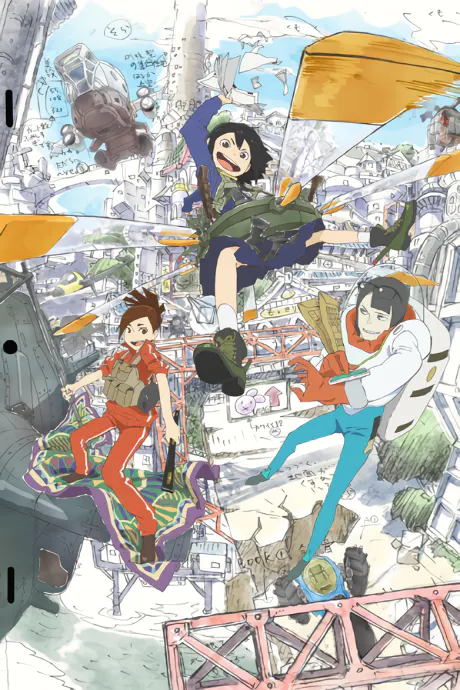
TV · 2020 · 12 episodes · Science SARU · 80% on AniList · Sub & dub
Adventure, Comedy, Slice of Life
Keep Your Hands Off Eizouken! (2020) is the creative side rather than the business side. Three high-school girls (a dreamer who draws backgrounds, an animator who's also a famous teen model, and a producer obsessed with money) start an anime club, and the show slips in and out of their imagined worlds as they plan their first film. Science SARU and director Masaaki Yuasa made it, and it explains layout, timing and budgeting more clearly than most documentaries. Our best Science SARU anime guide covers the studio.
How to see the pipeline in the credits
Next time an episode ends, read the staff credits with this list in mind:
- Script (脚本) and storyboard (絵コンテ): who wrote and planned this episode.
- Episode director (演出): who supervised it through production.
- Animation director (作画監督): who corrected the drawings. Several names here usually means a hard schedule.
- Key animation (原画) and in-between animation (動画): the animators, often with whole outside studios listed.
- Finishing (仕上げ), background art (背景) and compositing (撮影).
Once you know the roles, you'll start noticing that your favorite episodes share an episode director or an animation director, and fan sites can tell you who they are. To see the results of all this work, our best anime studios guide compares the major studios, and the Discover feed lets you sample first episodes from many of them back to back. You can also browse the full catalog, or check what's airing this season on the schedule.
Related explainers
- What is an OVA?: the straight-to-video format that gave many directors their start.
- What is filler?: what weekly production schedules do when they run out of story.
- What is a light novel?: one of the main sources anime are made from.
- Sub vs. dub: what happens when the voice track is redone in another language.