Satoshi Kon directed four feature films and one TV series, and then he died, in 2010, at the age of 46. That's the whole body of work. It is small enough to watch in a long weekend and influential enough that live-action directors in Hollywood still get compared to him. In our guide to the best anime directors, he's the one we point to when someone says anime can't do what serious cinema does.
This guide ranks everything Kon directed, all of which we stream, and then covers the two films he worked on for other directors. It also tells you which one to start with, because the wrong first Kon film can put you off the rest.
Who Satoshi Kon was
Kon started as a manga artist, and while still an art student he began working as an assistant to Katsuhiro Otomo, the creator of Akira. He moved into animation in the early 1990s, doing layouts and art design, and wrote the script for "Magnetic Rose," the first part of the anthology film Memories. His first film as director, Perfect Blue, was animated at Madhouse, where producer Masao Maruyama backed him, and every work he directed after that was made there.
He was diagnosed with pancreatic cancer in 2010 and died that August, while working on a children's film called Dreaming Machine. The film was never finished. Before his death, he wrote a long farewell message that was posted online, thanking the people he had worked with; many fans have read it since.
What makes a Kon film a Kon film
- Reality and fantasy with no border. His characters slip between memory, film, dream and real life, and the edit doesn't warn you. A scene cuts from a TV set to a bedroom and you aren't sure which one is real.
- Match cuts. Kon would end one scene on a movement or shape and start the next on the same one in a completely different place. It is the main reason editors and film students study him.
- Women under pressure. Perfect Blue, Millennium Actress and Paprika all center women whose public image is pulling against who they are.
- Japan's media and fandom. Idols, film studios, TV news, mascots and the internet all come under the microscope, years before most other directors were looking.
- Realistic character designs. No big eyes. His people have wrinkles, bad posture and ordinary faces, which makes the strangeness around them land harder.
- Susumu Hirasawa's music. The electronic musician scored Millennium Actress, Paranoia Agent and Paprika, and his music is a big part of how those works feel.
How we ranked them
All five are worth watching, so this is a ranking of degree, not quality cutoffs. We looked at how complete each work feels, how much it rewards a second watch, and how well it works for someone with no background in anime. Perfect Blue is already on a few of our other lists, but there is no honest Kon guide that doesn't put it near the top.
1. Perfect Blue (1997)
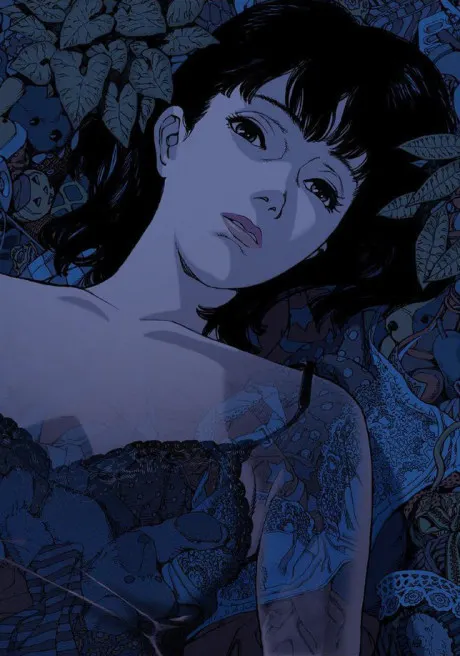
Movie · 1998 · MADHOUSE · 85% on AniList · Sub & dub
Drama, Horror, Psychological
Mima is the lead singer of a small, struggling idol group. She quits to become an actress, and her agency gets her a role in a violent TV crime drama. Her fans feel betrayed. Someone starts running a website that writes in her voice, describing her days in a detail only she should know, and a man begins to follow her. Then the people around her start dying, and Mima can no longer tell her life from the show.
This is Kon's first film and his most frightening. It is a psychological thriller with a horror film's grip, and its take on fan entitlement and the idol industry feels more relevant now than it did in the 1990s. It's ranked first because it is the most focused: every scene points at the same question about who Mima really is. Directors like Darren Aronofsky are often compared to it, and the comparison is fair. Who it suits: fans of thrillers and psychological anime. Content note: it includes a disturbing sexual assault scene being filmed for the TV show, and graphic violence. It is for adults. The opening: a small idol concert at a fan event, with heckling fans and a quiet, staring man in the crowd. Watch Perfect Blue.
2. Millennium Actress (2001)
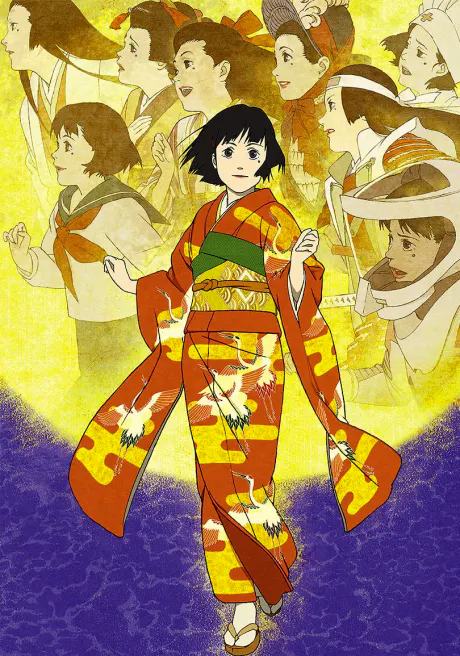
Movie · 2002 · MADHOUSE · 81% on AniList · Sub & dub
Drama, Fantasy, Romance
A documentary filmmaker and his cameraman visit Chiyoko Fujiwara, a famous actress who retired decades ago and vanished from public life. As she tells them her story, they find themselves inside it, and inside her old films too: samurai epics, wartime dramas, monster movies and science fiction, all with Chiyoko running after a man she met once as a girl.
Millennium Actress uses the same trick as Perfect Blue, mixing life and film, but for joy instead of fear. It is a love letter to a whole century of Japanese cinema and one of the most moving films Kon made. The filmmaker, who is a besotted fan, keeps appearing in her memories in costume, which is very funny. Who it suits: anyone, and especially people who like old movies. It's the best Kon to show a parent. The opening: a rocket launch in space, then a cut to a studio being torn down. Watch Millennium Actress.
3. Paprika (2006)

#3Paprika
Movie · 2006 · MADHOUSE · 79% on AniList · Sub & dub
Fantasy, Mystery, Psychological
A research team has built a device that lets therapists enter patients' dreams. Dr. Atsuko Chiba uses it at night under another identity, a bright, playful dream guide called Paprika. When some of the devices are stolen, people start losing themselves in shared dreams in broad daylight, and a giant parade of toys, appliances and gods marches through Tokyo.
Paprika is based on a novel by Yasutaka Tsutsui, who also wrote The Girl Who Leapt Through Time. It is Kon's most colorful film and his most fun to look at, and it is often compared to Christopher Nolan's Inception, which came out four years later. The plot is the loosest of his films, and the characters are thinner than in his other work. Who it suits: fans of mind-bending anime and sci-fi, and people who care more about images than story. The opening: a circus dream that turns into a chase across movie scenes, scored to Hirasawa's music. Watch Paprika.
4. Tokyo Godfathers (2003)

Movie · 2003 · MADHOUSE · 81% on AniList · Sub & dub
Adventure, Comedy, Drama
On Christmas Eve in Tokyo, three homeless people find a baby abandoned in the trash: Gin, a middle-aged drunk; Hana, a trans woman and former drag queen who has always wanted a child; and Miyuki, a teenage runaway. They decide to find the baby's mother themselves, and a chain of coincidences takes them through the whole city.
This is the Kon film with no dream logic at all. It is a comedy with a heart, built on miracles that the film knowingly piles on top of each other. It ranks fourth only because it is less ambitious than the others; it may be the one people like most. Hana is a full, funny, sympathetic character, though some of the jokes about her reflect the early 2000s. Who it suits: anyone who wants a holiday film. It's a natural pick for our best Christmas anime list, and it's a good Kon to start with if you are nervous about the darker ones. The opening: a church Nativity play for the homeless, then snow and garbage bags. Watch Tokyo Godfathers.
5. Paranoia Agent (2004)

TV · 2004 · 13 episodes · MADHOUSE · 76% on AniList · Sub & dub
Drama, Mystery, Psychological
Tsukiko Sagi designed a cute pink dog mascot, Maromi, that all of Japan has fallen for. Now she's stuck on a follow-up. One night she's attacked by a boy on golden rollerblades with a bent baseball bat. Then the boy strikes again, and again, and two detectives start to realize that his victims all have something in common.
Kon's only TV series, 13 episodes long, was built from ideas he had collected and couldn't fit into films. That makes it the least unified of his works: several episodes break off into stand-alone stories, including one famous comic episode about three people trying to die. It ranks fifth only because the middle wanders. The first and last few episodes are as strong as anything he made. Who it suits: people who like strange TV such as Serial Experiments Lain or Twin Peaks, and fans of mystery anime. The opening: a jittery montage of Tokyo citizens laughing, then the first attack, then a theme song you won't forget. Watch Paranoia Agent.
Kon's work on other people's films
Two films we stream carry Kon's hand without being his as director.
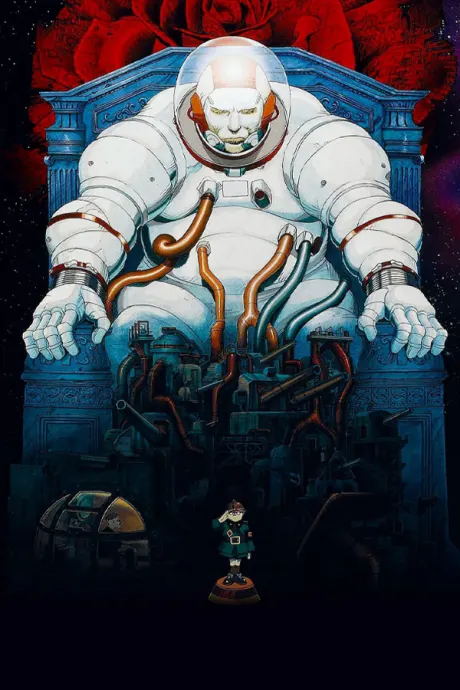
Movie · 1995 · Studio 4°C · 76% on AniList · Sub & dub
Adventure, Comedy, Drama
Memories (1995) is an anthology of three short films produced by Katsuhiro Otomo. Kon wrote the screenplay for the first, "Magnetic Rose," directed by Koji Morimoto: deep-space salvage workers board a wrecked station and find it haunted by the memories of an opera singer. You can see the seed of Perfect Blue and Millennium Actress in it, a woman trapped in her own past and the people pulled in with her. It is the strongest of the three shorts.
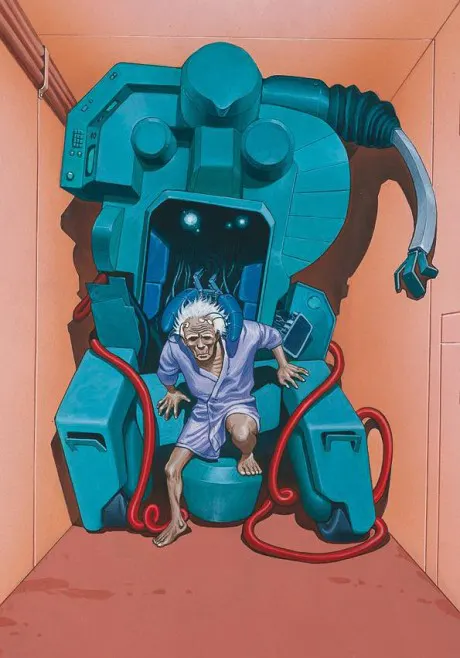
Movie · 1991 · APPP · 68% on AniList · Sub & dub
Action, Comedy, Drama
Roujin Z (1991), written by Otomo, is a comedy about a high-tech hospital bed for the elderly that turns into a rampaging machine. Kon worked on its backgrounds, layouts and set design. It is a fun, light film, but you're watching it for Otomo and for history, not for Kon.
What's missing
Dreaming Machine, the film Kon was making when he died, was never completed. His short "Ohayō" (Good Morning), a one-minute film made for an NHK anthology, isn't in our catalogue, and neither are the manga he drew before animation. Those, sadly, are the whole of what's left.
Which Kon to watch first
- If you like thrillers: start with Perfect Blue. It is short, around 80 minutes, and you will know straight away if he is for you.
- If you want something warm: start with Millennium Actress or Tokyo Godfathers, and save Perfect Blue for later.
- If you want spectacle: Paprika, but expect a thin story.
- If you have a weekend: watch in release order, 1997 to 2006, and end with Paranoia Agent's last episode. You'll have seen all of it.
If you'd rather stumble on something new after Kon, the Discover feed shuffles well-liked shows and films and plays their first episode, so you can swipe until something grabs you.
Where to go after Kon
Kon learned from Otomo, the creator of Akira, and the two share a dense, realistic drawing style; our Katsuhiro Otomo guide covers Akira and the rest. For another director who bends reality, try our Masaaki Yuasa guide, whose films are looser and funnier but just as unpredictable. If what you liked was the slow philosophical weight, Mamoru Oshii is next; see our Mamoru Oshii guide. Kon's main home was Madhouse, and our best Madhouse anime list covers the studio's range.
His films are very different from the warm, family-sized fantasies of Makoto Shinkai and Mamoru Hosoda, but there's a link through Tsutsui, who wrote the novels behind both Paprika and Hosoda's breakthrough. Our Mamoru Hosoda movies ranked list starts there. For more that messes with your head, see our lists of the best thriller anime, or browse psychological and thriller anime on the site.