Most guides to Hayao Miyazaki start in 1985, the year Studio Ghibli was founded. That skips about fifteen years of work that explain almost everything he did later. Before Ghibli, Miyazaki co-directed Lupin III, laid out scenes for Heidi, directed a 26-episode post-apocalyptic TV series and made one of the best heist films in animation. This guide starts there. For context on how he compares with other directors, our guide to the best anime directors covers the wider field.
What this page doesn't do is rank the Ghibli films again. Our best Studio Ghibli movies list already ranks every Ghibli feature, Miyazaki's and Isao Takahata's together. Here we go through his career in order, then look at the ideas he keeps returning to, with each film placed where it fits. Every card below is a show or film you can watch on MyAnimeVerse.
Part 1: Before Ghibli (1963–1984)
Miyazaki joined Toei Animation in 1963 as an in-between animator. There he met Isao Takahata, and the two would work together, on and off, for the next three decades. He was a key animator on Takahata's first feature, a fantasy called The Little Norse Prince (Hols), and on Toei films like Puss in Boots. None of those are in our catalogue. The work that is starts in the 1970s.
Lupin III Part 1 (1971)
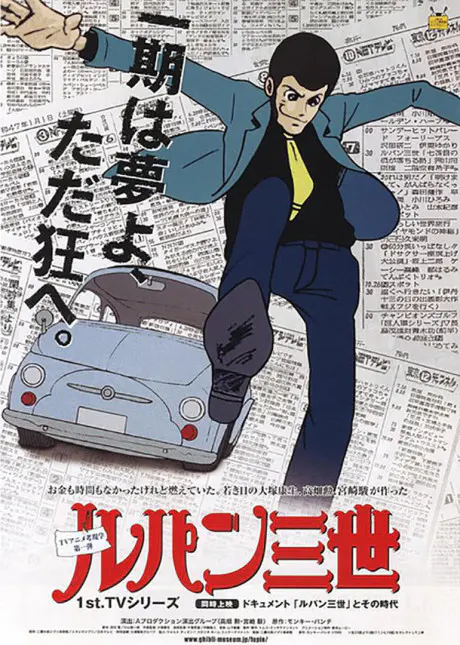
TV · 1971 · 23 episodes · Tokyo Movie Shinsha · 74% on AniList · Sub & dub
Adventure, Comedy
The first Lupin III TV series started as a darker, more adult show under director Masaaki Osumi. Ratings were poor, and partway through, Miyazaki and Takahata took over direction. The episodes they handled are lighter: Lupin becomes a cheerful rogue rather than a cold criminal, and the gang starts to feel like a family. That shift shaped the character for decades. Watch it for: the second half, where you can see the change happen. The tone swing is obvious if you watch episodes 1 and 15 back to back. Watch Lupin the 3rd Part 1.
Heidi, Girl of the Alps (1974) and Anne of Green Gables (1979)
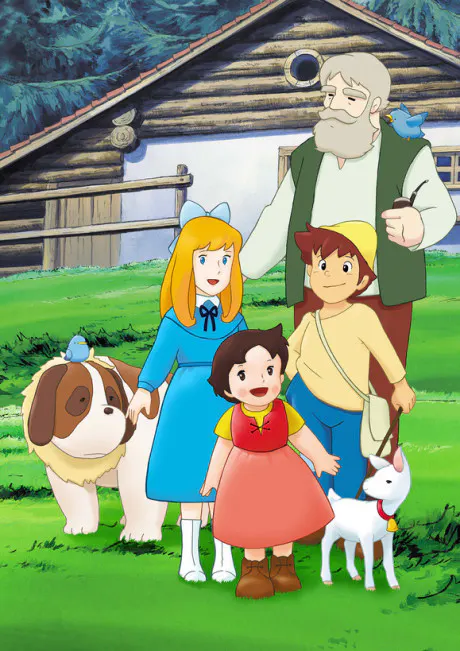
TV · 1974 · 52 episodes · Zuiyou Eizou · 73% on AniList · Sub
Drama, Slice of Life
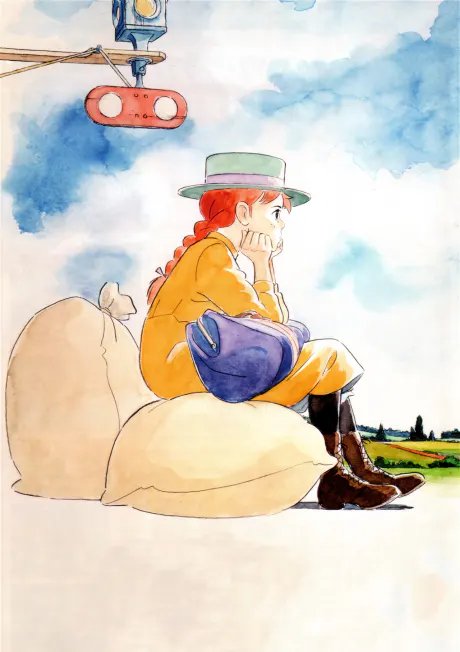
TV · 1979 · 50 episodes · Nippon Animation · 80% on AniList · Sub & dub
Drama, Slice of Life
Both series were directed by Takahata, and on both Miyazaki did scene design and layout, which means he decided where the camera sat and how each scene's space was arranged. On Anne, he left after the first fifteen or so episodes to make Cagliostro. Watch them for: the landscapes, the way meals and daily chores are given time, and the steady, patient pace that later shows up in Totoro. Watch Heidi or watch Anne of Green Gables.
Future Boy Conan (1978)
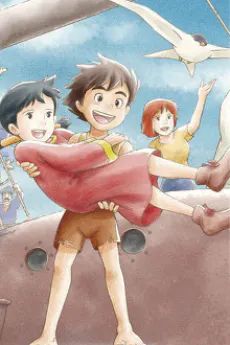
TV · 1978 · 26 episodes · Nippon Animation · 78% on AniList · Sub & dub
Adventure, Drama, Sci-Fi
This is the most important Miyazaki work most people have never seen, and his first series as director. It's set in 2028, twenty years after a war with super-weapons has sunk most of the world's land. Conan is a boy raised on a tiny island by his grandfather, so strong he can lift boulders and hold his breath for minutes. When a girl named Lana washes up on the beach, chased by soldiers from Industria, the last technological city, Conan leaves the island to save her.
It ran for 26 episodes on NHK, animated by Nippon Animation, and is loosely based on Alexander Key's novel The Incredible Tide. Almost every Miyazaki idea is here in early form: the girl with a mysterious link to old technology, the giant flying fortress, the kind-hearted rival, villages that farm and fish, and a deep distrust of anyone who wants to rebuild weapons. If you have seen Castle in the Sky, you will see it everywhere. It's also lively in a way his later films rarely are, with Conan running up walls and gripping airplanes with his toes. Who it suits: anyone who loves Castle in the Sky or Nausicaä, and families looking for a classic adventure series to watch together. Our best post-apocalyptic anime list explains why it's still one of the best in that genre. The opening: a short, grim narration about the war, then a sunny island, a boy spearfishing and a body on the beach. Watch Future Boy Conan.
Lupin III: The Castle of Cagliostro (1979)
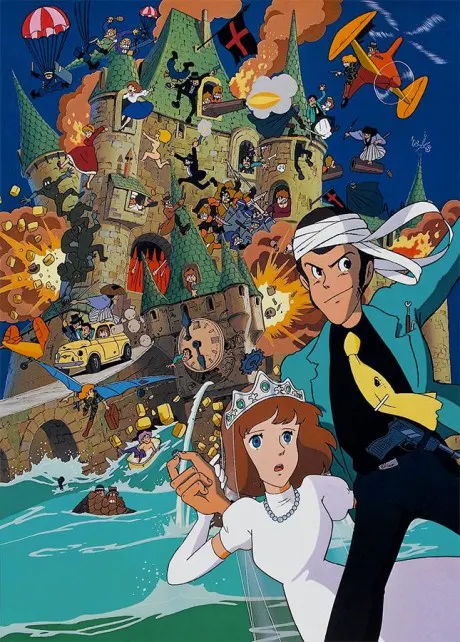
Lupin The 3rd: The Castle of Cagliostro
Movie · 1979 · Tokyo Movie Shinsha · 80% on AniList · Sub & dub
Action, Adventure, Comedy
Miyazaki's first feature film as director. Lupin and Jigen rob a casino, discover the money is counterfeit, and trace it to the tiny European country of Cagliostro. There, a scheming count is about to force a young princess, Clarisse, to marry him. Lupin decides to rescue her, partly for the treasure and partly because he once owed her a kindness.
It's a heist film, a chase film and a fairy tale at once. The car chase up a cliff road in a little yellow Fiat is one of the most famous action scenes in anime, and the clock tower fight at the end is still copied. It was not a big hit on release, and some Lupin fans found this gentle, chivalrous Lupin too soft. Its reputation grew steadily, and it is now often called the best Lupin film. Who it suits: anyone who likes adventure films, and a good first Miyazaki for people who think his work is only for kids. You don't need to know anything about Lupin, but our Lupin III watch order shows where it sits if you want more. The opening: a casino robbery and a road full of fake bills fluttering out of the car. Watch The Castle of Cagliostro.
Lupin III Part 2 (1977–1980), episodes 145 and 155
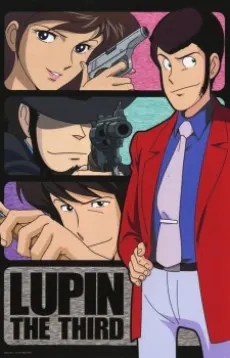
TV · 1977 · 155 episodes · Tokyo Movie Shinsha · 75% on AniList · Sub & dub
Action, Adventure, Comedy
Miyazaki wrote, storyboarded and directed two episodes of the second Lupin series, credited under a pseudonym. Episode 145, "Albatross: Wings of Death," is a flying-boat adventure that points straight at Porco Rosso. Episode 155, "Farewell, Beloved Lupin," features robots that look almost exactly like the one in Castle in the Sky. If you only want the Miyazaki parts of a 155-episode show, these are the two to watch. Watch Lupin the 3rd Part 2.
In the early 1980s he also directed several episodes of Sherlock Hound, a dog-filled take on Sherlock Holmes. That series isn't in our catalogue.
Nausicaä of the Valley of the Wind (1984)
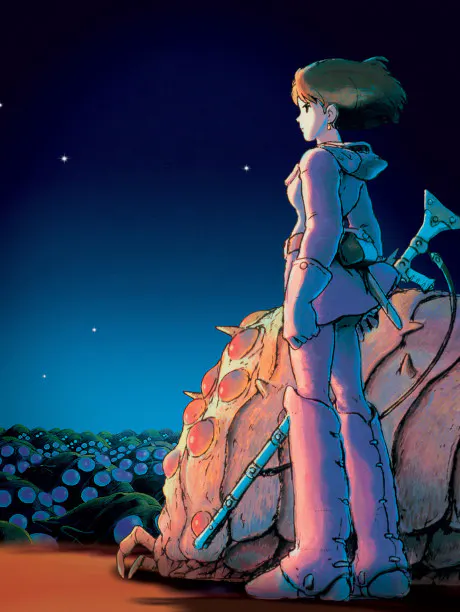
Nausicaä of the Valley of the Wind
Movie · 1984 · Topcraft · 81% on AniList · Sub & dub
Action, Adventure, Drama
Nausicaä is often listed as a Ghibli film, but it was made before Ghibli existed, at a studio called Topcraft. It's based on Miyazaki's own manga, which he started in 1982 and didn't finish until 1994. The film covers only the early part of that story. A thousand years after an industrial collapse, a toxic jungle is spreading, and a princess from a small valley realizes that the jungle and its giant insects are not the enemy people think they are.
Its success is what made Ghibli possible: Miyazaki, Takahata, producer Toshio Suzuki and the publisher Tokuma Shoten founded the studio the next year, taking many of Topcraft's staff with them. Who it suits: anyone who liked Princess Mononoke. Watch Nausicaä.
Part 2: The Ghibli years (1986–2023)
From here, the films are well known, so instead of describing each plot again, we've grouped them by the themes Miyazaki keeps coming back to. Most films could go in more than one group. For which ones are best, see the Ghibli ranking.
Flight
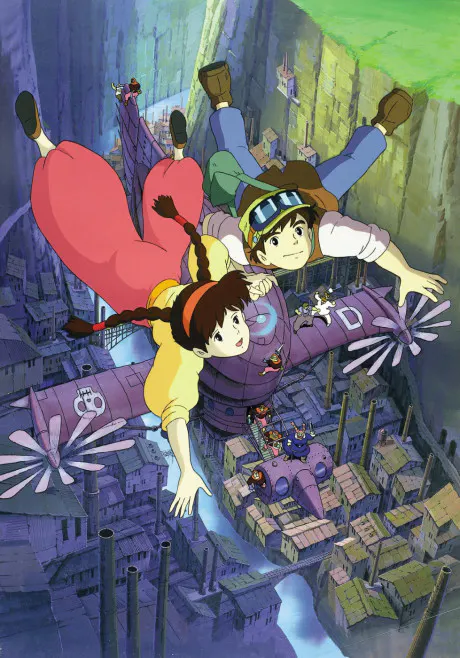
Movie · 1986 · Studio Ghibli · 80% on AniList · Sub & dub
Adventure, Fantasy, Sci-Fi
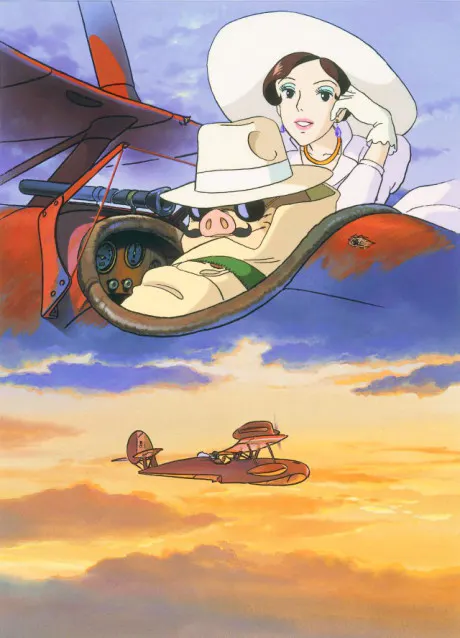
Movie · 1992 · Studio Ghibli · 78% on AniList · Sub & dub
Action, Adventure, Comedy
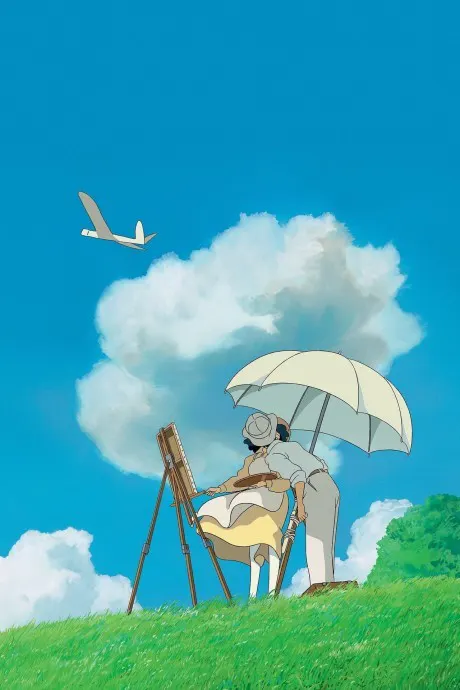
Movie · 2013 · Studio Ghibli · 80% on AniList · Sub & dub
Drama, Romance
Miyazaki's father ran a family company that made parts for warplanes during World War II, and Miyazaki grew up drawing aircraft. Almost every film he has made has a flying machine in it, and three are built around flight. Castle in the Sky (1986) is the purest adventure, a chase for a floating island full of airships and pirates; it is Future Boy Conan's story told again with a bigger budget. Porco Rosso (1992) follows a seaplane pilot who has been cursed with a pig's face, flying over the Adriatic between the wars. The Wind Rises (2013) is a fictionalized life of Jiro Horikoshi, the engineer who designed the Zero fighter. It is the most personal film he made before The Boy and the Heron, and it is about the problem at the center of his work: loving machines that were built to kill.
War, and his complicated feelings about it
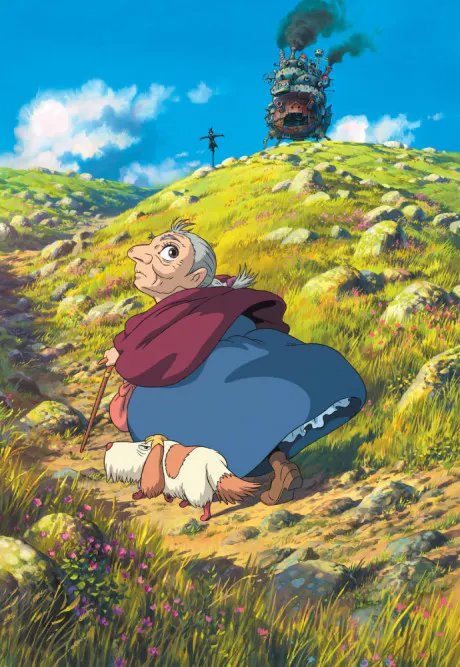
Movie · 2004 · Studio Ghibli · 85% on AniList · Sub & dub
Adventure, Drama, Fantasy
Miyazaki is a committed pacifist who loves tanks, battleships and planes. His films keep showing war as stupid and wasteful while drawing its machines with great affection. Howl's Moving Castle (2004) adds a war that isn't in the original novel by Diana Wynne Jones, with bombers over the town and a wizard who turns into a monster each time he flies out to fight. Miyazaki has said his opposition to the Iraq war fed into it. Porco Rosso's hero, who would rather be a pig than fight for a fascist government, and The Wind Rises both belong here too.
Nature without villains
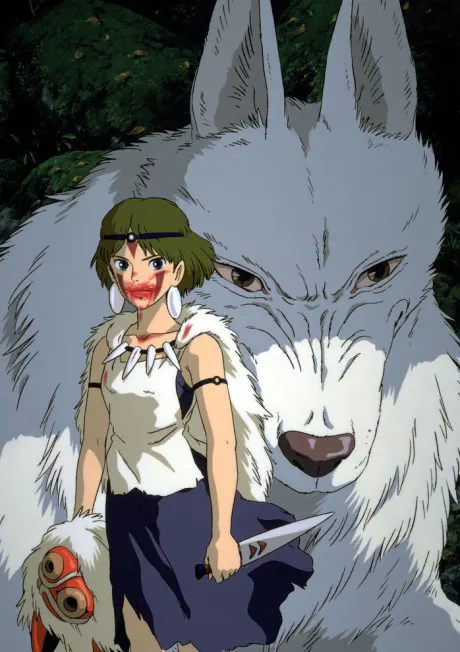
Movie · 1997 · Studio Ghibli · 85% on AniList · Sub & dub
Action, Adventure, Drama
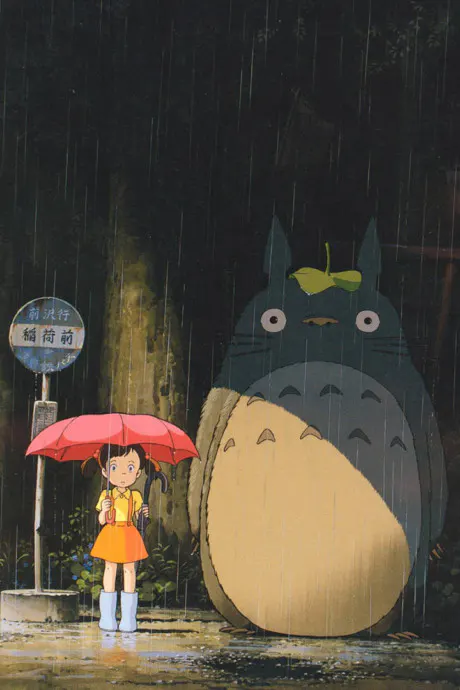
Movie · 1988 · Studio Ghibli · 81% on AniList · Sub & dub
Adventure, Fantasy, Slice of Life
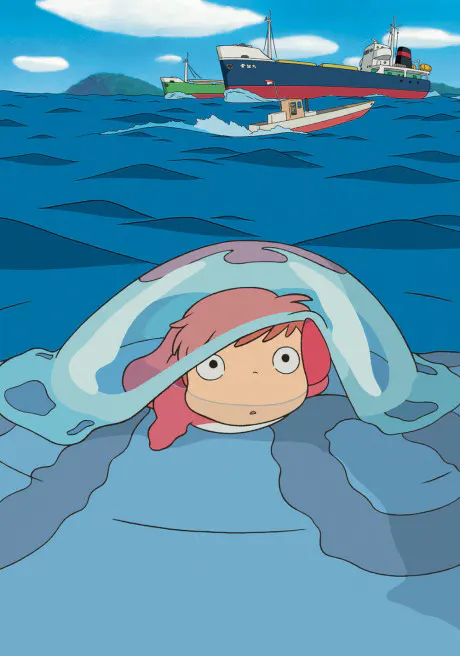
Movie · 2008 · Studio Ghibli · 80% on AniList · Sub & dub
Adventure, Fantasy
His films about nature don't have simple bad guys. In Princess Mononoke (1997), the woman cutting down the forest also shelters lepers and former sex workers. In Nausicaä, the poisonous jungle is cleaning the earth. Even the gentle films carry this idea: My Neighbor Totoro (1988) is a love letter to the countryside around Tokyo where Miyazaki lives, and Ponyo (2008) is a fish-girl story in which the sea is full of trash and still enormous. These are the films to start with if you want to see why people call Miyazaki an environmental filmmaker, even though none of them reads like a lecture.
Girls who work
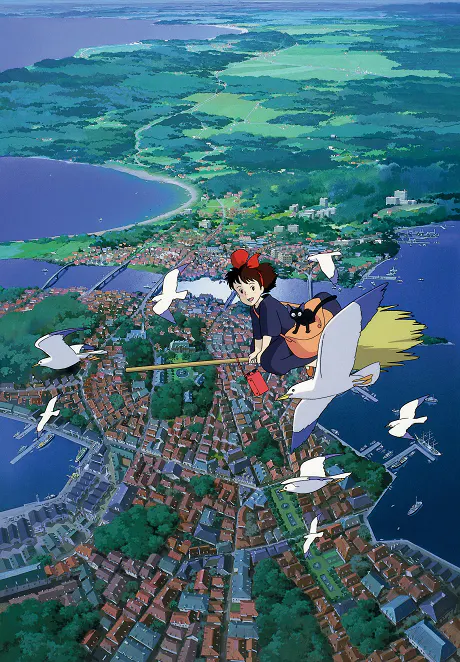
Movie · 1989 · Studio Ghibli · 81% on AniList · Sub & dub
Adventure, Drama, Fantasy
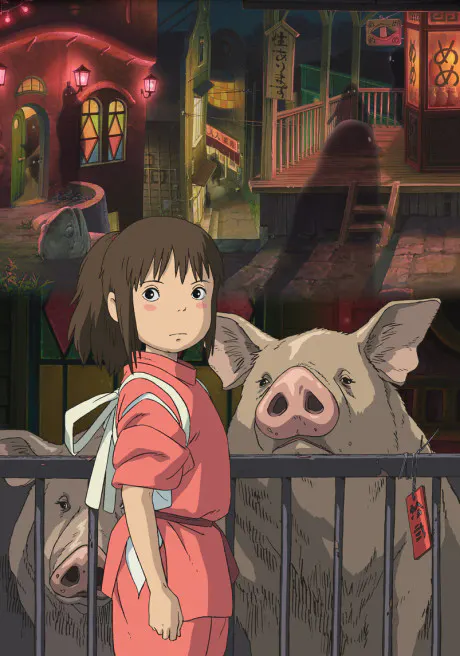
Movie · 2001 · Studio Ghibli · 86% on AniList · Sub & dub
Adventure, Drama, Fantasy
Miyazaki's heroines are famous, and the thing that sets them apart is that they have jobs. In Kiki's Delivery Service (1989), a teenage witch starts a delivery business in a new city and burns out. In Spirited Away (2001), a ten-year-old saves her parents by cleaning baths for spirits. Sophie in Howl's Moving Castle becomes the castle's cleaner. Work in Miyazaki's films is how people grow up, find their place and earn respect. It's one reason the films speak to adults, and one reason they appeal to viewers who grew up helping at home or at a family business. If you are looking for more stories like Spirited Away, our anime like Spirited Away list goes beyond Ghibli.
Mothers, loss and growing old
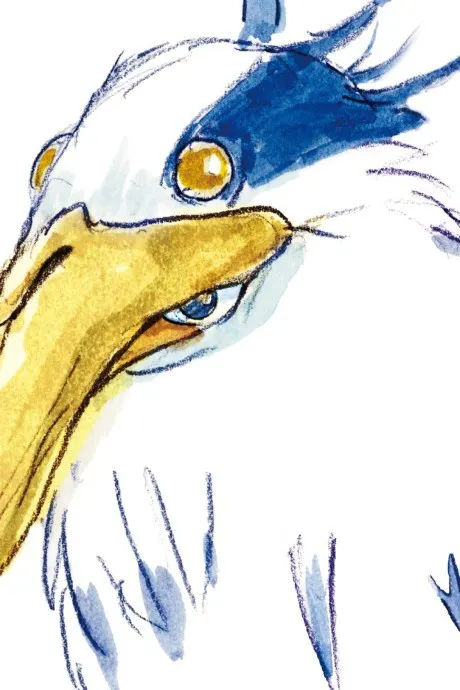
Movie · 2023 · Studio Ghibli · 77% on AniList · Sub & dub
Adventure, Drama, Fantasy
Miyazaki's mother spent years ill with spinal tuberculosis when he was a child, and sick or missing mothers run through his films: the hospitalized mother in Totoro, the lost mother in The Boy and the Heron (2023). That last film, whose Japanese title comes from a 1937 novel, How Do You Live?, is the closest he has come to autobiography: a boy in wartime who loses his mother, moves to the countryside and follows a heron into a strange world. It is also an old artist's film about who will carry on his work. It won the Academy Award for Best Animated Feature, his second after Spirited Away. Expect it to be confusing on a first watch; that is by design.
One music video
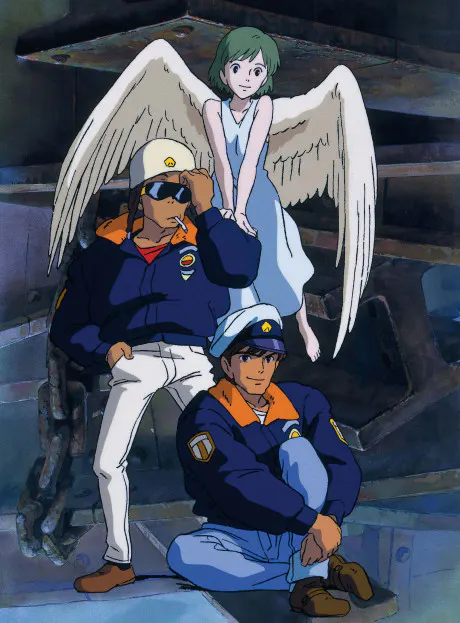
1995 · 1 episodes · Studio Ghibli · 72% on AniList · Sub & dub
Drama, Sci-Fi
On Your Mark (1995) is a seven-minute music video for the pop duo Chage and Aska, made between Porco Rosso and Mononoke. Two police officers rescue a winged girl from a cult and try to set her free, in a story that loops through several versions of the same escape. It has no dialogue and is one of the most interesting things he has made.
The themes you start to notice
Watch enough Miyazaki and you start seeing the same choices:
- Food that matters. The bread and egg in Castle in the Sky, the ham ramen in Ponyo, the riceballs in Spirited Away. Eating is how characters recover.
- Quiet moments. He leaves time for nothing to happen, like Chihiro on the train or the girls waiting at the bus stop in Totoro. Miyazaki has described these pauses with the Japanese word "ma," the space between things.
- Old women. He loves grumpy, strong old women: Dola the pirate in Castle in the Sky, the witches in Spirited Away, Sophie herself.
- Few pure villains. Yubaba runs a bathhouse and loves her baby. Lady Eboshi is cruel and kind. His clearest out-and-out villains, Count Cagliostro and Muska in Castle in the Sky, both come from early in his career.
- Retirement that doesn't stick. He announced he was stepping back after Princess Mononoke and again after The Wind Rises. Both times he came back.
What's missing
We don't have Takahata's The Little Norse Prince or the Toei features Miyazaki animated on, the Sherlock Hound series, Panda! Go, Panda! (which he wrote and designed for Takahata) or the short films made for the Ghibli Museum, like Boro the Caterpillar. Those museum shorts are mainly shown at the museum itself, in Mitaka, Tokyo. As of November 2026, Ghibli's producers have said Miyazaki is working on something new, but no title or release date has been announced.
Where to start
- You've seen the famous Ghibli films: go back to Future Boy Conan and The Castle of Cagliostro. They're the best way to see him fresh.
- You're new to him: Spirited Away, then Princess Mononoke, then whatever the Ghibli ranking suggests.
- With small kids: Totoro, Ponyo and Kiki, then Conan when they are older.
- For the whole picture: watch in release order from 1978, ending with The Boy and the Heron. You'll see the same ideas grow for 45 years.
Related guides
Miyazaki's career is tied to Takahata's, and our Isao Takahata guide covers the other half of Ghibli, from Heidi to The Tale of the Princess Kaguya. Mamoru Hosoda was once hired to direct Howl's Moving Castle before leaving the project, and his movies ranked show where he went instead. Makoto Shinkai was called "the next Miyazaki" for years, a comparison that never quite fit; our Makoto Shinkai movies ranked list shows how different his films really are.
For more beyond directors, our lists of the best anime of the 1980s, the best adventure anime and the best anime for kids all feature his work. You can also browse adventure and fantasy anime, or try the openings in our Discover feed.