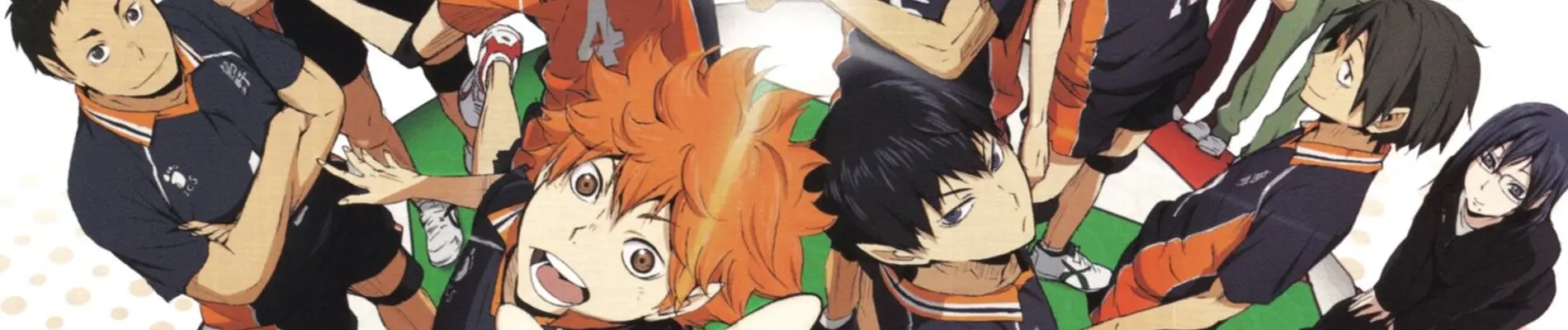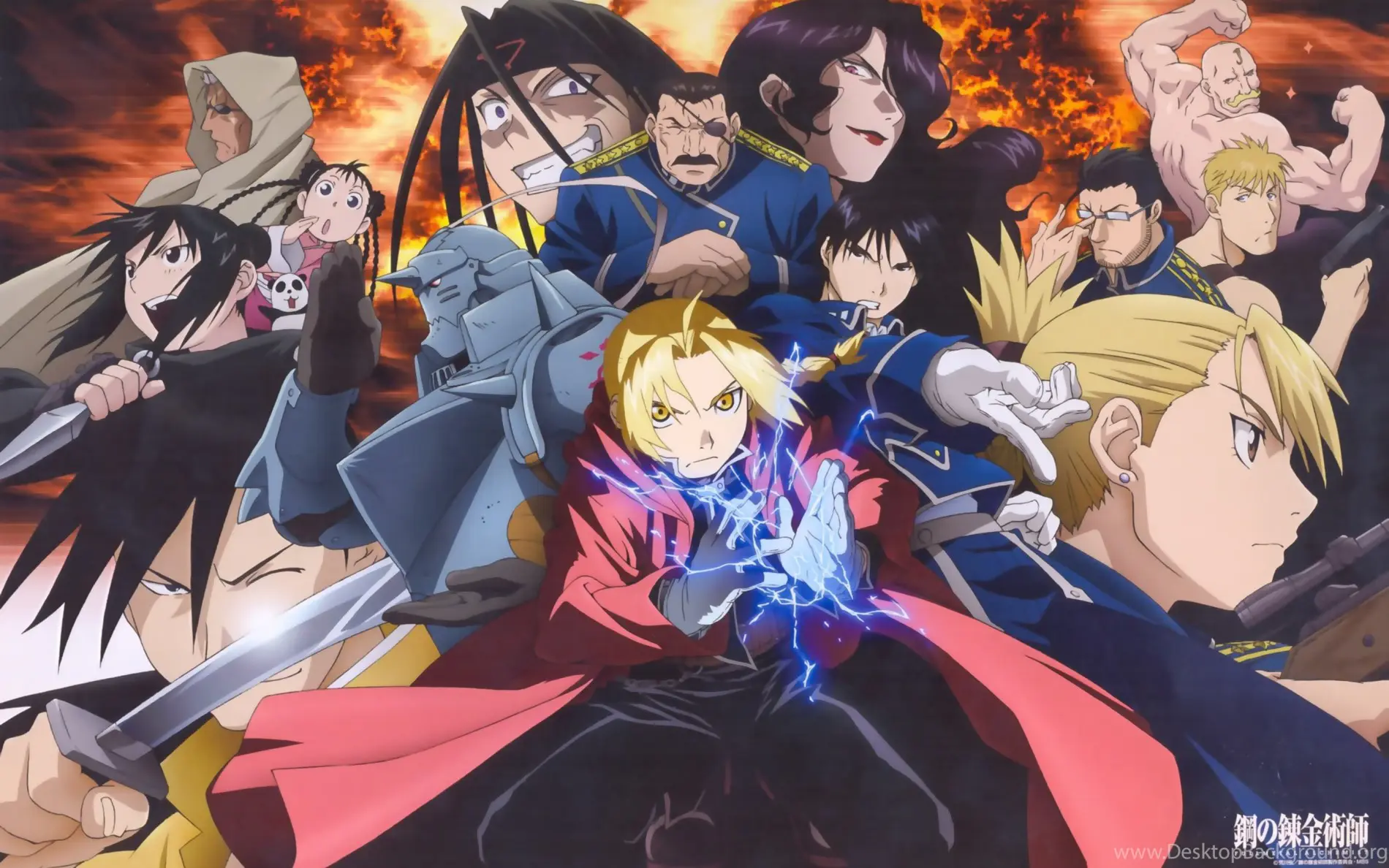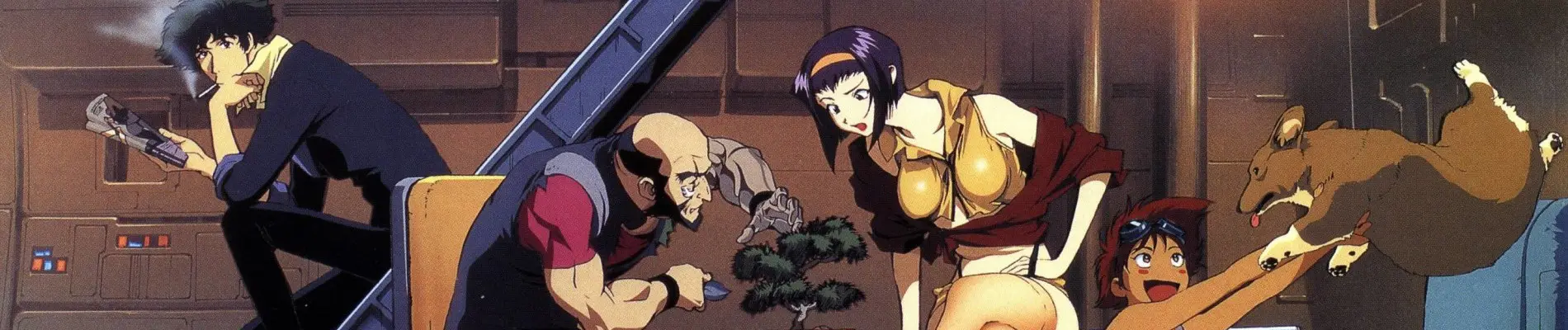
If you grew up in the Philippines, there's a good chance Sunrise animated something you watched long before you knew what an anime studio was. Its staff animated Voltes V and Daimos in the late 1970s, before Gundam, before Cowboy Bebop, before most Filipino viewers had heard the word "anime." Since then Sunrise has made more giant-robot shows than anyone, along with a space western, a 200-episode samurai comedy and a show about collecting space garbage.
Sunrise's name is on so many franchises that finding ten good shows is easy; the hard part is picking ten that show its range. The list below has three Gundam series and seven that have nothing to do with Gundam, all on MyAnimeVerse and all credited to Sunrise as a main studio in our database. For where Sunrise sits among the studios it influenced, see our guide to the best anime studios.
From Voltes V to Bandai Namco
Sunrise started in September 1972, when a group of former staff from Osamu Tezuka's Mushi Production set up their own studio. In its early years, as Nippon Sunrise, it worked on robot shows produced by Toei, including Voltes V (1977) and Daimos (1978), both directed by Tadao Nagahama. Our Voltes V history tells how that show became a phenomenon on Philippine TV after GMA-7 aired it in 1978, and our Daimos history covers its follow-up. Neither series is on MyAnimeVerse, so they aren't ranked here.
In 1979 the studio made Mobile Suit Gundam, and robots have been its main business ever since. In 1998, three Sunrise staffers who had worked on Cowboy Bebop left to found Bones, which is why our best Bones anime list starts with a Sunrise story. In April 2022, after decades as part of the Bandai group, Sunrise was merged into a new company, Bandai Namco Filmworks. The Sunrise name continues as a brand for its anime. One more corporate note matters for one show on this list: Gintama moved from Sunrise to a sister company, Bandai Namco Pictures, starting with Gintama° in 2015.
Why Code Geass isn't ranked
Code Geass: Lelouch of the Rebellion (2006) is one of Sunrise's most popular shows: an exiled prince gets the power to command anyone to obey him once and starts a rebellion against the empire that conquered Japan. It's a great, melodramatic thriller with robots, and it ends very well in R2. But it already ranks on several of our lists, so we've left it out here to make room for shows that get less attention. The Code Geass watch order sorts out the films and the Re;surrection sequel, and our anime like Code Geass list covers what to watch next.
1. Cowboy Bebop
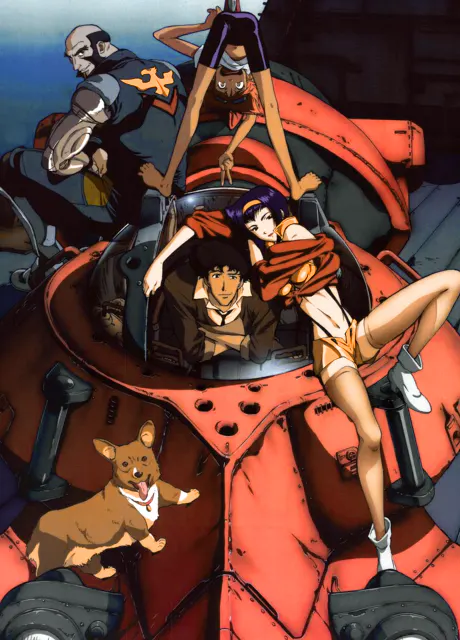
TV · 1998 · 26 episodes · Sunrise · 86% on AniList · Sub & dub
Action, Adventure, Drama
In 2071, Spike Spiegel and Jet Black are bounty hunters on a beat-up spaceship called the Bebop, chasing criminals for money they always manage to lose. Along the way they pick up a con artist named Faye, a kid hacker named Ed and a very smart dog. Cowboy Bebop (1998, 26 episodes, directed by Shinichiro Watanabe) already appears on several of our lists, but no honest Sunrise list can leave it out.
Each episode is a case, and each borrows from a different genre: noir, western, horror, comedy, kung fu film. Yoko Kanno's jazz, blues and rock soundtrack carries the mood. A thread about Spike's past in a crime syndicate runs underneath and comes to the front at the end. The first episode is a solid, low-key case; episode five is where most people fall for it. Bones' founders worked on it, and its film, Knockin' on Heaven's Door, is a Sunrise and Bones co-production. For what to watch after, see anime like Cowboy Bebop and our Shinichiro Watanabe guide.
Skip it if: you need a continuous plot. Most episodes stand alone.
2. Mobile Suit Gundam (1979)
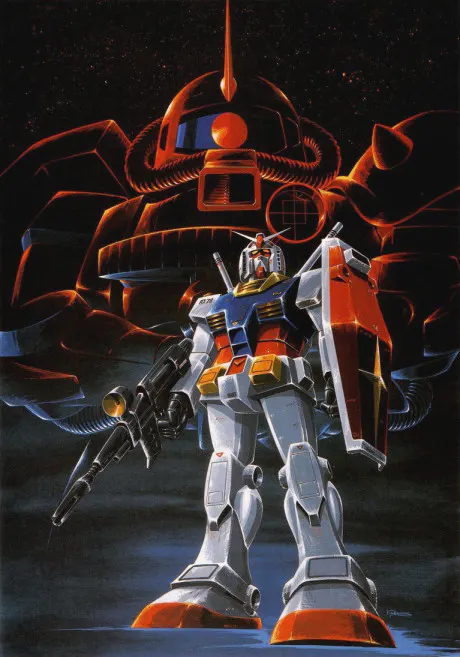
TV · 1979 · 43 episodes · Sunrise · 77% on AniList · Sub & dub
Drama, Mecha, Sci-Fi
In the year Universal Century 0079, a group of space colonies calling itself the Principality of Zeon declares independence from Earth, and the war that follows kills half of humanity. When Zeon attacks a colony where a secret new weapon is being tested, a teenager named Amuro Ray climbs into the cockpit of a prototype robot, the Gundam, and fights back. Mobile Suit Gundam (1979, 43 episodes) was created and directed by Yoshiyuki Tomino.
It changed the robot genre: instead of a super robot fighting alien monsters, the robots are military weapons, mass-produced and repaired, and both sides have reasons to fight. It was cut short for low ratings and only became a hit later, through toys and compilation films. Today it looks very old, and the pacing is slow by modern standards. But Char Aznable, the masked enemy ace, is still one of anime's great rivals, and everything in the Gundam franchise starts here. Our Gundam watch order explains where to start and how the timelines work, and the Mobile Suit Gundam watch order lists the wider franchise, including the three compilation films.
Skip it if: 1970s animation is hard for you to watch. Try The Witch from Mercury below.
3. Gintama
#3Gintama
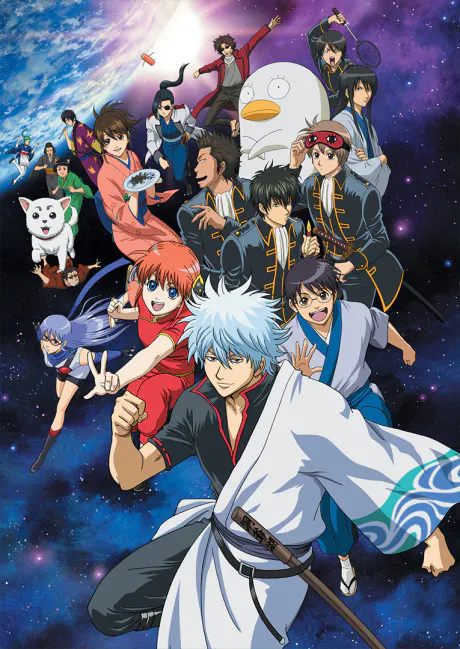
TV · 2006 · 201 episodes · Sunrise · 85% on AniList · Sub & dub
Action, Comedy, Drama
Aliens have conquered Edo-era Japan and banned swords. Gintoki Sakata, a former samurai with silver hair, runs an odd-jobs business with a teenage boy and an alien girl, and spends most of his time reading Shonen Jump and avoiding rent. Gintama (2006, 201 episodes, directed by Shinji Takamatsu) is a comedy that parodies everything, from other anime to Japanese history to itself.
The first couple of episodes are a poor sample: the very first is an anime-original special that's mostly jokes about the show itself. Start at episode three if you want to know what the show is like, and give it a dozen episodes. Its jokes need context, and plenty are about Japanese pop culture. Its serious arcs, which come and go between comedy runs, are some of the best action storytelling in shounen. Only the first two TV series are Sunrise's; from Gintama° on, it's Bandai Namco Pictures, as our Gintama watch order explains. The Gintama series page lists the seasons, films and specials.
Skip it if: you need to understand every reference. You won't, and that's fine.
4. Planetes
#4Planetes
TV · 2003 · 26 episodes · Sunrise · 80% on AniList · Sub & dub
Drama, Romance, Sci-Fi
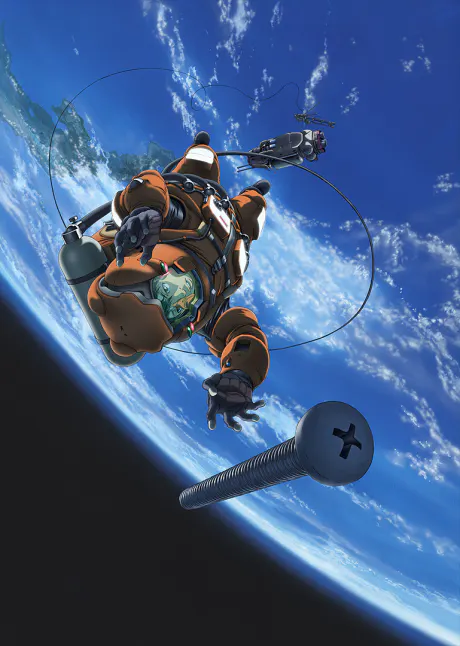
In 2075, space travel is routine, and so is space junk: bits of old satellites moving fast enough to destroy a passenger ship. Hachimaki is a debris collector on a low-budget team who wants his own spaceship. Ai Tanabe, a naive, idealistic new hire, joins his crew. Planetes (2003, 26 episodes, directed by Goro Taniguchi) is based on a manga by Makoto Yukimura, who later wrote Vinland Saga.
It's the most realistic space show on this list. There are no aliens and no robots, just orbital mechanics, bureaucracy, spacesuit trouble and workers fighting for funding. It starts as a workplace comedy and slowly becomes a story about ambition, terrorism and what people give up to reach space. The first episode, Ai's first days on the job, is quiet and sets the tone. Taniguchi later directed Code Geass for Sunrise, which shows the range. Our best space anime list has more set beyond the atmosphere.
Skip it if: you want action. It's a drama about jobs in space.
5. Mobile Suit Gundam: The Witch from Mercury
#5Mobile Suit Gundam: The Witch from Mercury
TV · 2022 · 12 episodes · Sunrise · 78% on AniList · Sub & dub
Action, Drama, Mecha
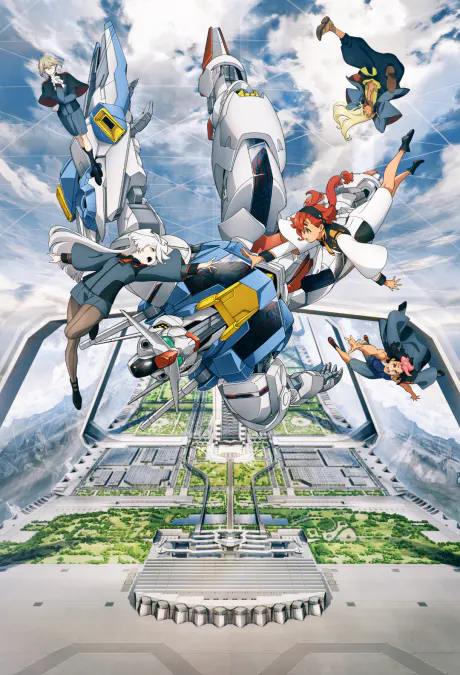
Suletta Mercury, a shy girl raised on Mercury, transfers to a school run by the corporation that controls the mobile suit industry. On her first day, she interrupts a duel to defend a girl named Miorine, and wins. By school rules, the winner of a duel gets engaged to Miorine, and Suletta is now her fiancée. Mobile Suit Gundam: The Witch from Mercury (2022, two seasons of 12 episodes) is set in its own timeline, so you don't need to know any other Gundam.
It's the best entry point to Gundam for new viewers. The first season plays like a school drama with robot duels, with a dark secret under it; the second becomes a war story about corporations, colonies and a mother using her daughter. The prologue episode, set years before, hints where it's going. It has fans who say it moves too fast in season two, and that's fair. The Witch from Mercury watch order places the prologue and both seasons.
Skip it if: you want Gundam's classic war setting from the start.
6. The Vision of Escaflowne
TV · 1996 · 26 episodes · Sunrise · 73% on AniList · Sub & dub
Adventure, Fantasy, Mecha
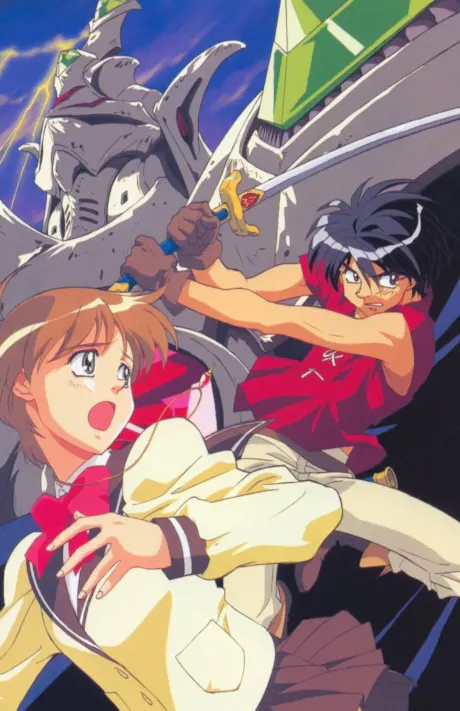
Hitomi Kanzaki is a high school runner who reads tarot cards. A boy and a dragon appear on her school's track, and she's pulled into Gaea, a world where Earth hangs in the sky like a moon. There she meets Van, a young king who pilots a robot called Escaflowne, as an empire with its own robots invades. The Vision of Escaflowne (1996, 26 episodes, directed by Kazuki Akane) mixes fantasy, mecha and romance.
It was ahead of its time: a girl pulled into another world, decades before isekai became a genre, with robots that move like knights in armor. Its love triangle is central, and the soundtrack, co-composed by Yoko Kanno, is one of the best of the 1990s. The first episode is a little clumsy, with school scenes that drag before the dragon arrives. It was later retold as a film, Escaflowne: A Girl in Gaea, credited to Bones and Sunrise. It also suits viewers working through our classic '90s anime list.
Skip it if: you're tired of love triangles.
7. Mobile Suit Gundam: Iron-Blooded Orphans
#7Mobile Suit GUNDAM Iron Blooded Orphans
TV · 2015 · 25 episodes · Sunrise · 78% on AniList · Sub & dub
Action, Drama, Mecha
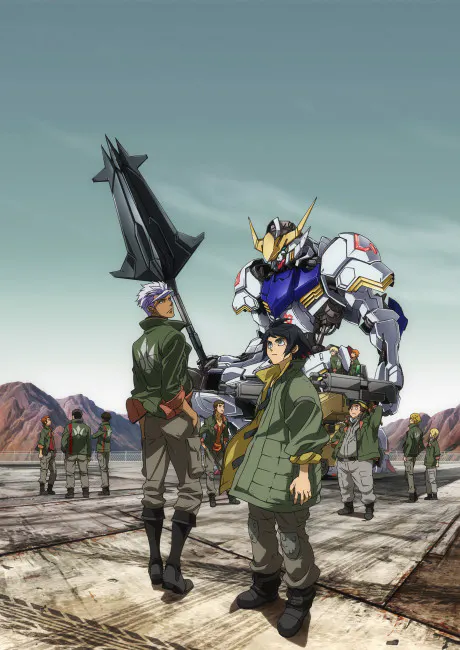
On Mars, child soldiers working for a private security company are used as disposable labor. When the company abandons them during an attack, a boy named Orga Itsuka takes over, renames the group Tekkadan and turns its members into mercenaries. His friend Mikazuki pilots an old Gundam dug out of the company's basement. Mobile Suit Gundam: Iron-Blooded Orphans (2015, directed by Tatsuyuki Nagai) runs for two seasons of 25 episodes.
It's the grimmest modern Gundam and closer to a gangster story than a war story: it's about loyalty, family and kids who were never given another way to live. The fights are close-up and brutal, with blunt weapons instead of beams. Many fans think its second season and ending are a letdown; others think the ending is the point. The first episode, the attack on the base, is strong. Its series composition was by Mari Okada, whose career our Mari Okada guide covers.
Skip it if: you need a hopeful ending.
8. Tiger & Bunny

TV · 2011 · 25 episodes · Sunrise · 76% on AniList · Sub & dub
Action, Comedy, Mecha
In Stern Bild City, superheroes work for corporations and compete on a reality TV show called Hero TV, earning points for arrests and rescues while wearing real sponsor logos on their suits. Kotetsu, a veteran hero called Wild Tiger, is old-fashioned and losing ratings, so his company pairs him with Barnaby, a young, polished rookie who can't stand him. Tiger & Bunny (2011, 25 episodes) is a buddy-cop superhero show.
It was a superhero satire years before superhero anime took off, and it's easy to like: Kotetsu is a single dad doing a job he believes in, and the partnership grows warmer as Barnaby's backstory comes out. The CG hero suits look dated, and the plot is predictable. The first episode, a rescue that turns into a ratings race, is a fun pilot. It suits viewers who liked My Hero Academia and want adult heroes instead.
Skip it if: dated CG bothers you.
9. Outlaw Star

TV · 1998 · 24 episodes · Sunrise · 75% on AniList · Sub & dub
Action, Adventure, Comedy
Gene Starwind runs an odd-jobs business on a backwater planet with his young partner Jim, and is afraid of space after something that happened to his father. A job goes wrong, and Gene ends up with a powerful spaceship, the Outlaw Star, and Melfina, a mysterious girl delivered sealed inside a capsule. Outlaw Star (1998, 24 episodes) is a space adventure about the hunt for a legendary treasure called the Galactic Leyline.
It aired the same year as Cowboy Bebop and is often compared to it, unfairly for both. Outlaw Star is lighter, sillier and more of a straight adventure, with space pirates, magic and ship-to-ship grappling battles. Its fan service and goofy episodes date it. The first episode, set before Gene gets the ship, is slow. Stick with it to episode four. It's a good pick for viewers who want the '90s space adventure Bebop isn't.
Skip it if: you're watching it expecting Bebop.
10. Daily Lives of High School Boys
#10Daily Lives of High School Boys
TV · 2012 · 12 episodes · Sunrise · 80% on AniList · Sub & dub
Comedy, Slice of Life
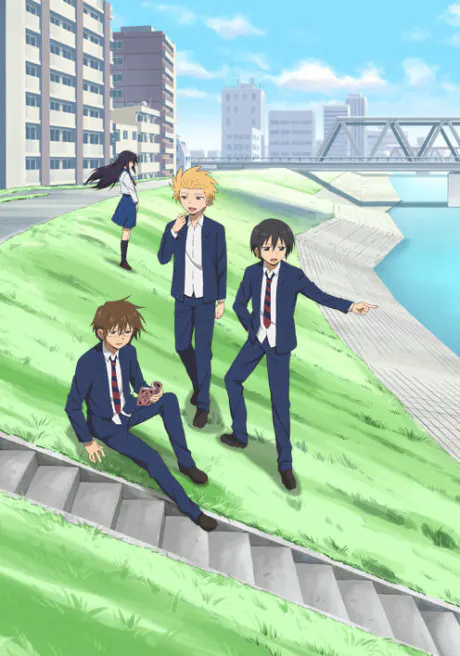
Tadakuni, Hidenori and Yoshitake are three ordinary boys at an all-boys school, and nothing happens to them. They make up role-playing games on the walk home, embarrass themselves in front of girls and turn small problems into dramas. Daily Lives of High School Boys (2012, 12 episodes, directed by Shinji Takamatsu) is a sketch comedy.
It's here to show Sunrise's comedy side, and it shares a director with Gintama. The jokes are about how dumb and dramatic teenage boys can be, and girls in the show, especially the "Literary Girl" on the riverbank, get some of the best scenes. Each episode is a set of short sketches, so it's easy to dip into, and the first episode is a fair sample. It's one of the purest comedies in our best comedy anime list's style.
Skip it if: you need a story. There isn't one.
More Sunrise worth your time
- City Hunter (1987): a womanizing private eye in Tokyo, and one of Sunrise's longest-running '80s hits.
- InuYasha: Rumiko Takahashi's 167-episode feudal fantasy. The InuYasha watch order covers The Final Act.
- Gundam Wing, Gundam SEED and Gundam 00: three alternate-universe Gundam series, each a common starting point.
- Mobile Suit Gundam GQuuuuuuX (2025): co-produced with Studio Khara, the studio Hideaki Anno founded. Our Hideaki Anno guide covers Khara.
- Armored Trooper Votoms and Witch Hunter Robin: a gritty '80s soldier story and a 2002 occult police drama.
- Love Live! School Idol Project: the idol franchise, covered in the Love Live watch order.
Sunrise anime at a glance
| # | Title | Year | Format | Best for |
|---|---|---|---|---|
| 1 | Cowboy Bebop | 1998 | TV, 26 eps | Style and jazz |
| 2 | Mobile Suit Gundam | 1979 | TV, 43 eps | Where Gundam starts |
| 3 | Gintama | 2006 | TV, 201 eps | Parody and action |
| 4 | Planetes | 2003 | TV, 26 eps | Realistic space drama |
| 5 | The Witch from Mercury | 2022 | TV, 24 eps | New Gundam fans |
| 6 | The Vision of Escaflowne | 1996 | TV, 26 eps | Fantasy mecha romance |
| 7 | Iron-Blooded Orphans | 2015 | TV, 50 eps | Grim robot war |
| 8 | Tiger & Bunny | 2011 | TV, 25 eps | Adult superheroes |
| 9 | Outlaw Star | 1998 | TV, 24 eps | Space adventure |
| 10 | Daily Lives of High School Boys | 2012 | TV, 12 eps | Sketch comedy |
Sunrise FAQ
Did Sunrise make Voltes V?
Its staff animated it. Voltes V (1977) was produced by Toei, with animation by Nippon Sunrise, as Sunrise was then known. The same arrangement made Daimos.
Does Sunrise still exist?
As a brand, yes. In April 2022 the company merged into Bandai Namco Filmworks, which keeps using the Sunrise name for its anime.
Where should I start with Gundam?
The Witch from Mercury for something modern, or the 1979 original for the main timeline. Our Gundam watch order and our what is mecha explainer go deeper. You can also try first episodes on Discover.
Where to go next
Sunrise's former staff founded Bones, so the best Bones anime is the next read. For a studio built on the opposite of Sunrise's realistic robots, see the best Trigger anime; for more giant robots, our best mecha anime list. Sunrise practically built the mecha genre page, and its sci-fi neighbor is next door; sort either by score on Browse.